

At the end of the day it doesn’t matter what we call our efforts to sustain happy and loyal customers; our customers simply want to accomplish things. I call these things jobs and if we are able to help them get these done better than our competitors, there will not be enough perceived gap-in-value to switch services. Sounds simple doesn’t it? And because it sounds so simple, the efforts to minimize (or understand) defecting customers has spent far too long within marketing organizations. We need a longer term and more foundational strategy for dealing with this problem as the providers of these services, and it needs to start before we even get that first customer.
Some of what I propose here you will disagree with. Maybe all of it. But keep in mind the facts I share as you make that assessment.
What is Customer Success Management?
In my experience, the concept of customer success was always aligned to efforts to grow existing our existing relationships. The term often bandied about was Farmers because the job of customer success managers was often to plant seeds to expand or lengthen the relationship. In many organizations this was simply a junior inside sales executive that put customers on the call list each quarter to see what they could sell. In others, it was more proactive using free consulting as a means to identify ways to help the customer, while building trust and loyalty. While that sounds customer-centric, it was often clear that there was little or no understanding of customer needs on the front-end of the relationship; or why would we need to do this?
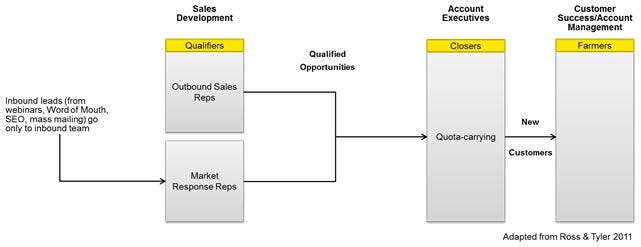
It seems as though no matter how caring we try to be, we still fall into the trap of short-termism. When we must attract new customers now, or grow existing customers now, we default to the path of least resistance…and it only gets worse with the advent of cheap communication technology!
SaaS Accelerated Things
As customers, we have always subscribed to services, so Software-as-a-Service (the cloud) really didn’t introduce anything new in that sense. For example, if I don’t like my Cable and Internet service for some reason, I can switch. One of the things these companies don’t seem to learn is that it’s not about customer service, it’s about the service itself. Customer service only helps me deal with a service that has failed in some capacity; so as a customer who is trying to accomplish something by hiring the service, having to contact the customer service department means that I’m struggling. And taking this a bit deeper, the Marketing organization cannot overcome those struggles by repeatedly telling us about the wonderful service — when it isn’t wonderful.
SaaS companies are now selling services that have traditionally required large capital investments by customers — making the new service attractive because they can now be paid for from operating budgets. However, while many providers still try to lock Enterprises into contracts, the barriers to switching are much lower than they used to be. As a result, it’s critical for these providers to offer a consistent and reliable service, while also helping customers accomplish stuff better than competing solutions. In other words, perceived value has shifted from total control and customization towards helping them along dimensions of cost and ease of administration. However, the shifting of the value chain never really stops; so we need a way to monitor it if providers intend to sustain their efforts to help their customers succeed.
The Impact on Normal Types of Companies
Everything we sell is a service. Services can be something we subscribe to over time, something we hire once, or embedded in an appliance we turn on when we need it, or embedded in a tool such as a hammer (used in conjunction with our brains and muscles). If our customers can find a service — or a product integrated with complementary services — that they perceive to help them get their job(s) done significantly better, they will switch. This is true for any type of company, not just SaaS providers. Companies what to keep their existing customers and sell more to them. The alternative is simply too costly!
As mentioned earlier, companies will see the symptom of customer defection or stagnation and turn the problem over to a) the Customer Service organization, and/or b) the Marketing organization; when in fact, the problem is systemic. The entire organization must be organized around a common understanding of what customers need, and how they will help their customers fulfill those needs as they strive to accomplish something. The problem is that most companies view markets through the lens of product or service categories — solutions — and not through the jobs that their customers are trying to get done. As a result, the company integrates capabilities around what they are selling, measures their internal activities, and has little or no ability to measure the success of the customers who they are in existence to serve.
The solution to this problem, fortunately, requires a bit more work than simply interviewing customers to figure out why they switched. If it were easy, everyone would be doing it and hashtags would be born of it! Once a customer has defected, it’s seemingly too late to identify innovative services to counteract this; and thus, we focus on clever marketing and customer service alternatives due to the short term demands under which we are placed. However, there is a sustainable path to defining customer success before, during and (hopefully never) after the relationship. How can you hope to succeed in a Customer Success program if you can’t articulate exactly how a customer defines their own success? More on that later…
How Are We Doing?
It’s interesting how we often ask customers how we are doing? When we do this, we’re forcing our customers to reconcile what they are trying to accomplish with the service we have decided to provide them. Lance Bettencourt suggests that the right question to ask is how are you doing? This simple change shifts the focus to understanding what the customer is trying to accomplish (where we have no metrics), from how we are executing our services (where we have many questionable metrics). To design valuable services, those that help our customer become, or remain successful, we should be focusing on our customer’s ability to maximize/minimize the outcomes they use to measure their path to achievement (the entire job). As long as we continue to focus on convenient internal activity metrics, we are merely paying lip service to the needs of our customers.
Resources: A Service Lens on Value Creation - Bettencourt, Vargo, Lusch 2014We Are Not Doing Very Well
Why is your customer hiring your product or service? How does your customer measure success? These are seemingly basic questions; yet if you ask people, you will get an array of responses. There is no agreed upon common language for describing the perfect execution of whatever “thing” a person or company is trying to accomplish. This is a foundational issue with regard to measuring our customers’ success and finding ways to help them succeed. Without an externally-focused value targeting mechanism we rely on a couple of things:
The latest hype cycle
The personalities repeating the mantra of the hype cycle
Clearly, this strategy has been lucrative for many Customer Experience Management and/or Customer Relationship Management professionals over the years. So now we are finally on to a new term, and one that should really mean something. Customer Success Management. So let’s get honest about just how successful companies really are…
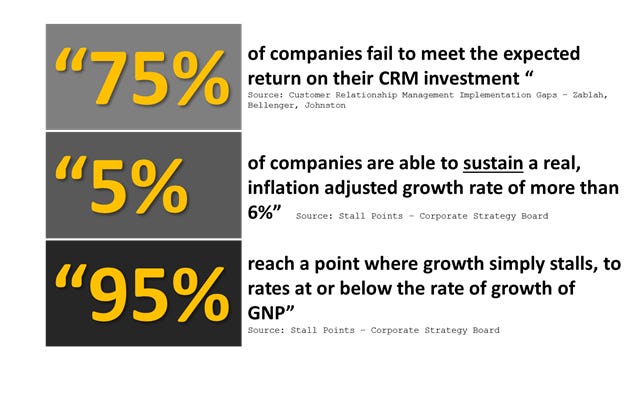
These are pretty scary numbers. But here is one more dose of reality that should make us all think long and hard about where we want to apply our future efforts in terms of ensuring the success of our customers…
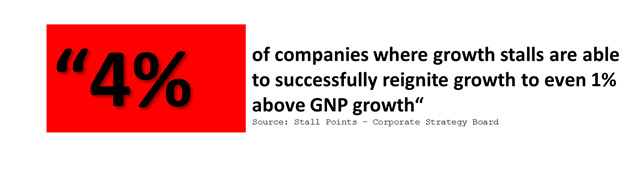
Now that we’re all in agreement, it’s time to wander off the reservation…
I’m sad to say that there is very little to hype here unless you want to co-opt the hashtag #overalls. There is nothing easy about turning a battleship around even when we know it’s heading to the wrong war. It’s hard work. People will have to get dirty. If you are leading the program, the “creative” people won’t like you; your business analytics people will continuing looking inward; your convenient channels to market will no longer be convenient.
As a result, in many cases you will need to create capabilities that don’t look like “lead to order” or “order to cash.” They will be externally focused capabilities that align perfectly to the steps your customers take to get things, tasks or jobs done! Once you’ve got that down pat, then you can reconsider your internally focused efficiency metrics…as long as they don’t impact your customers’ ability to get their jobs done with your services better than competing services.
Have I driven that one home yet? This is true customer-centricity and you won’t find the next generation of practitioners in your marketing department, I’m sad to say. You probably won’t find them in your customer service department, either. In fact, this will require extreme leadership from above; someone who can also develop the new leaders below them to view the world differently.
The software to enable what I’m thinking of hasn’t been developed yet, although we are seeing solid attempts to understand customer behaviors through their long tail interactions with us. Looking backward into the long tail of big data is already being done and has been done the hard way for many, many years. I feel it’s time to develop a forward looking mechanism that fits perfectly with our existing systems of interaction analytics and multi-channel engagement.
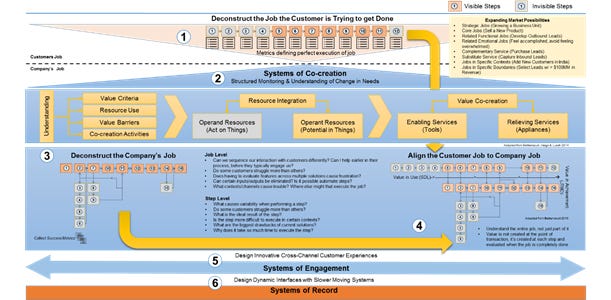
If we are to turn our focus to our customers’ success, then we need a common language as a baseline. So here’s a short list of terms and definitions to help us begin this journey:
A Common Language
Customer Jobs — Derived from the term made popular by Clay Christensen — jobs-to-be-done — Customer Jobs are essentially something our customer is trying to accomplish. They are a process with all traces of solution stripped away. The Job is decomposed into steps, which in many ways describe the new capabilities you’ll need. These jobs have related jobs which describe the consumption of a service that is hired. They are interwoven into a larger hierarchy of jobs that define the system a customer employs to get the ultimate job done. It is systems thinking at its finest. The job and the job executor essentially define a market; as opposed to a product or service category.
Customer Metrics — These are the individual needs that customers use to measure how well a step in the process is getting done. They are the definition of perfect execution from the customer’s perspective. There could be many of them; but many practitioners have been trying to minimize them to start with a good enough framework of measuring customer success.
In the world of jobs-to-be-done, these are also known as desired outcomes. Customer segments are derived from these needs through simple statistical clustering analysis so we can help each group with their specific needs. Our job is to identify and prioritize customer jobs, decompose the jobs into steps, and capture every need a customer uses to define perfection execution. Obviously, no job will ever be perfectly executed but this provides a roadmap to view shifts on how well the job is getting done from the perspective of a customer, or group of customers.
Resources: Giving Customers a Fair Hearing- Ulwick & Bettencourt 2008 The Customer-Centered Innovation Map- Ulwick & Bettencourt 2008Systems of Co-Creation — Once the jobs and the needs have been cataloged (they are metadata and don’t really change) the company needs to build systems to monitor the successful facilitation of customer decision journeys. This enables the customers to provide forward-looking data using a common language that captures their current evaluation of needs, even latent needs. This is a symbiotic relationship, even if customers aren’t really aware of how they are contributing. (h/t to Jeff Sussna for suggesting this on Twitter)
Systems of Engagement — These are the logical interactions and resource integration between companies and customers driven by information supported by the learnings from the Systems of Co-Creation. Capturing the results of the interaction in real-time to facilitate rapid correction of failed touchpoints, or defection is where the emerging customer success solutions seem to be focused today. They also leverage transaction data from Systems of Record to integrate forms of analysis such Customer Lifetime Value or RFM (recency, frequency, monetary). New forms of engagement are sure to evolve, which makes the platform you choose critical — you don’t have time to focus on that while focusing on your customer!
Systems of Record — These are the good old systems where data is stored and rules are often enforced. They rarely change and are slow moving. This poses a problem when the engagement flavor of the day (think “new channels added” to multi-omni-channel experience) is constantly changing since they have not historically been designed for quick integration. While all of this is rapidly changing, we need to facilitate the new data related to how our customer defines success (from systems of co-creation) and feed it back to prioritize and evaluate the latest hype in Systems of Engagement. Sometimes, it’s best to let our competitors experiment in areas that we already know have little value.
What Comes After Customer Success?
We are always looking for new terms to solve the world’s problems when Customer Success really details it out quite nicely. At the end of the day, as companies, we will not be successful unless our customers are successful. They don’t buy our products and services just because they are cool. They buy them when we functionally help them get things done better than the alternatives. If they’re also cool, that might be a tie-breaker. But, the Fail Fast world has highlighted the critical problem…
…most of us have traditionally begun our businesses with ideas and not with customer needs. This chaotic, creative approach strokes our egos but does little to guarantee the long term success of our customers. We can’t quantify the value of ideas within the larger sea of ideas. The next generation of Customer Success systems will provide the means to target areas of the value chain where the most opportunity exists. This opportunity equates to unmet needs of customers. Only then can be begin to identify ideas that align to our capabilities and deliver solutions that meet these needs, as well as to ensure that we have the means to continually evaluate how well are customers are doing.
I apologize for this long and winding road. This is not a whitepaper and I have no assistants or editors to keep me on track. So in closing I would like to emphasize that Customer Success is not only for Cloud software companies to track engagement within their applications. The answer cannot be found in Big Data either. We need to leverage the right data to understand what our customers are doing, what they want to accomplish, and how they measure success. It’s not about their interactions with our solutions as that can only fine tune the day-to-day stuff. The right data involves an understanding of the jobs customers are trying to get done, and their measurements for successful execution. I see no path to that in the cloud today. Unfortunately, we’ll have to do some in-real-life work with…wait for it….customers.
It’s better to do the right thing poorly than to waste your time doing the wrong thing perfectly. Customer Success is about finding the right thing. That’s something we can actually build upon with our customers. We’re clearly not there yet.
Resources:The Three Factors Reinventing Customer Experience Design - Dr. Graham Hill 2015Failing Fast is for People Who Failed Statistics - Effective CRM 2015The Job of Hitting the Nail on the Head - Effective CRM 2015Supposed Growth Exists Where There Are No Numbers - Effective CRM 2015Measuring Customer Experience One Step at a Time - Effective CRM 2014Customers Don't Want Relationships...PERIOD! - Effective CRM 2013