

Before you read this article
There are two ways to build a strategy.
One starts by asking customers what they want. You interview them, weight the answers, prioritize the patterns, and recommend whatever ranks highest. The numbers that come out of this process look rigorous. They are not arithmetic — they are the customer’s coping strategies, quantified. The model that produced them was built by humans, populated by humans, and read by humans. The bias is in the architecture, not the output.
The other starts by computing the floor. The floor is what the outcome would cost to deliver using nothing but raw inputs — no labor, no overhead, no friction. You subtract the floor from what the outcome costs today. The number you get is the size of the structural opportunity, in dollars, and it does not depend on what any customer said in any interview.
Most strategy writing does the first one and calls it the second. This document does the second one. Every recommendation is built off the floor. The opportunity runs through a seven-step pipeline. If the math stops working at any step, the recommendation dies there. No committee. No narrative rescue. The pipeline says no, and the document you are about to read is the version where the math said yes — for at least long enough to keep reading.
Strategy pieces that look like this one are common. What is not common is the part at the end of the pipeline that says stop. This document has it. Keep reading and you will see the gates.
— Venture Proof
The opening line to remember
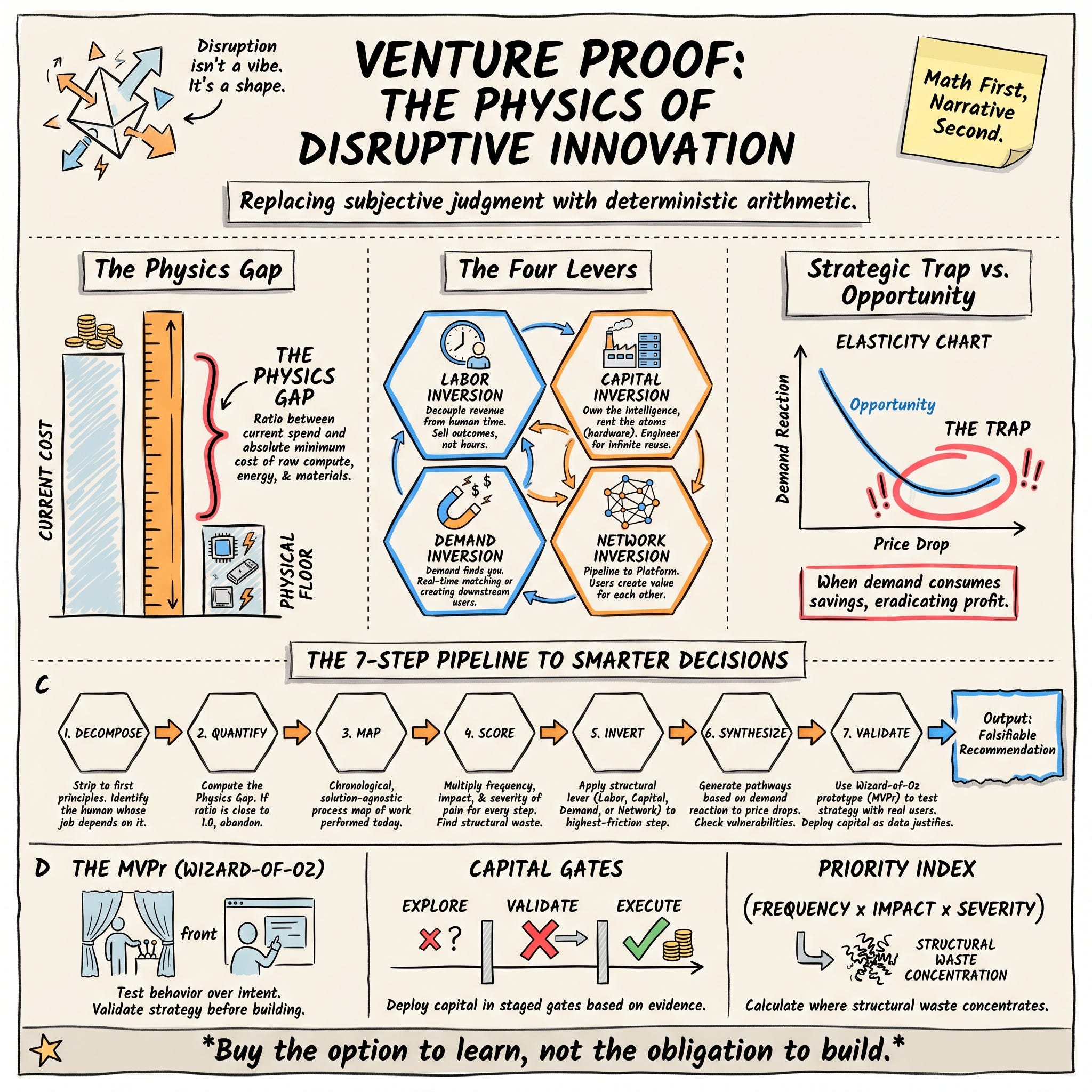
Disruptive innovation isn’t a vibe. It’s a shape.
Most people talk about disruption the way they talk about weather - something that happens to industries, sweeping in from somewhere else. A great founder has a vision. A new technology arrives. Customers change their minds overnight. Markets flip.
That story is comforting. It is also wrong in a way that costs companies real money.
The truth is that disruption is not a feeling, a slogan, or a stroke of luck. It is a shape - a recognizable set of structural moves that, when applied deliberately, change what a product or service is allowed to cost. Companies that understand the shape can build toward it. Companies that don’t, copy what they see on the surface, and almost always miss the part that mattered.
This article explains that shape in plain language. It also explains how Venture Proof uses the shape to evaluate whether a strategic opportunity is real, before any money is spent.
Venture Proof is a platform I built for working with clients who have been burned by strategy and “innovation” consulting in the past. If you haven’t been burned, this likely won’t resonate with you.
Why analogical thinking fails at the moment it matters most
When a leadership team faces a new strategic question - should we enter this market? acquire this company? build this product? - the default move is to look sideways. What did our competitors do? What did the last great company in this space do? What did a respected analyst recommend?
This is analogical thinking. It feels rigorous because it borrows credibility from people who already shipped. It is, however, the most expensive mistake a strategy team can make - because it answers a different question than the one being asked.
Analogical thinking answers: What worked for someone else, in their context, with their physics?
The question on the table is: What is physically and economically possible here, in our context, with our physics?
Those are not the same question. The competitor’s path is the output of their constraints, not yours. Copying their path copies their constraints - and usually their waste.
Consider three examples that almost no one frames this way:
A bank looking at a fintech’s growth rarely asks why the fintech’s marginal cost per transaction dropped to fractions of a cent. It asks how to “look more like the fintech” - which usually means a new mobile app.
A manufacturer looking at a new battery chemistry rarely asks what the floor cost of a kilowatt-hour would be if you built the entire supply chain from scratch. It asks which battery vendor to partner with.
A consulting firm looking at AI-driven analysis rarely asks what the cheapest correct answer to its core question would be. It asks how to bolt AI onto its existing decks. In each case, the analogical answer sounds reasonable. In each case, it skips the one step that actually determines whether the opportunity exists.
That step is what Venture Proof is built around.
I’m sharing an opportunity at the end. If you’re currently developing job maps and models for your innovation or journey design work, I’ve opened a beta for something I’ve developed. Check it out below. 👇
The first principle: every outcome has a physical floor
Consider any outcome a business produces. A loan decision. A clinical assessment. A legal review. A logistics plan. A product design. An audit.
For each of those outcomes, there is a physical floor: the absolute minimum it would cost to deliver that outcome using nothing but raw compute, raw energy, and raw materials - no people, no overhead, no friction.
That floor is not a guess. It is an arithmetic claim. You can compute it. Once you compute it, you have a fixed reference point.
The next claim is even more useful: the gap between what you currently spend and the physical floor is the size of the structural opportunity.
If the gap is small, the market is already efficient. No amount of branding or vision will create a gap that isn’t there. The honest answer is to walk away.
If the gap is large, the gap is real, quantified in dollars, and waiting to be captured.
This is not a metaphor. Venture Proof calls this gap the Physics Gap - what it costs today (fully loaded) divided by the physical floor. When the Physics Gap is close to 1.0, there is no opportunity. When the Physics Gap is far above 1.0, the opportunity is enormous, and the question becomes: which structural move captures it?
Most strategy conversations start with a thesis and backfill numbers to support it. Venture Proof starts with the physical floor and only generates a thesis if the math justifies it. That inversion - math first, narrative second - is the entire idea.
The shape of disruptive innovation, expressed as moves
Disruption is not one thing. It is a recurring set of structural moves. Venture Proof catalogs the moves (and memorializes them using a semantic graph) that consistently appear in companies that broke their industry’s cost curve, and arranges them into four levers. Strategists should be able to name the four levers in any conversation.
1. Labor inversion - decouple revenue from human time. The traditional business sells hours. The modern business sells outcomes. When a company finds a way to deliver the same outcome at one-tenth the labor cost, the savings can either be banked (if demand doesn’t grow when price drops) or reabsorbed by volume growth (a paradox where cheaper service creates more demand than the savings can absorb). Either way, the labor cost is no longer the binding constraint.
2. Capital inversion - own the right assets, rent the rest. This lever has two flavors. The first is externalization: stop owning expensive hardware that the market can provide more cheaply, and put your investment into the intelligence that orchestrates it. The second is amortization: when you must own hardware, engineer it to be reused across many cycles so the unit cost collapses. Companies that pick the wrong side of this choice burn cash on atoms they did not need to own.
3. Demand inversion - stop chasing demand, structure your business so demand finds you. The first flavor is matching: real-time systems that pull demand to available supply instead of pushing supply at customers. The second is vertical demand creation: build a downstream business that consumes your own excess capacity as its primary input. The savings from the upstream efficiency become the advantage in the new market. This is how a rocket company became a satellite internet company: the rockets were too reusable, so the company built the customers.
4. Network inversion - turn a pipeline into a platform. A pipeline is a company that creates value and ships it to a customer. A platform is a place where users create value for other users, with the company orchestrating the rules. Companies that make this transition change the shape of their growth curve. It is also the hardest move to reverse, so it deserves the most scrutiny before commitment.
Remember: “Venture Proof evaluates four levers - labor, capital, demand, and network - and the right one depends on the math, not the mood of the leadership team.”
How Venture Proof turns the shape into a decision
Knowing the shape is necessary. It is not sufficient. Knowing the shape without knowing where to apply it is how companies end up with a beautiful transformation agenda and no measurable result.
Venture Proof uses a seven-step pipeline to convert a strategic question into a falsifiable recommendation. The pipeline is the same for every topic - a market entry, an acquisition, a new product, a cost-out initiative. The inputs change. The assembly line does not.
Step 1 - Decompose. Strip the problem to its first principle: the smallest physical or economic truth that, if removed, makes the outcome impossible. Identify the specific human whose job depends on that principle - not a department, not a system, a person with a job title. Without this step, the rest of the pipeline optimizes the wrong thing (that especially includes jobs).
Step 2 - Quantify. Compute the Physics Gap - the arithmetic ratio of what it costs today (fully loaded) to the physical floor of delivering the same outcome with raw inputs. If the Physics Gap is close to 1.0, the pipeline says so honestly and stops. Many opportunities die here. That is a feature, not a bug.
Step 3 - Map. Build a chronological, solution-agnostic process/job map of how the work is actually done today - not how it should be done, not how the leadership team imagines it, how it is done on a Tuesday afternoon. The map covers the full job, from defining the outcome to concluding it. It is grounded in a first principle always.
Step 4 - Score. For each step in the map, score the friction. How often does this step happen? What happens when it fails? How severe is the current pain? Multiply the three numbers. The step with the highest score is where the math says the waste concentrates.
Step 5 - Invert. Apply the four levers - labor, capital, demand, network - at the highest-friction step. Pick the lever that most radically changes the cost curve. This is where structural moves replace incremental improvements. Evaluate 150+ subtractive levers when you’re ready to get serious.
Step 6 - Synthesize. Generate three pathways, conditioned on how sensitive demand is to price. If demand barely moves when price drops, a co-pilot that helps the existing process is bankable. If demand surges when price drops, the co-pilot is a trap, and structural inversion becomes urgent. The math selects the pathway; the leadership team approves it.
Step 7 - Validate. Produce the MVPr: a Wizard-of-Oz prototype the customer team puts in front of real users to test whether the proposed strategy works in practice. The MVPr makes the thesis falsifiable through observed behavior before the customer builds the full product or commits full capital. Capital deploys in stages - Explore, Validate, Execute - each with a Go or No-Go gate. Each stage buys the option to learn, not the obligation to build.
Remember: “Seven steps. Decompose, Quantify, Map, Score, Invert, Synthesize, Validate. The math drives the decision, and capital deploys in stages with explicit gates.”
What Venture Proof is, in one sentence
Venture Proof is a methodology and a working software platform that replaces subjective strategy judgment with a deterministic decomposition pipeline, producing a falsifiable cost gap, a friction-scored process map, and a staged validation plan - usually within two hours of operator time, instead of six to twelve weeks of consulting - and a Wizard-of-Oz prototype enabler that lets customer teams validate their own strategy in front of real users.
Three things to notice in that sentence.
First, methodology plus working software, used in the field. Venture Proof is software that already runs. Customer teams - corporate strategy, product, and design - use it to falsify hypotheses about their own strategy before they commit capital. The Wizard-of-Oz prototype enabler inside it lets a customer team validate a strategy in front of real users before any of their product gets built.
Second, falsifiable. The Physics Gap is an arithmetic claim. It can be checked. The pipeline says “no opportunity exists” when the math says so. There is no narrative escape hatch. No 6-figure consulting engagement to get here.
Third, staged validation. Capital deploys in stages. Each stage has a Go or No-Go gate. The leadership team buys the option to learn more, not the obligation to spend more. If the math stops justifying the next stage, the pipeline stops.
Who uses this, and on what decisions
Consider a few examples of the kind of strategic question Venture Proof is built to evaluate.
A mid-market manufacturer weighing whether to acquire a smaller competitor. The analogical answer is “we will gain market share and reduce costs.” The Venture Proof answer starts with: what does it physically cost to deliver the combined output? What is the floor? What is the gap, and where in the operational map does the waste concentrate? Which lever closes the gap most radically? Does the acquisition math survive the structural answer, or does it collapse?
A logistics company weighing whether to enter a new geographic market. The analogical answer is “competitors did well there.” The Venture Proof answer starts with: what is the labor cost structure for the new market? What is the physical floor for delivery in that geography? What friction step in the new market has the highest Priority Index, and is it a problem the company’s existing lever portfolio can solve?
A consulting firm weighing whether to launch an AI-augmented service. The analogical answer is “everyone is doing it.” The Venture Proof answer starts with: what is the floor cost to deliver the same outcome with raw compute and a constrained AI? What does the Physics Gap say about the size of the opportunity? Is demand elastic - does lowering cost create proportional demand growth that consumes the savings, or inelastic - does the savings bank? The elasticity answer determines whether the AI service is bankable or a trap.
In each case, the influence of analogical thinking is not removed by being smart. It is removed by replacing the question with a math-first decomposition.
What you should be able to say
After reading this article, the strategist should be able to make three points confidently, in any room, without notes.
One. Disruptive innovation is not a vibe. It is a shape - a small set of structural moves that change the cost curve. Companies that copy the surface of disruption usually miss the part that mattered.
Two. Venture Proof uses a deterministic decomposition pipeline to replace strategic opinion with arithmetic. It computes the gap between what an outcome costs today and the physical floor - and uses that gap to decide whether the opportunity exists at all.
Three. Venture Proof is a working platform already in use with corporate strategy, product, and design teams. Customers use it to falsify hypotheses before they commit capital, and the built-in Wizard-of-Oz prototype enabler lets them validate a strategy in front of real users before they build. Capital deploys in stages, each with a Go or No-Go gate.
If the strategist can make those three points clearly, the listener has what they need to ask the next question. That is the goal.
Closing thought for the strategist
The hardest part of communicating this work is not explaining the math. It is resisting the temptation to soften it.
The temptation is real. Strategic conversations reward comfort. Audiences expect reassurance. The instinct is to round the edges, to say “this is a thoughtful framework that complements existing approaches,” to leave room for the listener to nod and move on.
That instinct will kill the message. Venture Proof is not a complement to existing strategy work. It is a replacement for the part of existing strategy work that produces unfalsifiable recommendations. If the listener is comfortable with that framing, the conversation continues. If the listener is not, the conversation ends honestly, and both sides save time.
The right audience for this work is not the audience that wants to be reassured. It is the audience that has been burned by strategy work that could not be checked, and is ready for an approach that can be.
A short glossary, for the strategist who gets asked a definition
First principle. The smallest physical, digital, or economic truth that makes an outcome possible.
Job executor. The specific person whose job depends on the first principle.
Physics Gap. The fully-loaded cost of delivering an outcome today, divided by the physical floor of delivering the same outcome with raw inputs. When the Physics Gap is close to 1.0, there is no opportunity. When the Physics Gap is far above 1.0, the opportunity is real and quantified.
Priority Index. The product of frequency, impact, and severity for a step in the job map. The step with the highest Priority Index is where the structural waste concentrates.
Elasticity factor. The empirical sensitivity of demand to price. The elasticity determines whether lowering cost banks as savings or triggers demand growth that consumes the savings.
Structural inversion. A move that changes the shape of the cost curve, not just its position. The four structural inversions are labor, capital, demand, and network.
MVPr (Wizard-of-Oz prototype). The artifact produced in Stage 7. It gives real users enough of the proposed experience to test the customer’s strategic thesis through observed behavior, while people may perform unfinished operations behind the scenes. The customer learns before committing to the full build.
Is your organization interested in differentiated innovation? The world is changing quickly. If you’re not adapting to those changes, you’re not innovating. Seeking reassurance from consultants fails, nearly always (sometimes they get lucky). I work with organizations who are serious about attacking problems using first principles. Many have been burned once, and they don’t want it to happen again. Is that you? (my availability is limited).
Submit a problem or challenge: Click here
Book an appointment: Click here
Email me: mike@pjtbd.com
Call me: +1 678-824-2789
Join the community: Click here
Follow me on 𝕏: https://x.com/mikeboysen
Articles - jtbd.one - De-Risk Your Next Big Idea
Always attack…Never defend
Seeking beta testers: a complete JTBD model-building tool
This is not Venture Proof
I’ve opened a beta for a new mini-app that builds the research model behind a JTBD research initiative — Job Maps, Step Approaches, Success Metrics, Root Causes, Contexts, Situational Factors, Related/Social/Emotional Jobs, and complete maps for all 17 Consumption Job Journeys.
It’s not an outcome tool. It produces structured content you drive your research with — it doesnt replace the research.
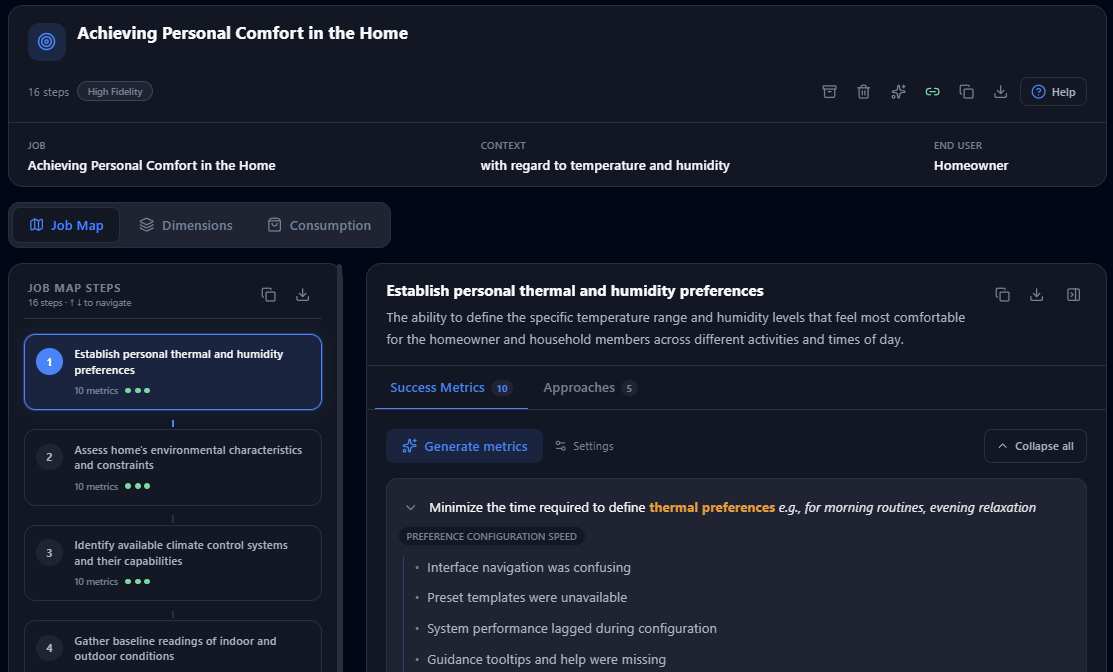
Three ways to use it: the SaaS app, an MCP server (coming soon) for your own AI workflows, and an API for each model element (coming soon). MCP and API usage is pay-per-use via x402 (USD denominated stablecoins, pennies per call).
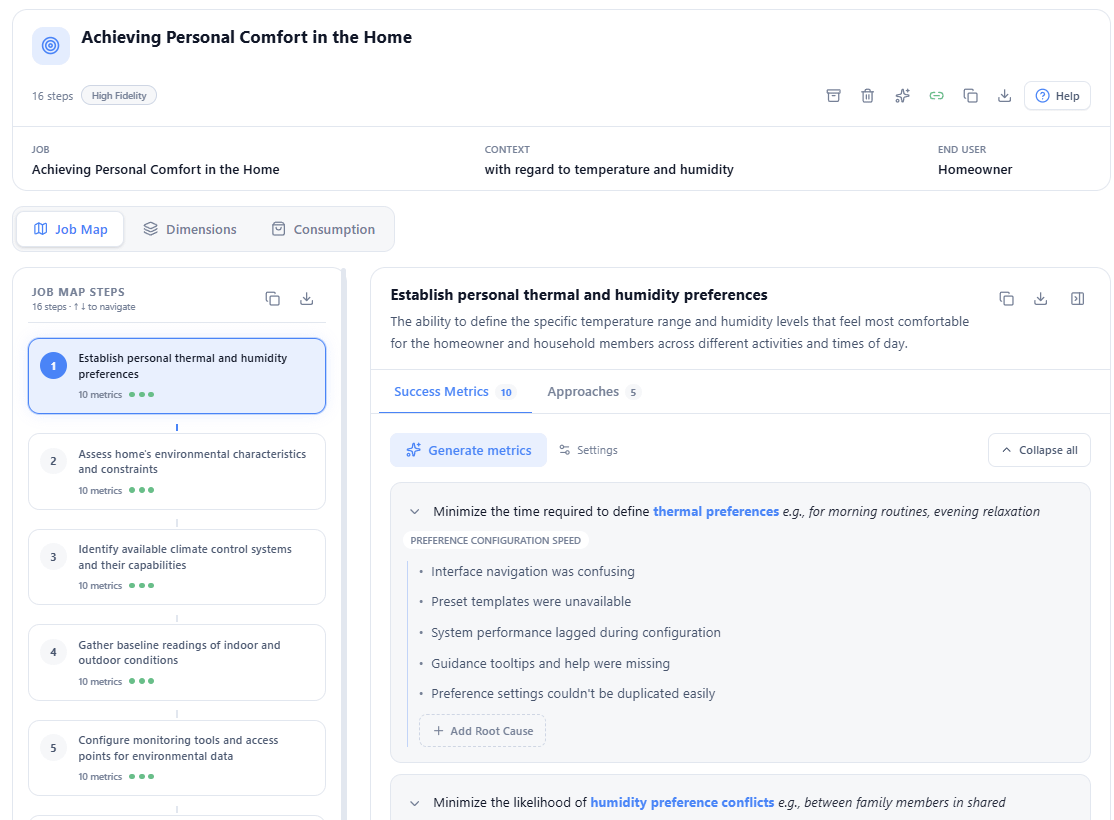
The beta is free, and Im looking for things that break — not UI opinions. Small group, real time commitment. If you actively build JTBD models and want in, reply with how you use JTBD, what you’d test first, and how much time you can commit.
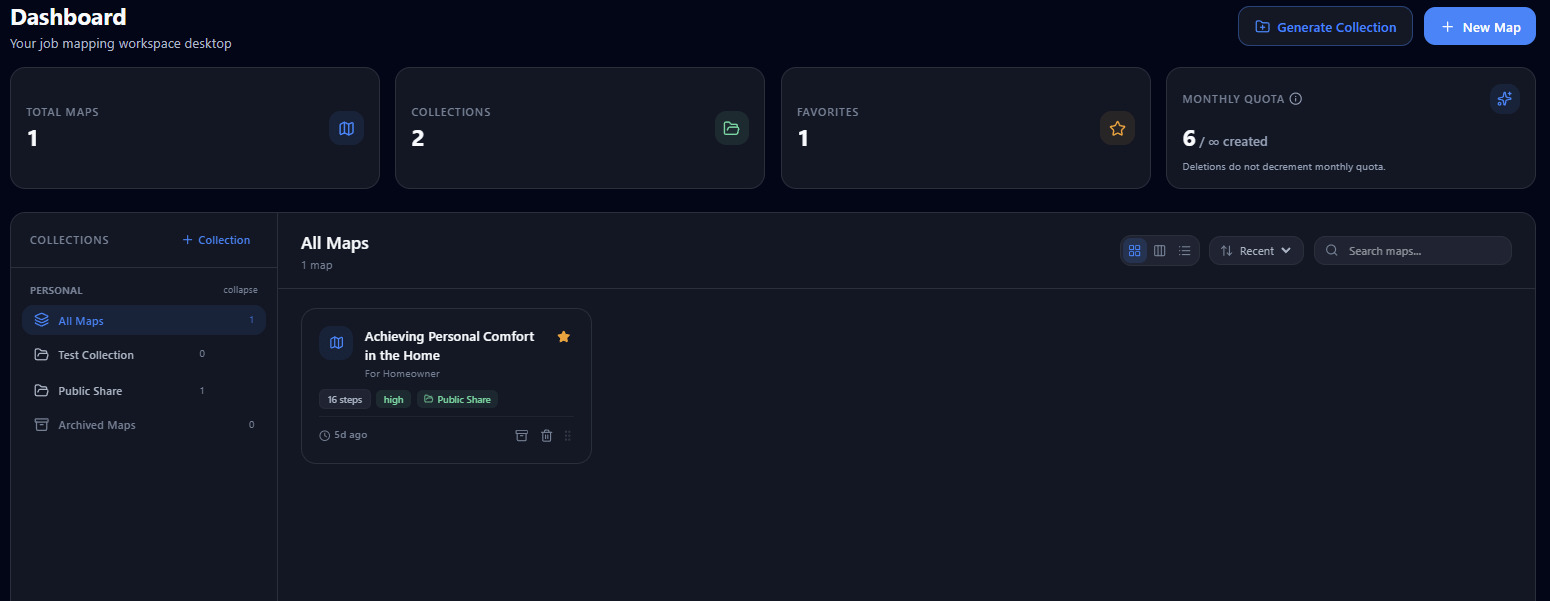
Subscription discount if you continue after the beta.
Here’s a link to a shared model (yea, that’s a feature): Click here
If reply is not working, send to mike@pjtbd.com