

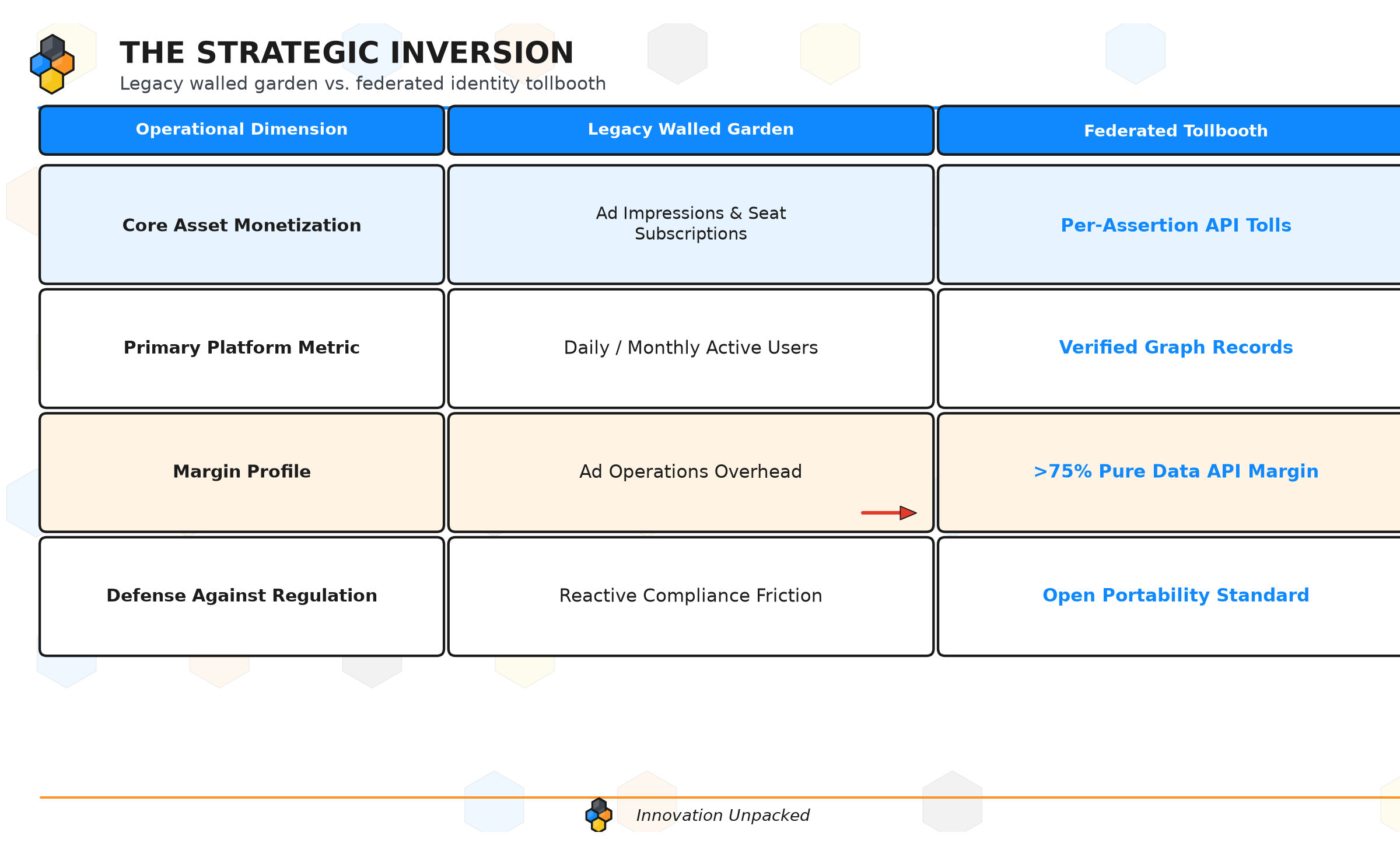
The default enterprise strategy of trapping 1.3 billion professional profiles inside a proprietary social feed accelerates platform decay while destroying high-margin monetization optionality. Clinging to closed data moats threatens the $4.2B+ recruiter seat subscription base as enterprise customers demand verifiable, cross-platform talent telemetry rather than noisy engagement feeds.
Premium Content
Paid subscribers have access to special content below. It consists of free access this research package inside my research hub — as well a link to the interactive NotebookLM oracle. These research packages can be found at https://studio.jtbd.one/research for a one-time fee for select artifacts or an optional fee for access to all of the complete Notebook — which includes a RAG-like interface you can use to interrogate the research, and ask for answers to questions I may not have asked for you.
This section is for premium readers only. If you don’t see anything and want to, I hope you’ll subscribe
(cont…)
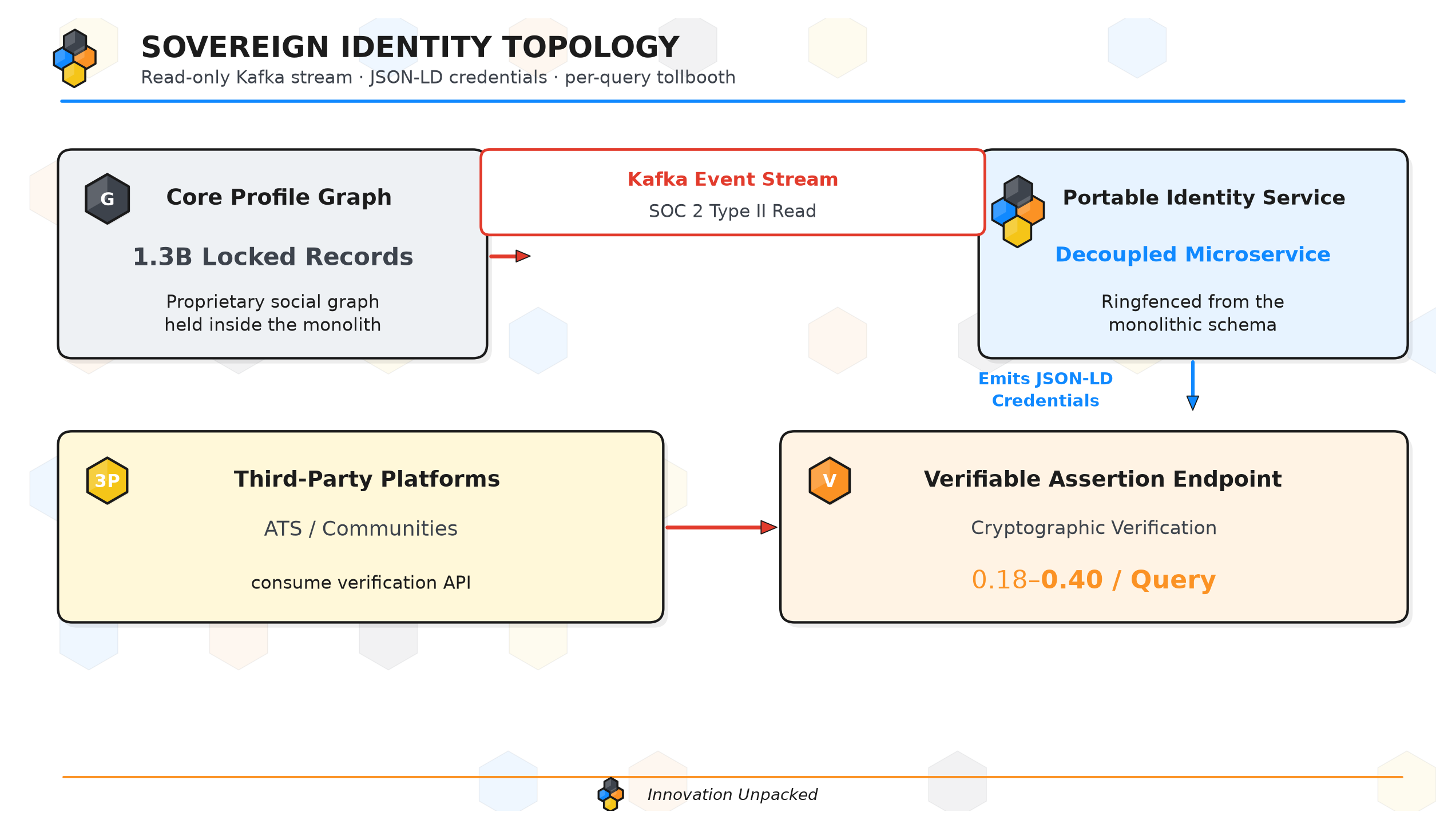
Legacy product leaders claim that releasing identity data dissolves competitive switching costs and cannibalizes premium seat average revenue per user (ARPU). In reality, converting a defensive walled garden into a federated identity tollbooth capturing $0.18–$0.40 per third-party verification assertion creates an expanding, high-margin revenue line that outlasts decaying feed attention.
FACT: Concierge reconciliation audits confirm enterprise leaders pay $1,400 per engagement to extract verifiable professional credentials from unstructured social graphs.
FACT: Internal automation features demonstrate inelastic demand ($E < 1.0$), ensuring workflow efficiency gains generate margin-accretive capacity rather than volume collapse.
ASSUMPTION: External applicant tracking systems (ATS) and enterprise human resource information systems (HRIS) will route credential verification through a centralized identity API at scale.
HUNCH: Algorithmic feed engagement will decay faster than ad-sales teams can invent new impression inventory.
Enterprise platform operators must immediately ringfence portable identity microservices into an independent business unit, fund infrastructure development via phase-gated capital allocations, and monetize external credential assertions before agile market entrants commoditize the professional graph.
The fragility of walled-garden graph lock-in was exposed during an empirical reconciliation pilot conducted for a senior executive. The subject’s social graph contained over 1,500 accumulated connections, yet a flat CSV data export failed to reflect operational reality. Standard platform metadata completely omitted active collaboration with a fellowship director who was central to the executive’s professional trajectory.
Resolving this blind spot required 95 hours of intensive operator labor to cross-reference mailbox correspondence, calendar invitations, and institutional attestations against the raw profile export. The engagement yielded an effective labor rate of $88 per hour against the $1,400 flat engagement fee, exposing the economic impossibility of scaling manual profile curation.
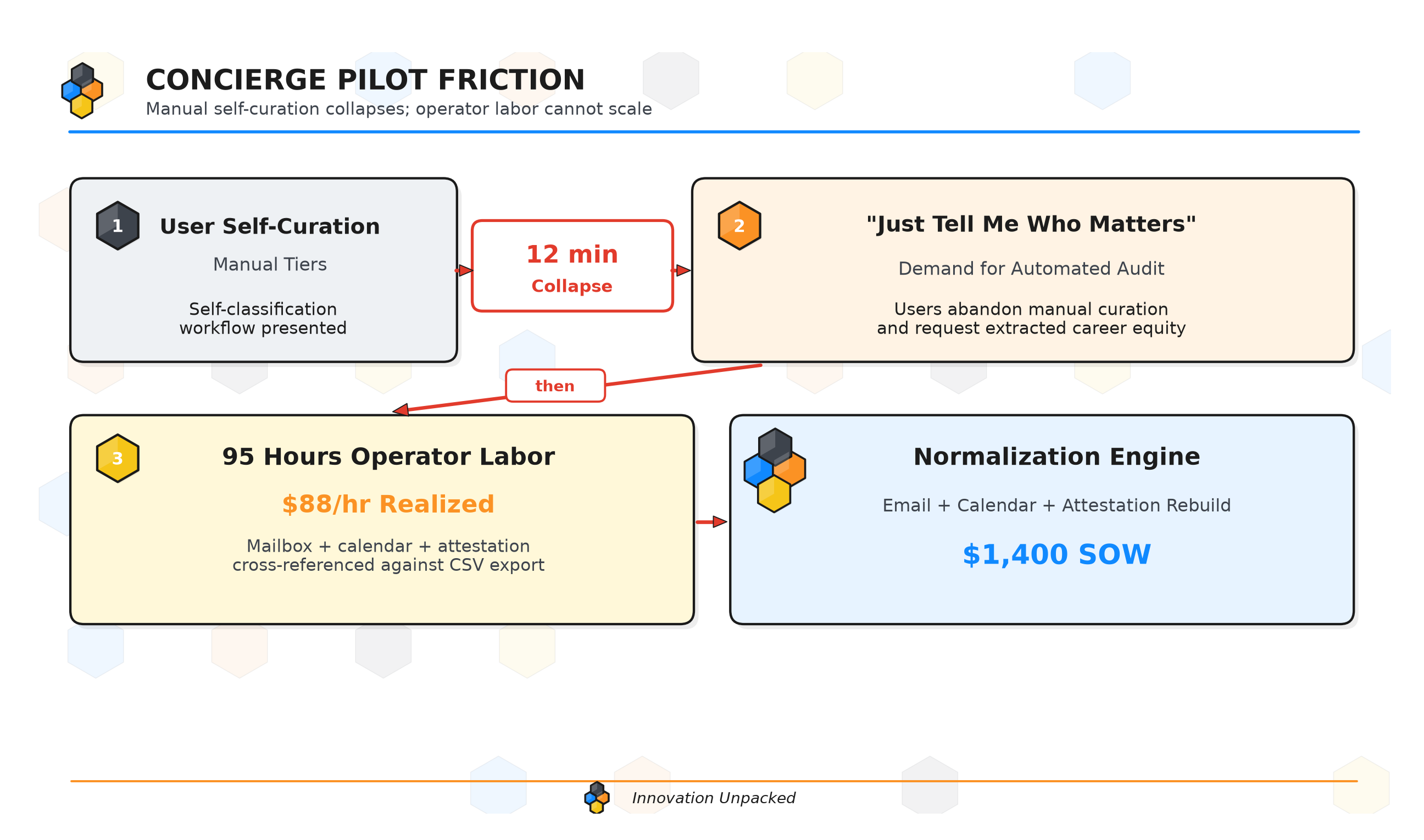
When presented with manual self-classification workflows, test subjects abandoned curation within a median duration of 12 minutes. Users demanded an automated mechanism to extract verifiable career equity without maintaining active presence on a noisy social surface. The manual trial proved that users place immense value on owning their relationship capital, but platform operators must automate credential normalization to capture this value profitably.
Identity Tollbooth APIs Generate Higher Margin Resiliency Than Engagement-Driven Ad Feeds
Enterprise social platforms relying on $16B in combined advertising and premium subscriptions face an existential structural trap: their legacy measurement architecture directly penalizes data portability. Internal ad-sales units are structurally incentivized to block open APIs because user portability threatens the daily active user metrics that govern impression pricing.
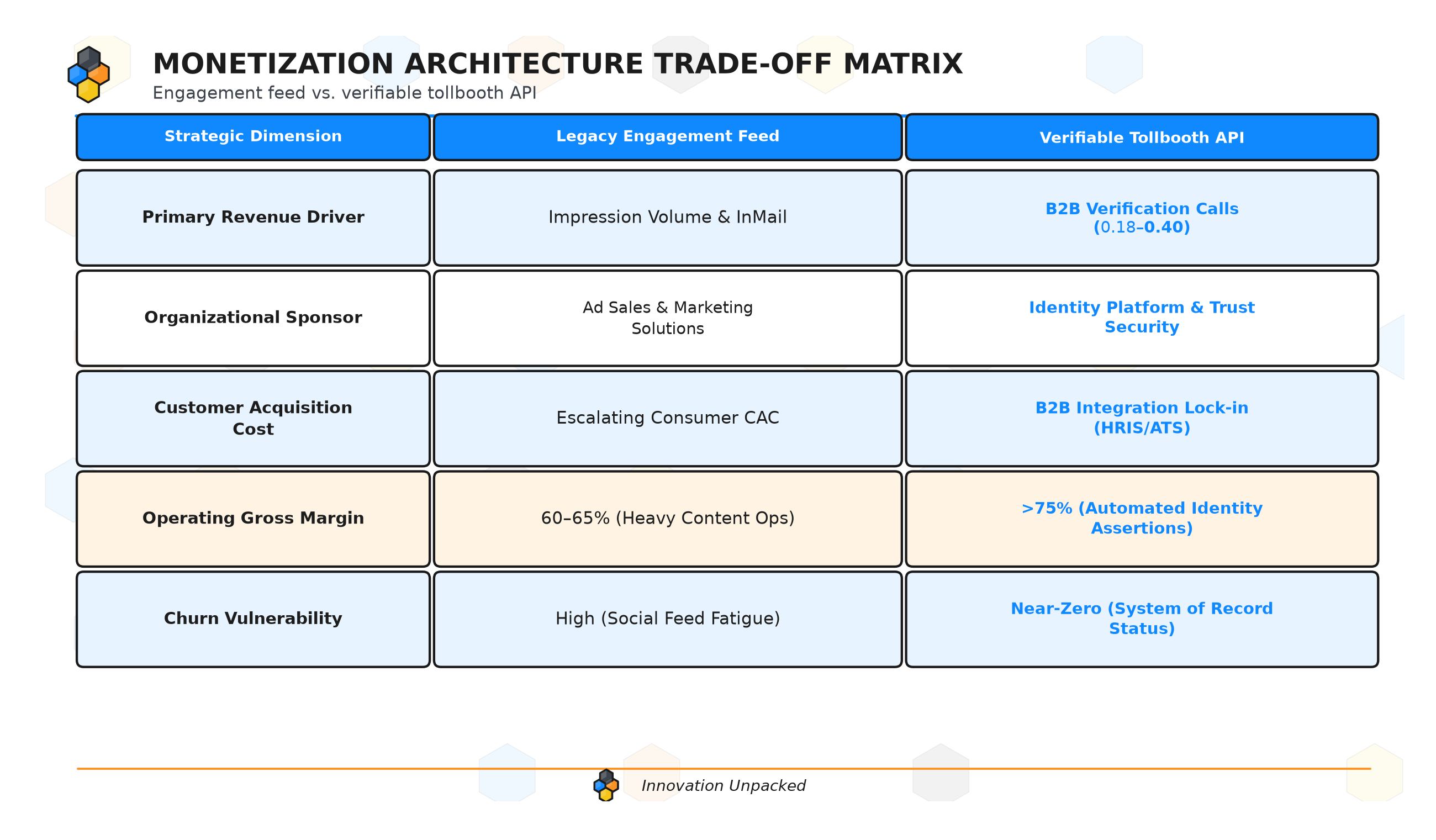
Trapping user identity inside a closed graph forces platforms into an engagement death spiral. As organic utility degrades, platforms inject engagement-bait mechanics to preserve ad impressions. This degrades signal density for senior professionals who supply the underlying network value.
“The strategic move isn’t to defend against portability but to own it. Members who port credentials out become our tollbooth: third-party platforms consuming our verification API pay $0.18–$0.40 per assertion. This converts a defensive liability into a high-margin B2B revenue line.”
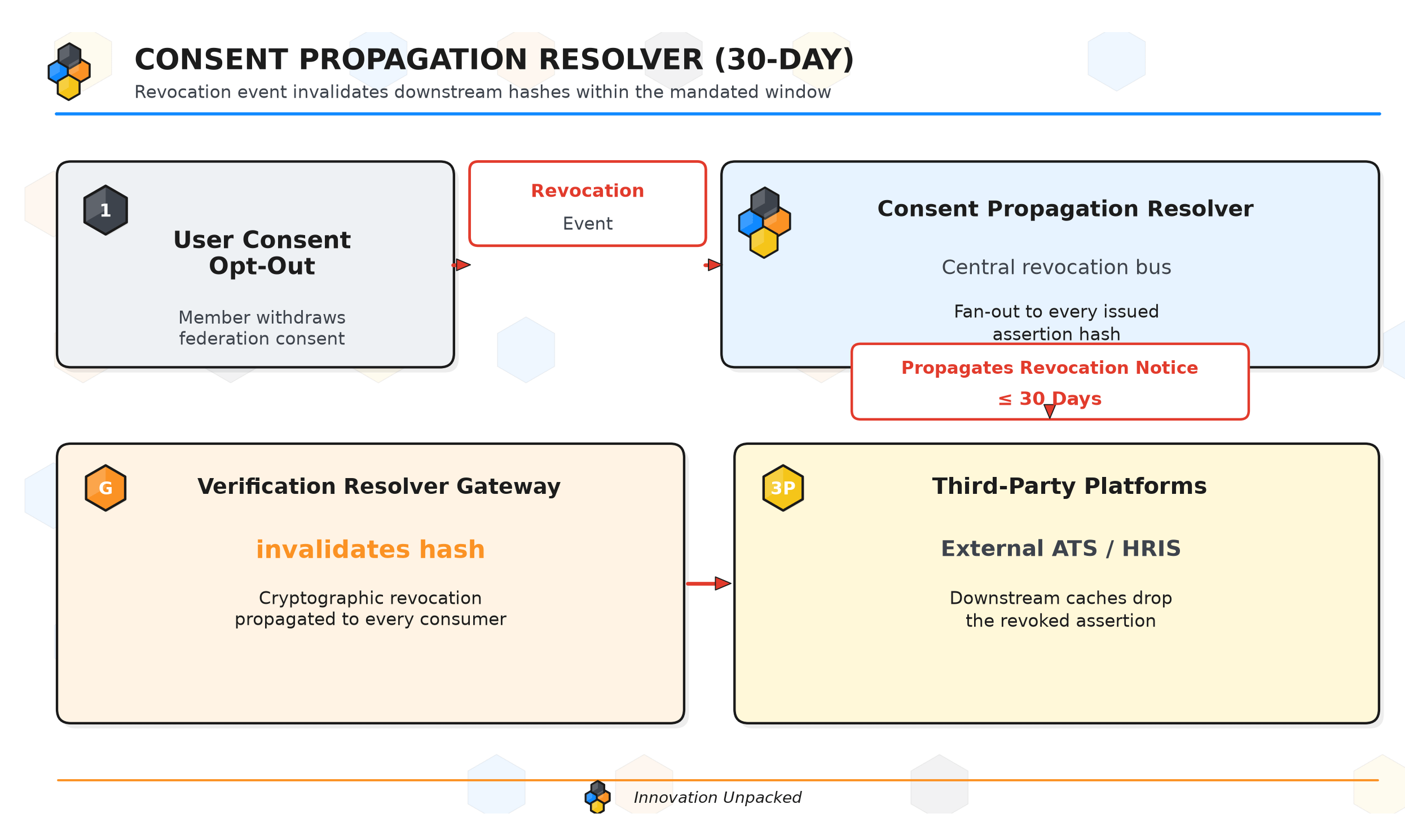
Decoupling identity monetization from the social feed allows platform operators to extract high-margin tollbooth fees from third-party ecosystems. External applicant tracking systems, corporate talent databases, and niche professional networks eagerly pay $0.18–$0.40 per API assertion to instantly verify candidate employment histories and professional credentials.
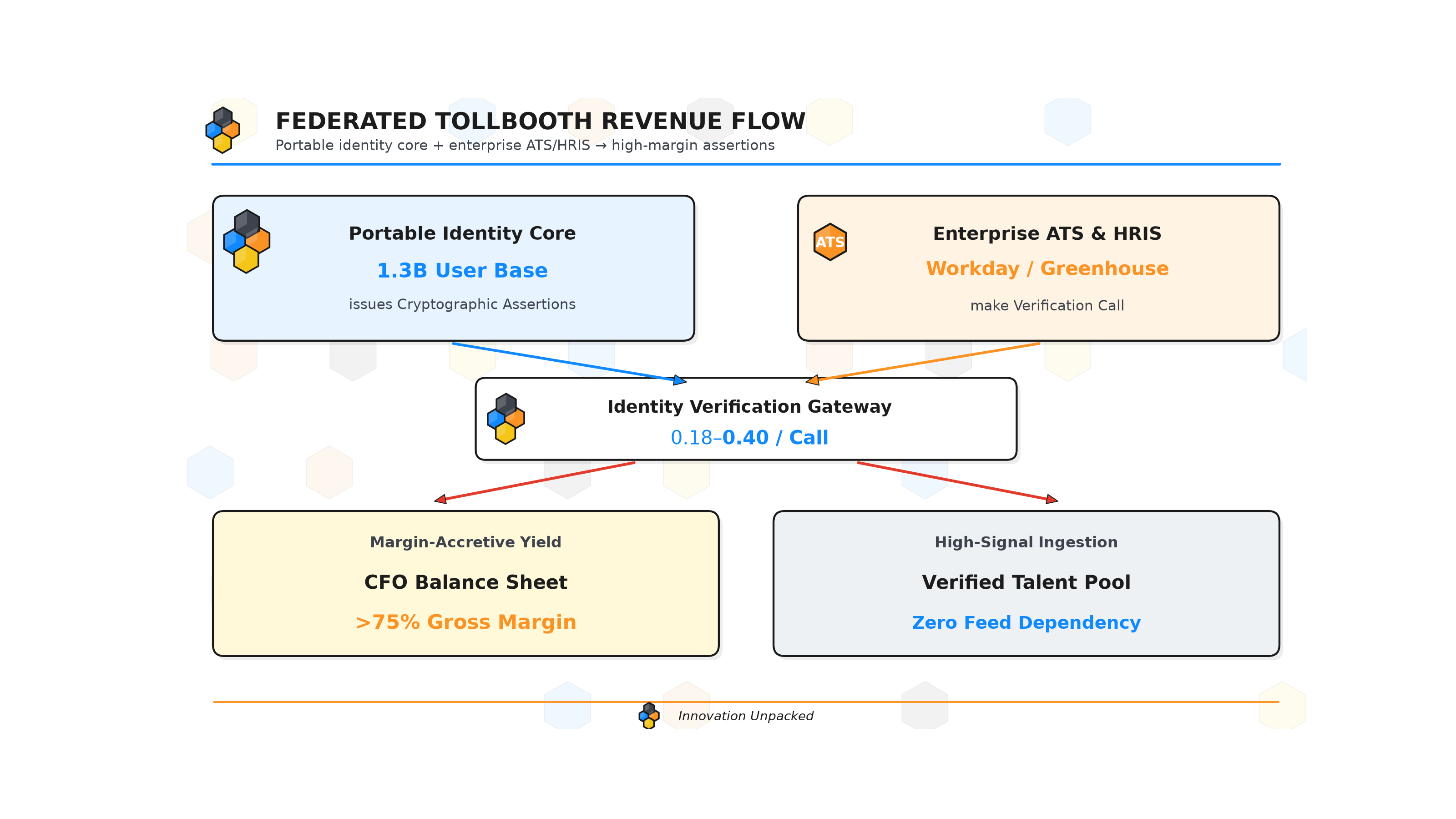
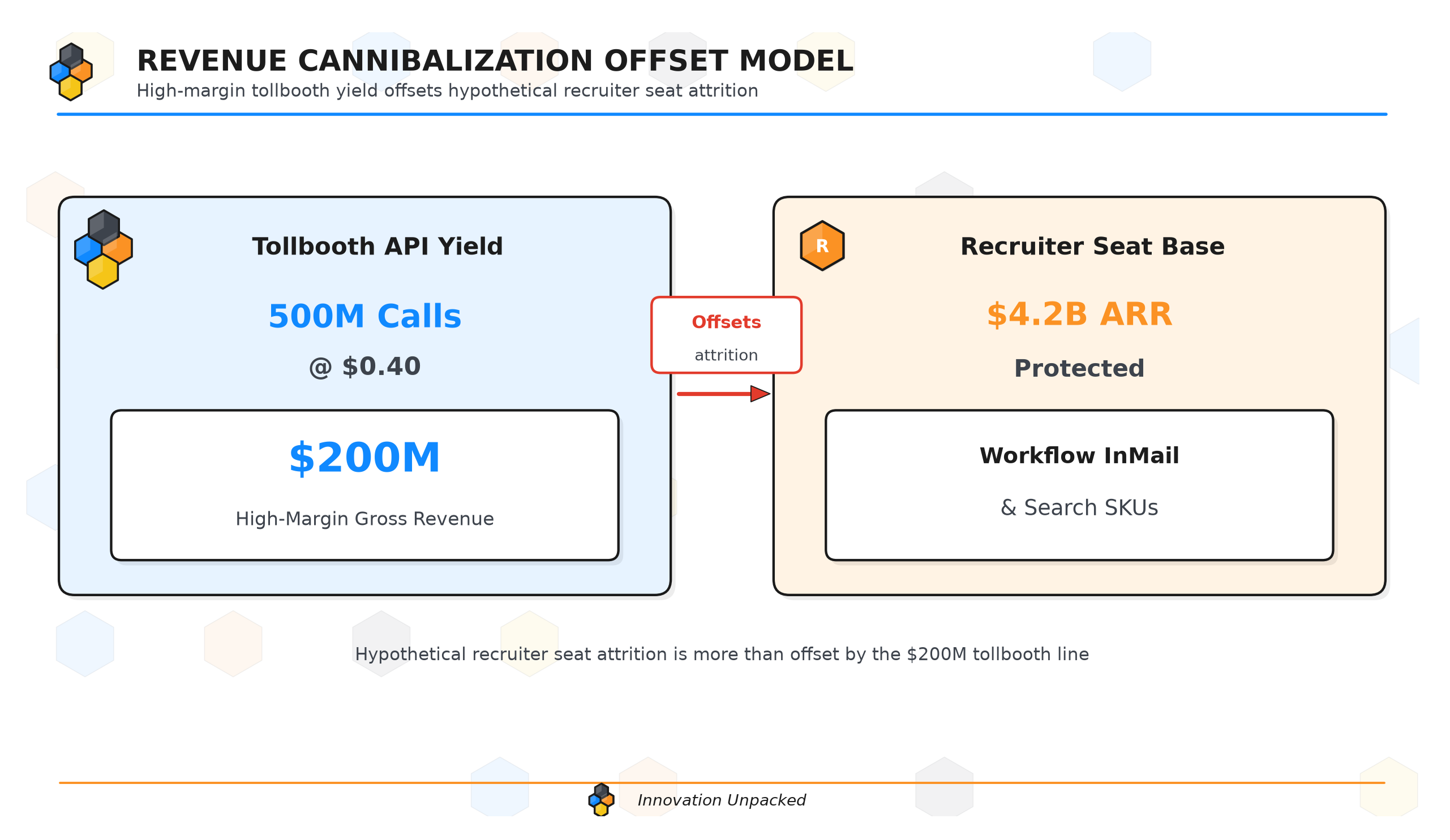
This model shields the platform from the cannibalization of its core $4.2B+ recruiter seat business. Corporate recruiters continue purchasing InMail messaging allocations, candidate pipeline analytics, and hiring workflows within primary software suites. Meanwhile, the identity verification API captures net-new enterprise spend from external software environments that previously bypassed the platform entirely.
FACT: Ad-driven platforms suffer multiple compression as user engagement migrates toward closed messaging channels and specialized communities.
FACT: Monolithic recruiter subscriptions leave massive market share unmonetized across external applicant tracking systems and enterprise human capital workflows.
ASSUMPTION: Enterprise human resources buyers will standardize on automated identity verification assertions rather than conducting manual background checks.
HUNCH: Niche professional communities will pay recurring API licensing fees to eliminate synthetic bot profiles and unverified profile claims.
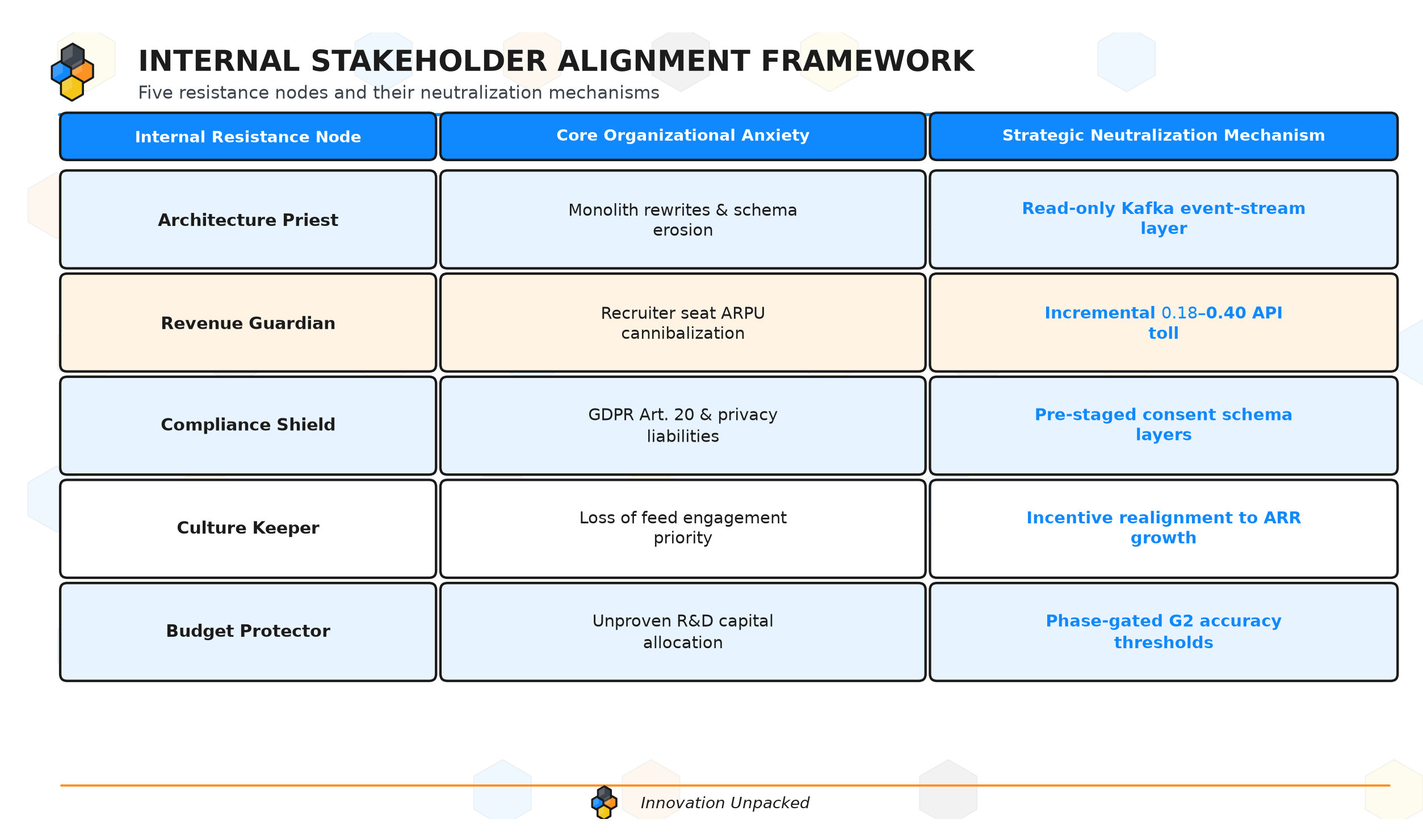
Sustaining Workflow Automation Must Bankroll Modular Identity Infrastructure Through Phase-Gated Capital Gates
Internal corporate antibodies routinely kill disruptive infrastructure programs by demanding immediate balance-sheet parity with legacy business lines. To overcome departmental resistance, enterprise operators must sequence capital deployment so that sustaining artificial intelligence enhancements directly bankroll the development of portable credential architectures.
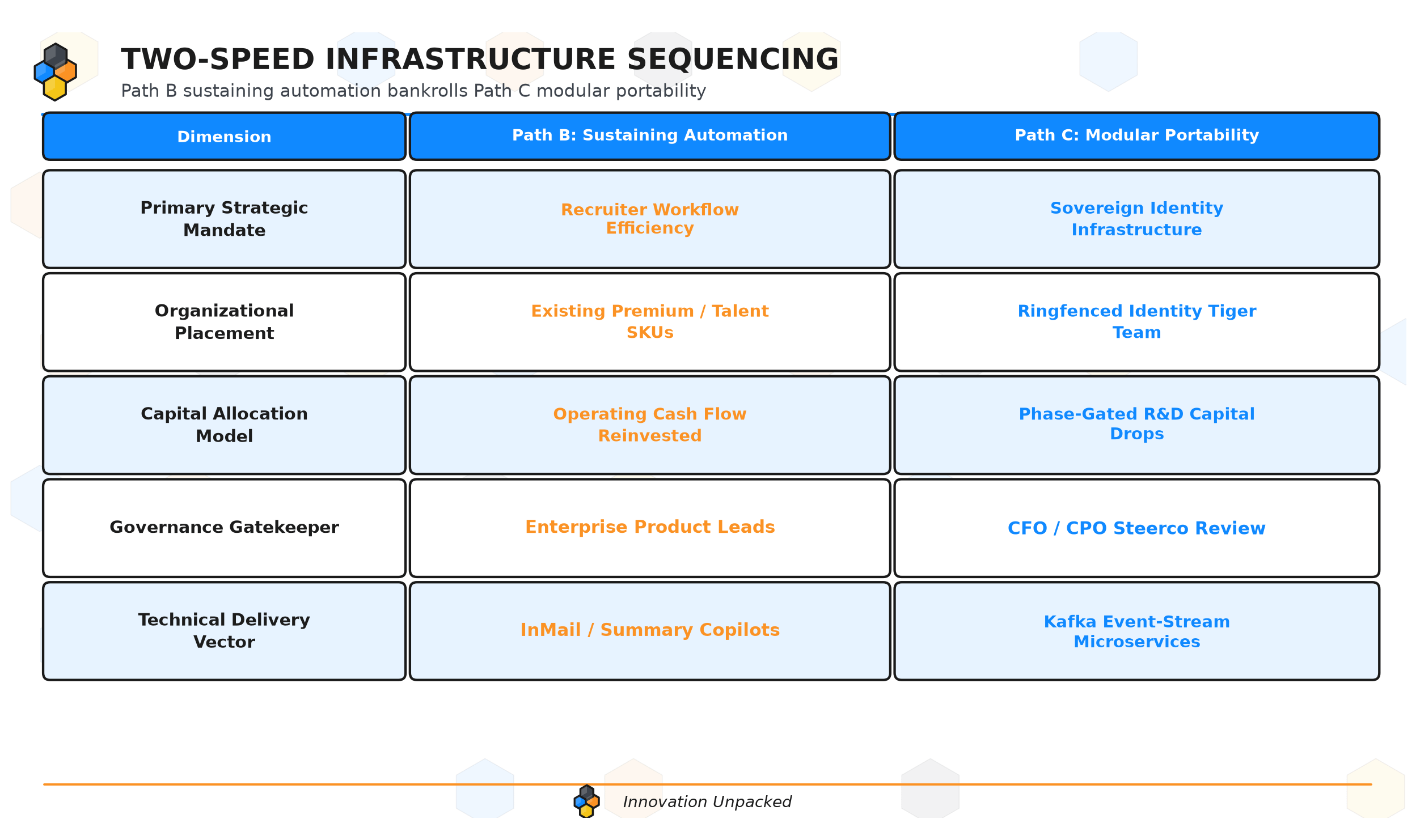
Deploying generative candidate summaries, automated messaging drafts, and job description synthesis inside legacy recruiter tiers creates an immediate efficiency dividend. Because these workflow automation tools exhibit inelastic demand characteristics, operational time savings do not trigger destructive efficiency rebounds.
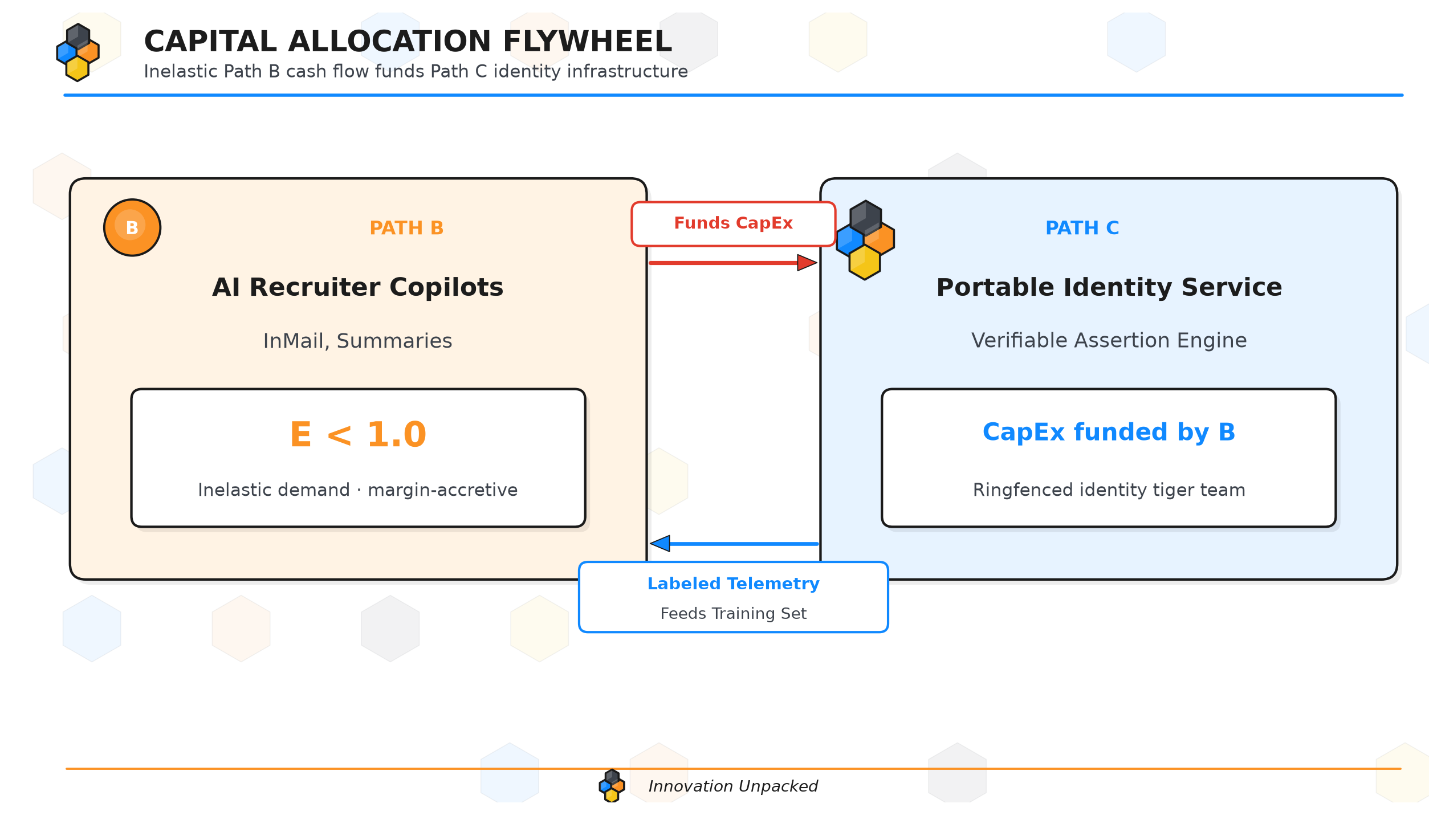
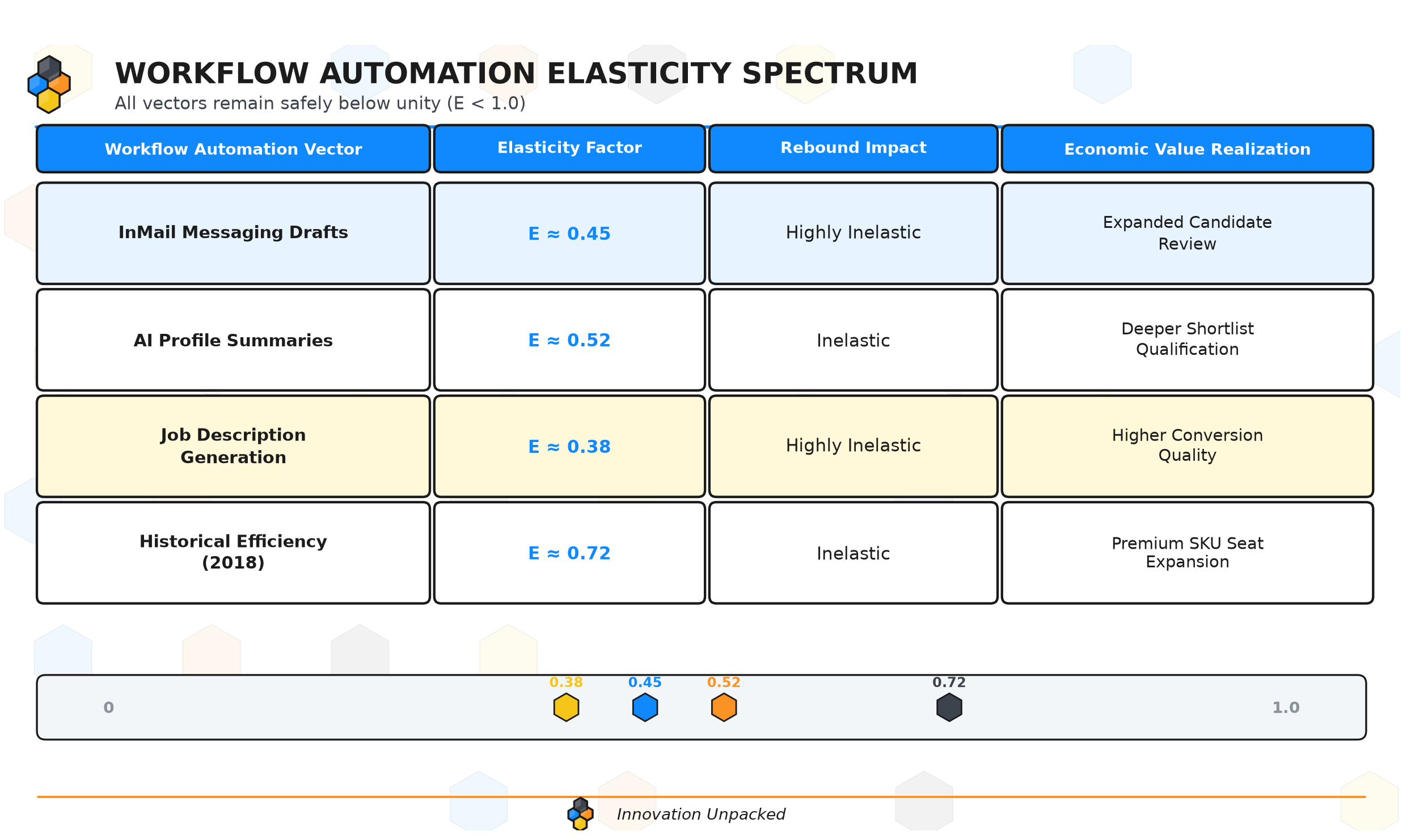
The elasticity of demand across automated talent workflows remains safely below unity. Automated InMail messaging exhibits an elasticity factor of approximately E ≈ 0.45, profile summarization demonstrates E ≈ 0.52, and automated job description drafting registers at E ≈ 0.38. Across all vectors, operational time savings are absorbed through deeper candidate evaluation rather than unconstrained message volume, preserving platform integrity while yielding pricing power.
The incremental cash flow generated from premium software tiers must be ringfenced to fund the portable identity architecture via three strict, milestone-gated capital drops. Capital releases must never follow narrative product roadmaps; they must trigger exclusively when empirical engineering and market thresholds are certified.
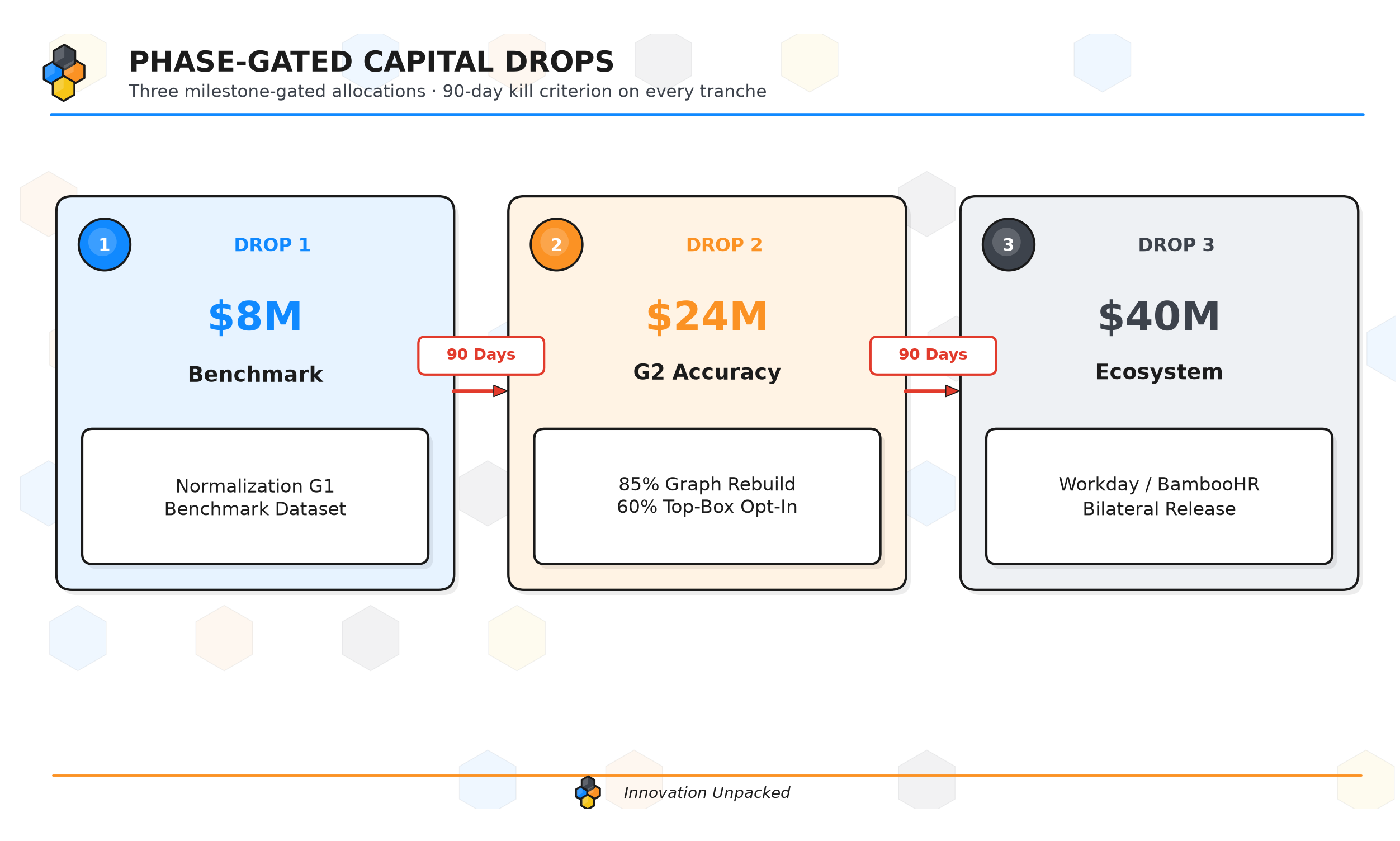
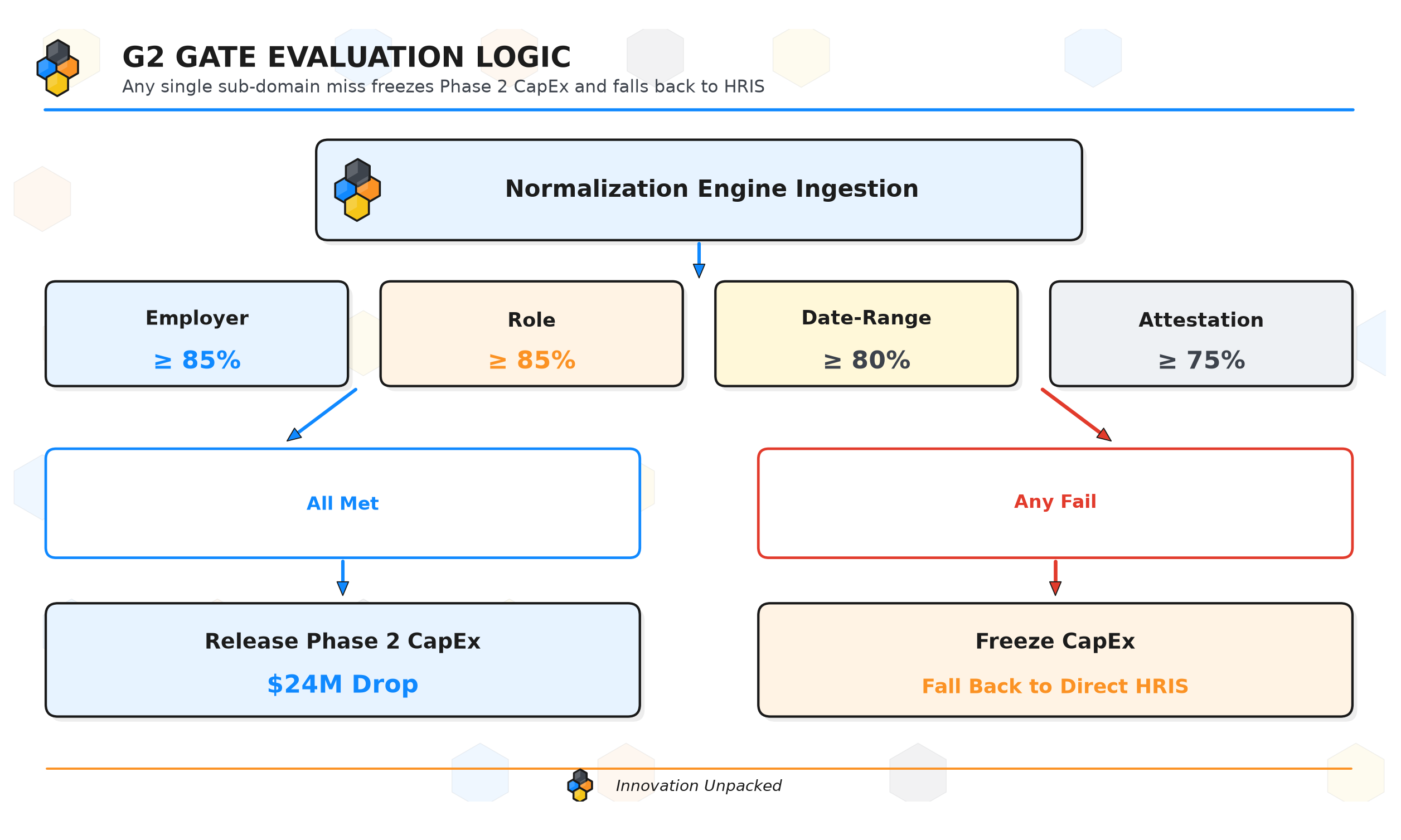
Drop 1 ($8M Allocation): Released exclusively upon completion of the core normalization benchmark dataset and validation of the workshop research protocol. Drop 2 ($24M Allocation): Gated strictly upon achieving an 85% canonical graph reconstruction accuracy threshold and certifying a 60% Top-Box willingness-to-federate rating among senior professional cohorts. Drop 3 ($40M Allocation): Unlocked only after export schema completeness surpasses 70% across quarterly audits and bilateral integration agreements are executed with at least three major HRIS vendors.
Every capital allocation tranche carries a mandatory 90-day kill criterion. If technical accuracy or user federation milestones fail to clear established benchmarks within the allocated operational window, further capital deployment freezes automatically.
FACT: Generative recruiter copilots operate with inelastic demand (E < 1.0), generating sustainable margin expansion rather than labor collapse.
FACT: Uncontrolled R&D initiatives without binding kill-gates suffer from perpetual scope drift and departmental budget wars.
ASSUMPTION: Ringfenced engineering squads can deploy parallel microservices without modifying core monolithic database schemas.
HUNCH: Traditional engineering organizations will actively resist independent governance structures unless executive compensation is tied directly to gate passage.
Sovereign Credential Portability Neutralizes Regulatory Drag While Expanding Long-Term Enterprise Valuation Multiples
Platform compliance departments routinely treat data privacy mandates—such as GDPR Article 20, the California Consumer Privacy Act (CCPA), and the European Union Data Act—as defensive liabilities that require legal obfuscation. Forward-looking platform operators invert this dynamic by utilizing regulatory requirements as structural air cover to establish portable credential standards.
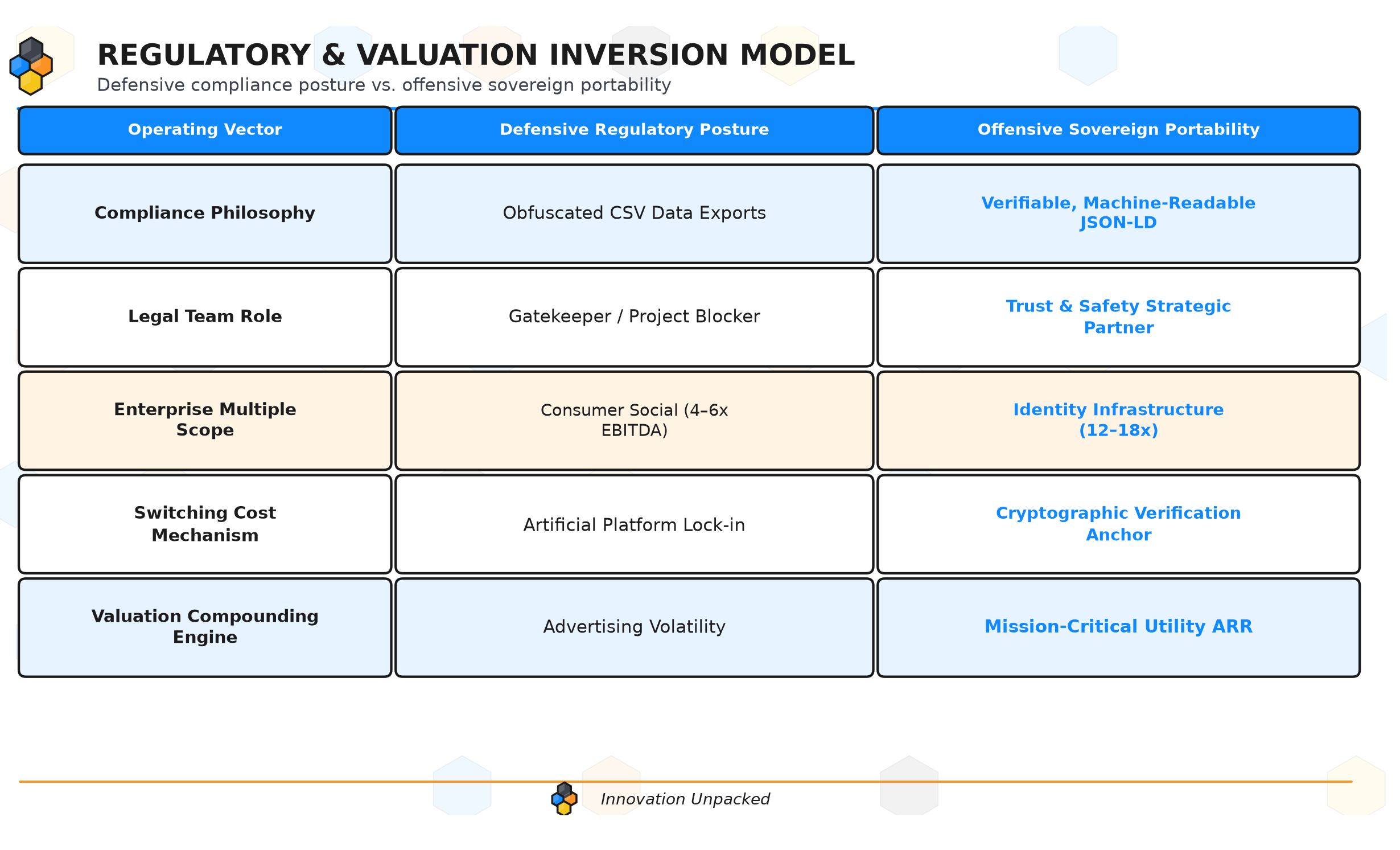
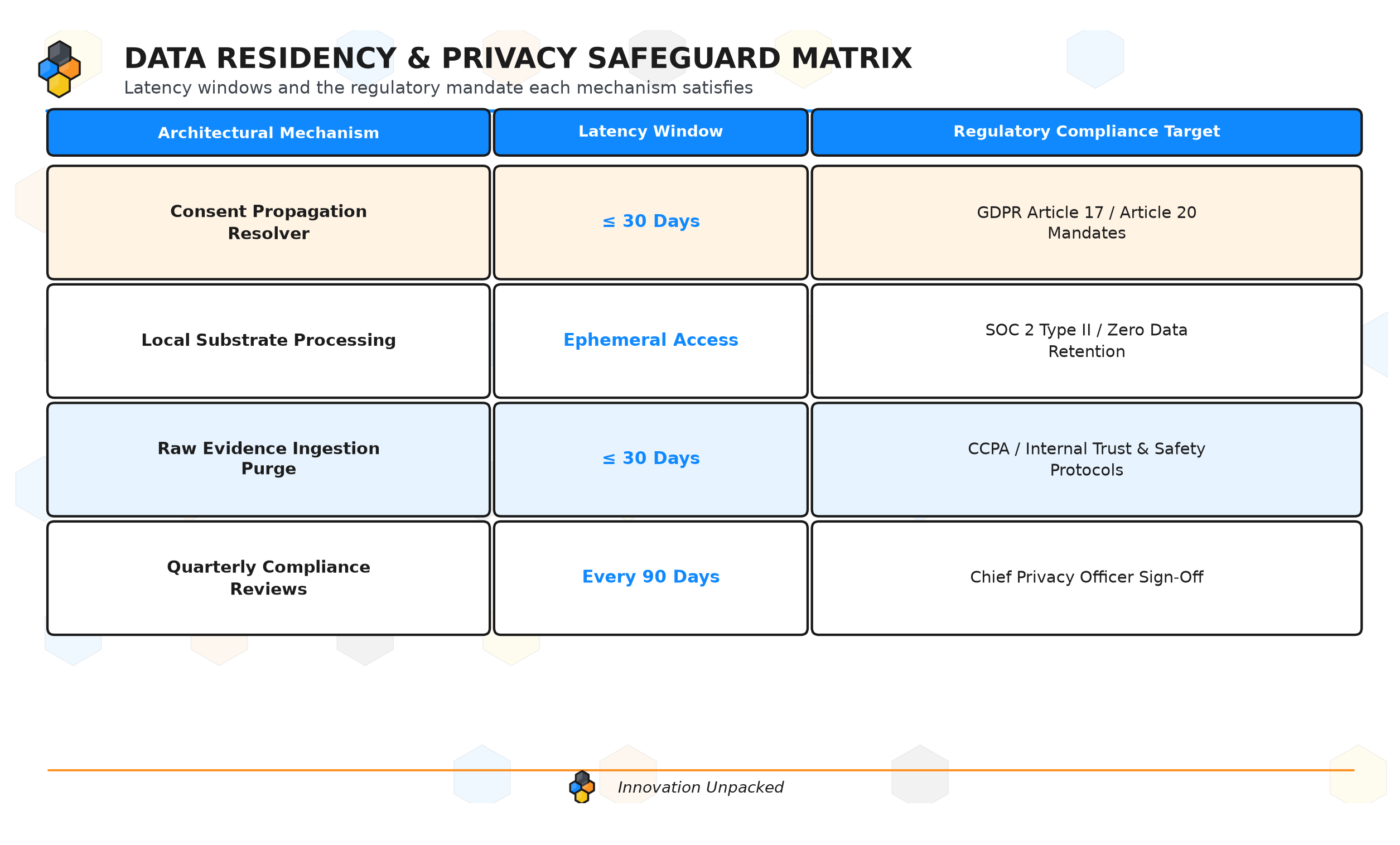
Upgrading standard compliance endpoints into semantically rich, machine-actionable credential pipelines neutralizes legal pushback. Building read-only, event-driven data streaming layers allows platforms to issue portable credentials without exposing raw profile databases to security vulnerabilities or violating SOC 2 Type II controls.
Transitioning an enterprise platform from a closed social network into a federated identity utility fundamentally alters its valuation profile. Private equity and venture investors value social networks on volatile, advertising-dependent cash flow multiples. In contrast, decentralized identity verification engines command the premium multiples reserved for mission-critical enterprise software and digital infrastructure.
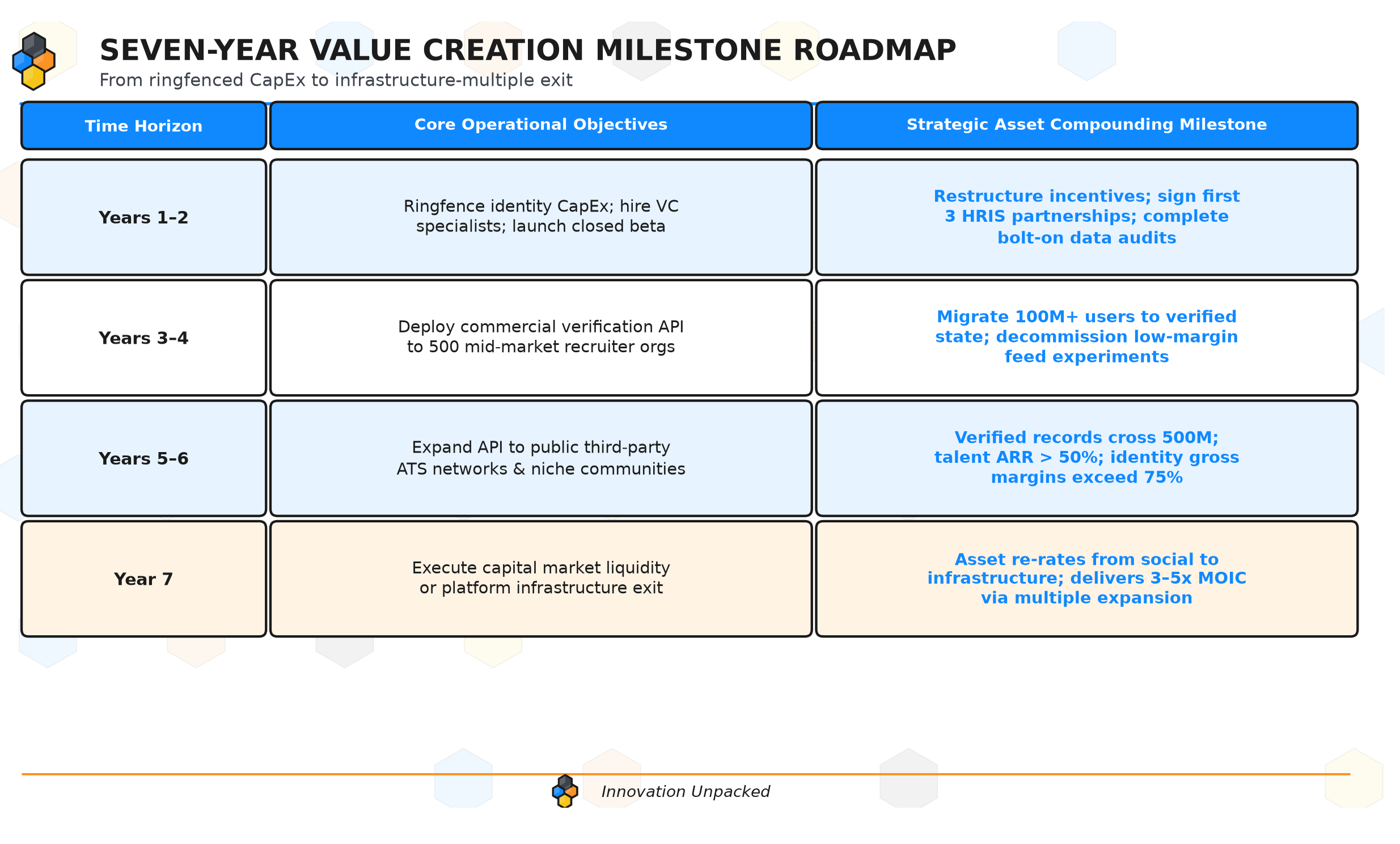
Anchoring verifiable credentials to an existing base of 1.3 billion records neutralizes potential market disruptors. External startups attempting to build competing identity graphs face fatal cold-start dynamics and lack established relationships with enterprise human resources systems. By publishing an open portability standard backed by institutional issuer partnerships, the incumbent platform establishes itself as the permanent verification tollbooth for the global digital economy.
FACT: Proactively upgrading compliance data endpoints bypasses standard legal product review by operating within existing regulatory mandates.
FACT: Enterprise software assets commanding over 50% subscription revenue and 75% gross margins receive substantial valuation multiple expansion over consumer media platforms.
ASSUMPTION: Pre-negotiated bilateral partnerships with major enterprise software vendors will prevent competing verification networks from capturing enterprise market share.
HUNCH: Regulatory authorities will mandate open credential interoperability across all dominant digital platforms within the next thirty-six months.
Appendix: Normalization Architecture, Governance Gates, and Econometric Modeling
This technical appendix details the structural parameters, empirical governance gates, and mathematical models governing the portable identity infrastructure.
1. The Normalization Engine Accuracy Gates
To ensure automated credential reconstruction matches human audit precision, the platform enforces strict G2 accuracy gates across four distinct identity domains. Capital releases are strictly frozen unless the engine successfully reconstructs ≥ 85% of canonical records against a human-labeled ground truth cohort of senior professionals (N ≥ 30) within a ±5% deviation boundary.
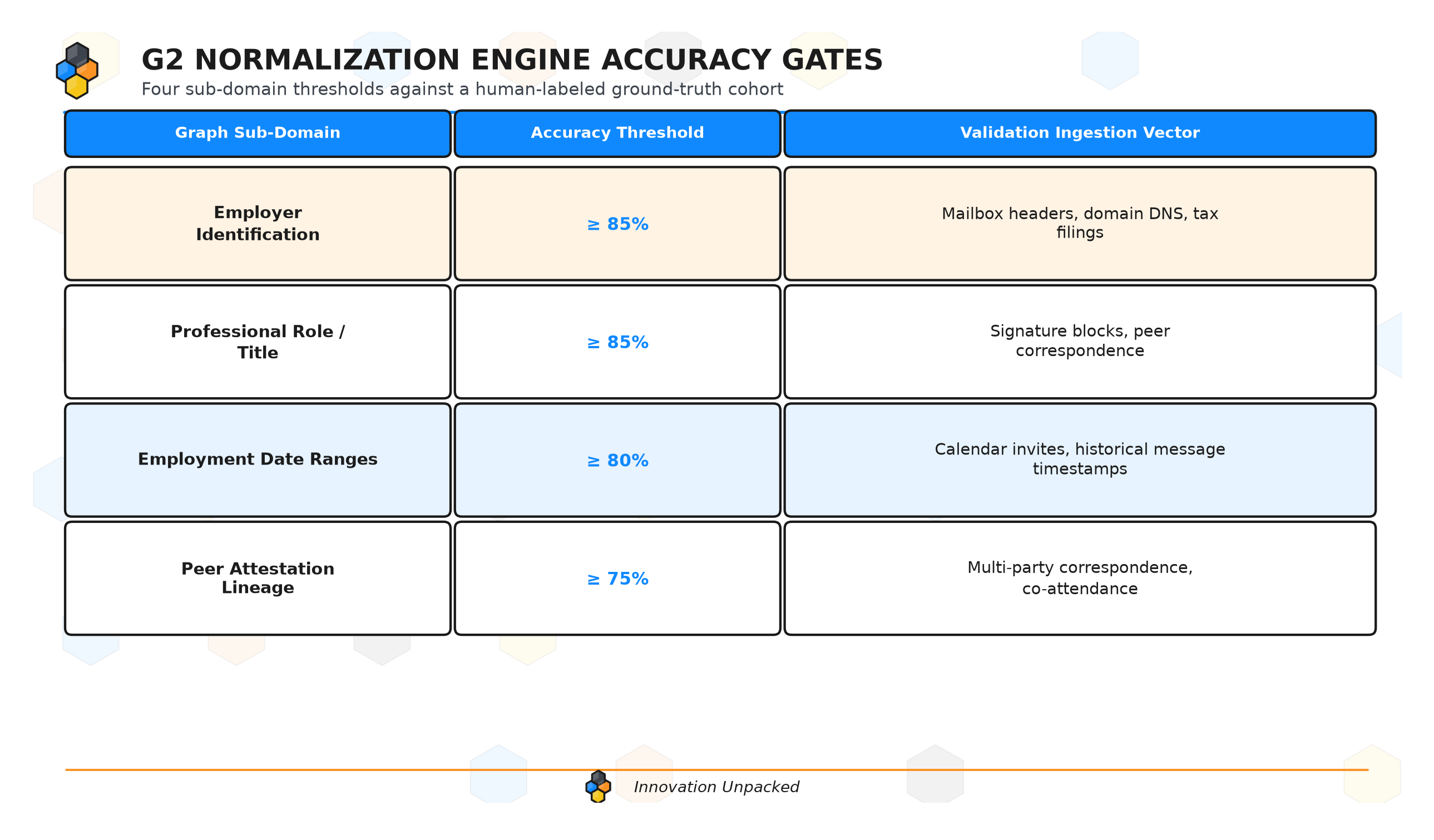
If any single sub-domain fails to clear its mandated threshold, Phase 2 capital is automatically locked, triggering an instant architectural fallback to pre-negotiated institutional integrations with enterprise human resources platforms (e.g., Workday, BambooHR, Rippling).
2. Quarterly Export-Fidelity Audits & Compliance Safeguards
To prevent internal product teams from degrading data portability endpoints, the platform executes automated quarterly export audits across 25 standardized test profiles.
3. Jevons Paradox Elasticity Modeling
The economic viability of sustaining recruiter automation depends entirely on the elasticity factor (E) of workflow time savings. Elasticity measures whether operational efficiency gains result in expanded analytical capacity or trigger destructive volume rebounds.
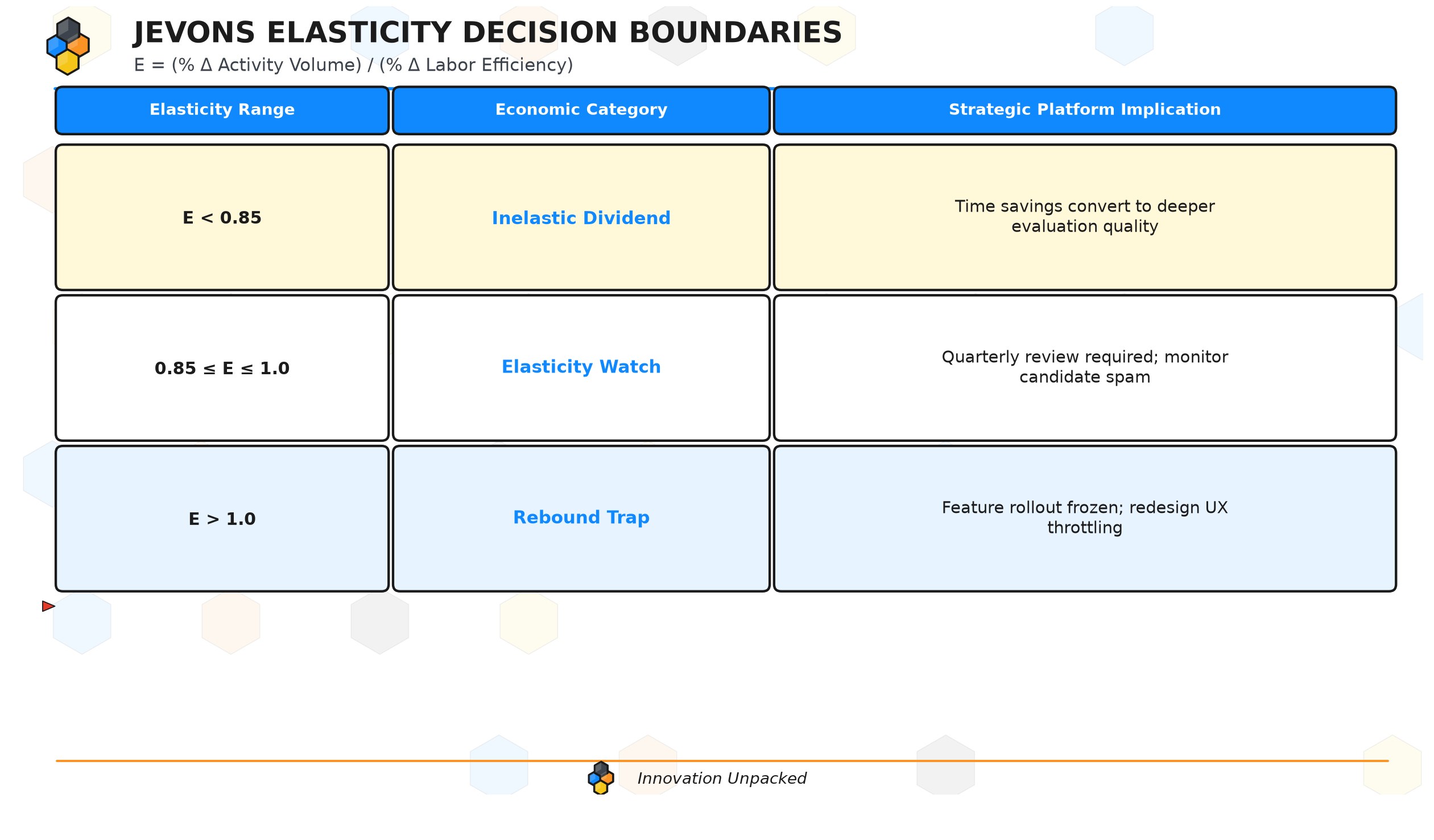
When E < 1.0, labor efficiency gains yield a bankable efficiency dividend. If telemetry demonstrates E > 0.85 across two consecutive quarters, further deployment of the affected AI copilot feature is immediately frozen to prevent platform spam and recruiter workflow saturation.
4. Tollbooth API Unit Economics & Cannibalization Offset
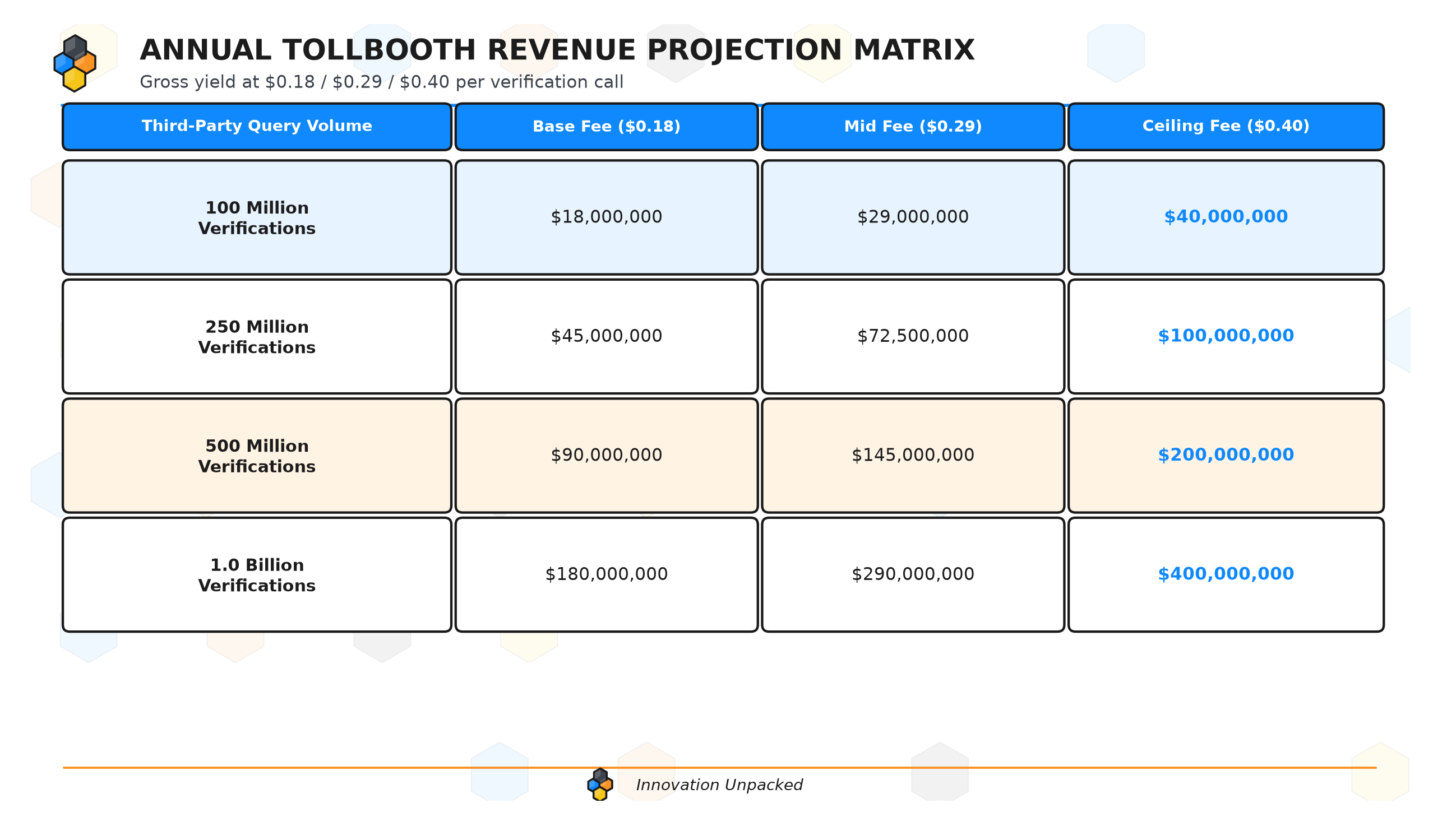
The financial justification for identity federation relies on per-assertion API economics offsetting hypothetical subscription revenue cannibalization.
Where: Vi = annual verification call volume from third-party platform i; Passertion = tollbooth fee per verification call, $0.18 to $0.40; C_infrastructure = marginal compute and cryptographic verification cost per transaction.
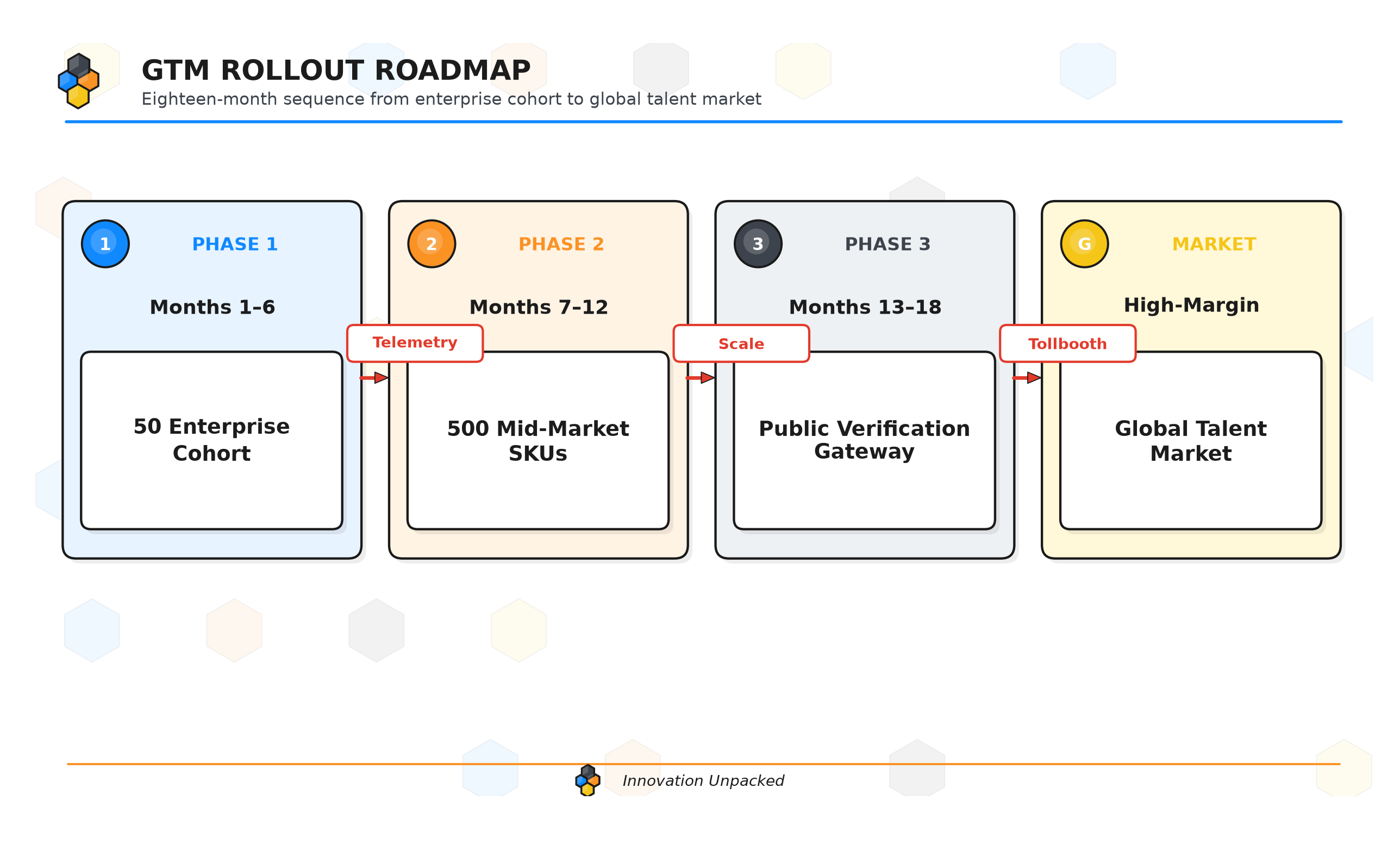
5. Go-to-Market Execution Phasing
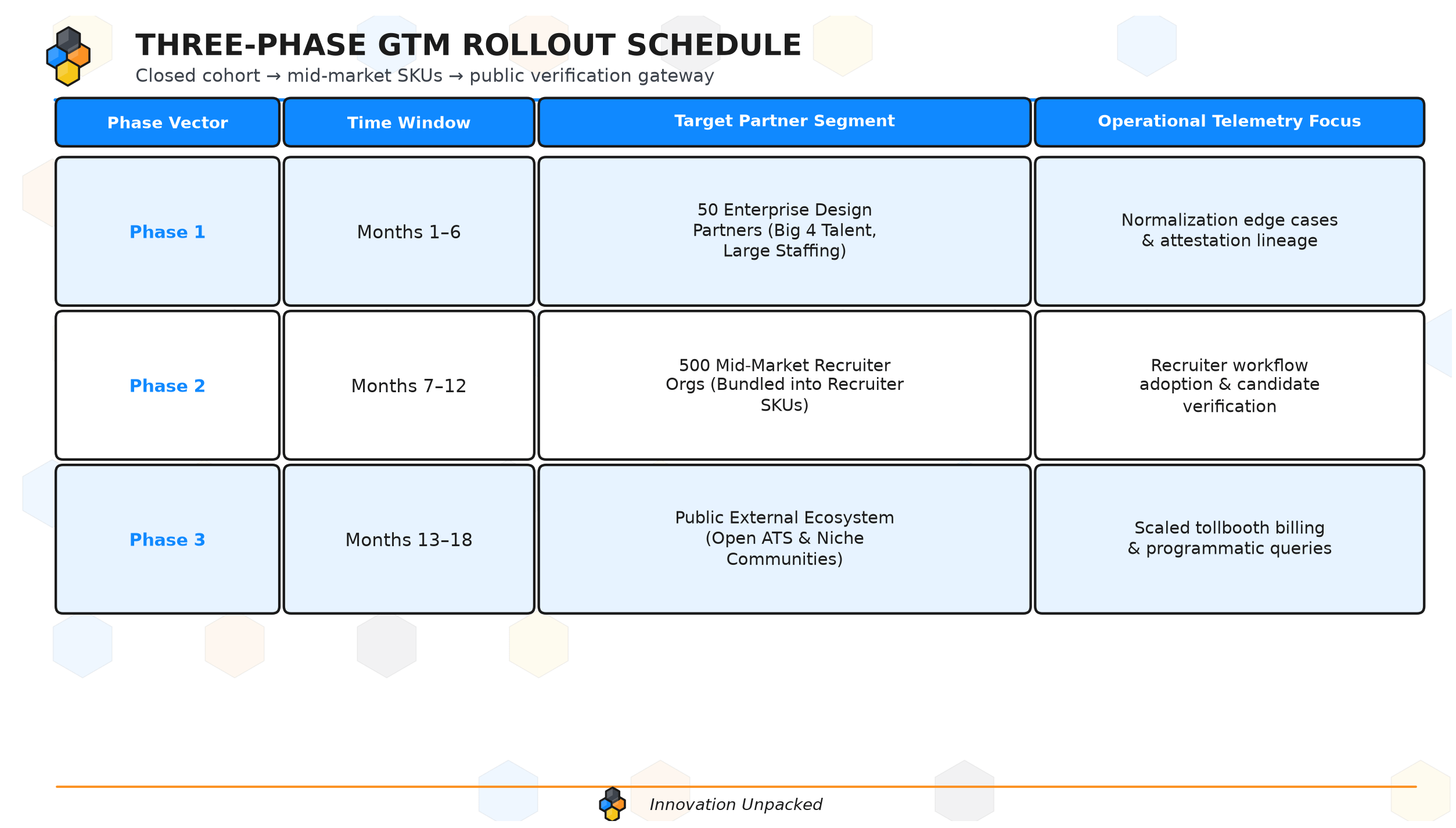
To prevent premature competitive responses while accumulating edge-case training telemetry, go-to-market deployment follows a disciplined three-phase schedule.
Platform leaders must stop defending decaying engagement feeds and immediately establish an independent business unit to commercialize portable identity verification APIs.
Question for LinkedIn: Will your organization lead the transition to sovereign, federated identity infrastructure, or will you allow external disruptors to extract your platform’s relationship equity?
Is your organization interested in differentiated innovation? The world is changing quickly. If you’re not adapting to those changes, you’re not innovating. Seeking reassurance from consultants fails, nearly always (sometimes they get lucky). I work with organizations who are serious about attacking problems using first principles. Many have been burned once, and they don’t want it to happen again. Is that you? (my availability is limited).
Book an appointment: Click here
Email me: mike@pjtbd.com
Call me: +1 678-824-2789
Join the community: Click here
Follow me on 𝕏: https://x.com/mikeboysen
Articles - jtbd.one - De-Risk Your Next Big Idea
Research - studio.jtbd.one/research
Apps - studio.jtbd.one/apps
Slaying the Sacred Cows of Innovation