

Premium Content inside. Scroll down for more information.
Mid-market field service enterprises lose between 5% and 15% of their top-line billable revenue to structural handoff latency between completed field operations and back-office invoice dispatch. Traditional Business Process Outsourcing (BPO) promises an immediate 76% labor cost reduction by transferring administrative tasks to offshore seats, yet empirical data reveals that net realized operational savings routinely compress to between 45% and 55%. This margin collapse occurs because human-centric labor arbitrage fails to resolve undocumented tribal knowledge, multi-system integration seams, and asynchronous exception handling.
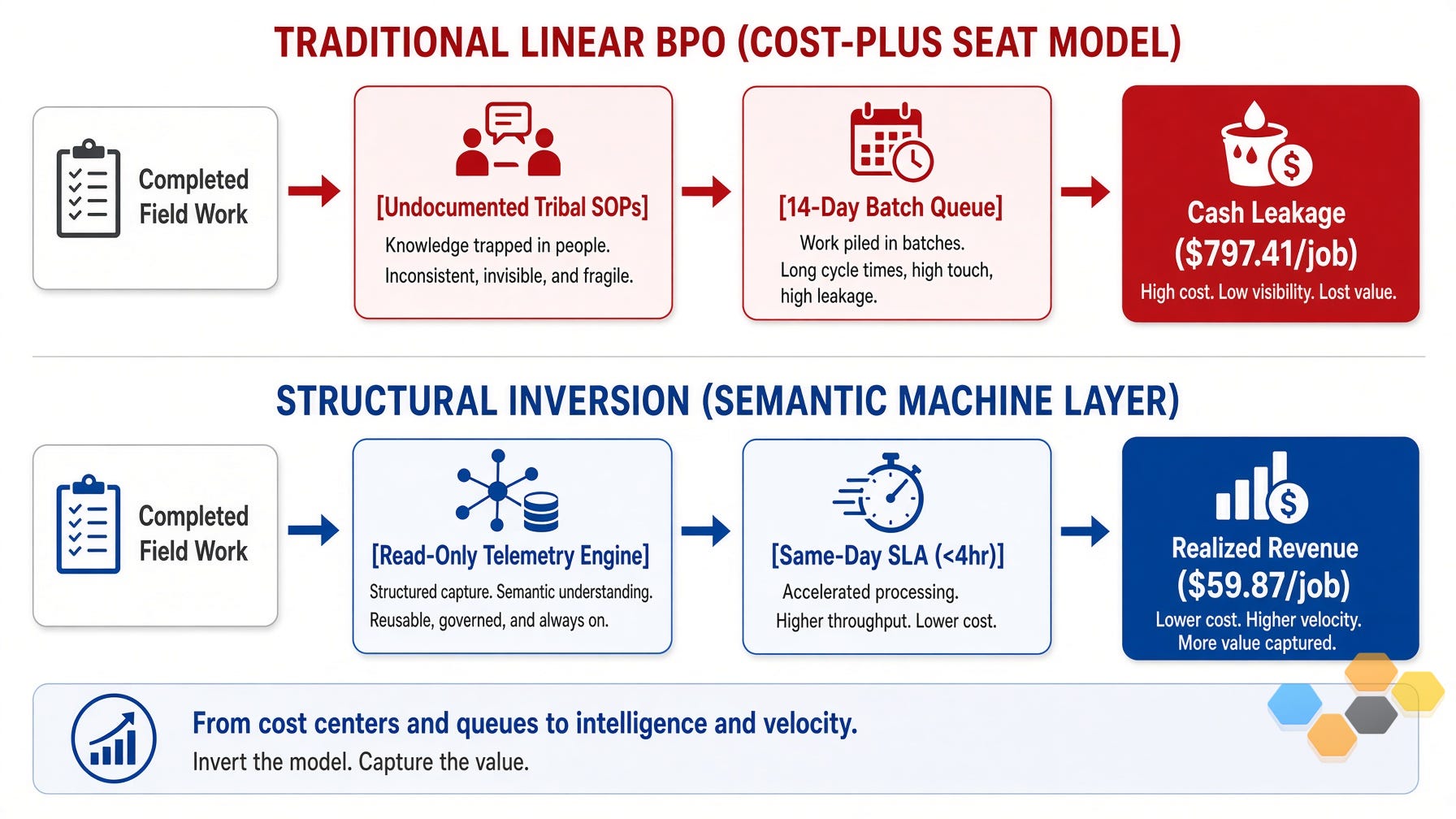
The fundamental bottleneck in trade services is not the wage rate of administrative coordinators; it is the process maturity of the revenue-conversion chain. When completed field tickets linger in dispatch queues for 14 days, working capital remains trapped while Accounts Receivable (AR) collectibility decays at 1% to 2% per week past day 60. Transitioning from fixed-seat labor arbitrage to a machine-enforced semantic layer collapses transaction costs from a $797.41 manual baseline down to a $59.87 physics floor, unlocking $535,571.88 in verified enterprise value per firm.
The Fallacy of the 76% Headline Arbitrage: Why Landed BPO Economics Collapse
Offshore labor arbitrage in trade services experiences immediate margin compression because vendor cost-plus pricing structures externalize supervisory, attrition, and rework overhead onto the client. While an entry-level offshore invoicing clerk costs between $18,000 and $45,000 AUD annually compared to a $75,000 AUD onshore dispatcher, the landed cost must absorb a 1:8 to 1:10 supervisory ratio, 15% to 25% annual attrition replenishment, and 15% to 25% first-year rework rates.
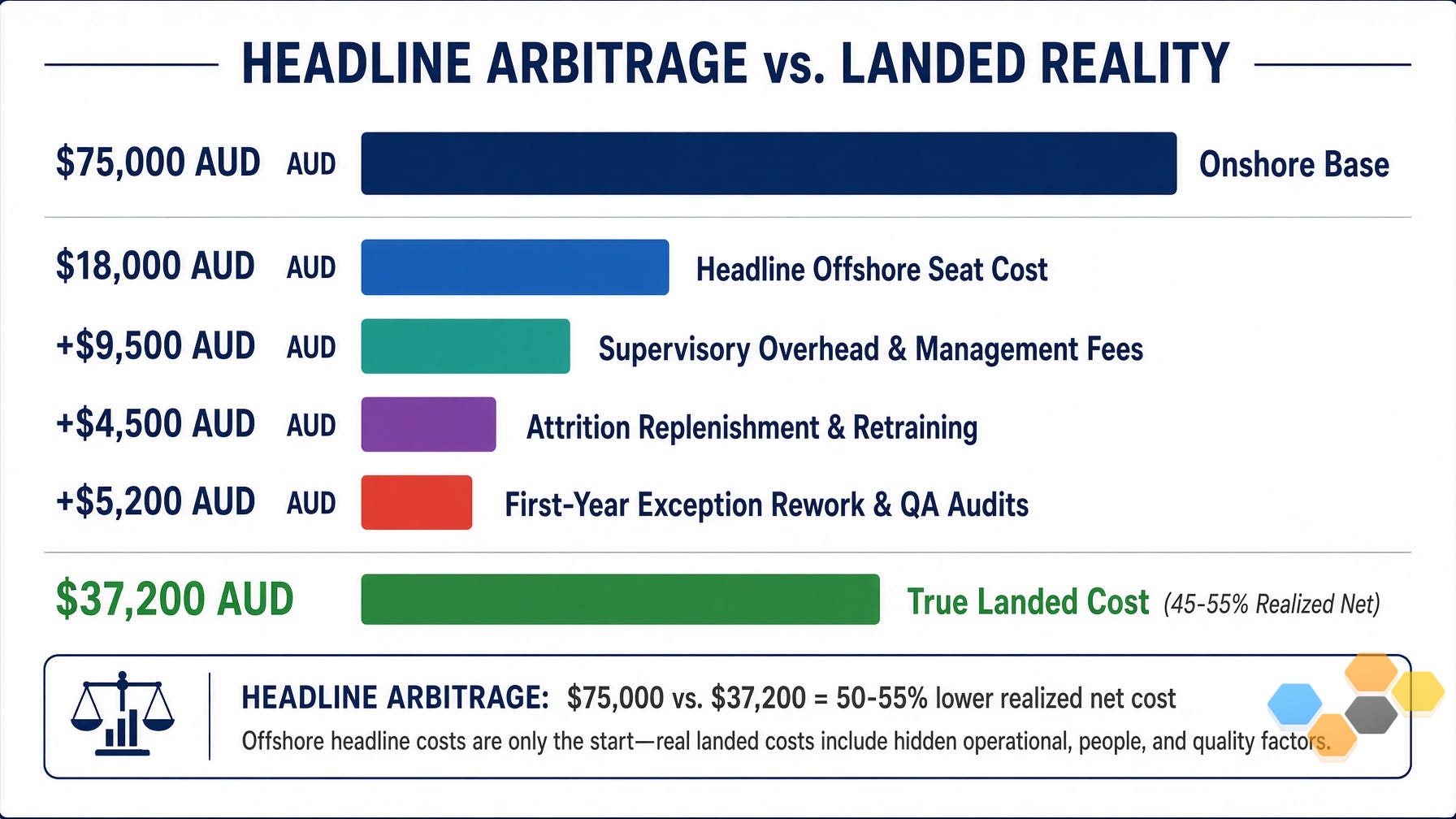
The Cost-Plus Distortion Principle: A cost-plus BPO vendor derives revenue directly from billable seat count, creating a structural disincentive to eliminate operational exceptions through software automation.
Mid-market trade contractors operating 15 to 150 technicians run on uncodified tribal conventions rather than standardized procedure manuals. Long-tenured back-office leaders manage billing logic through mental models, meaning offshore teams cannot execute transactions without continuous synchronous escalations. When remote personnel guess on complex multi-trade job packets, customer billing disputes increase and downstream working capital stalls.
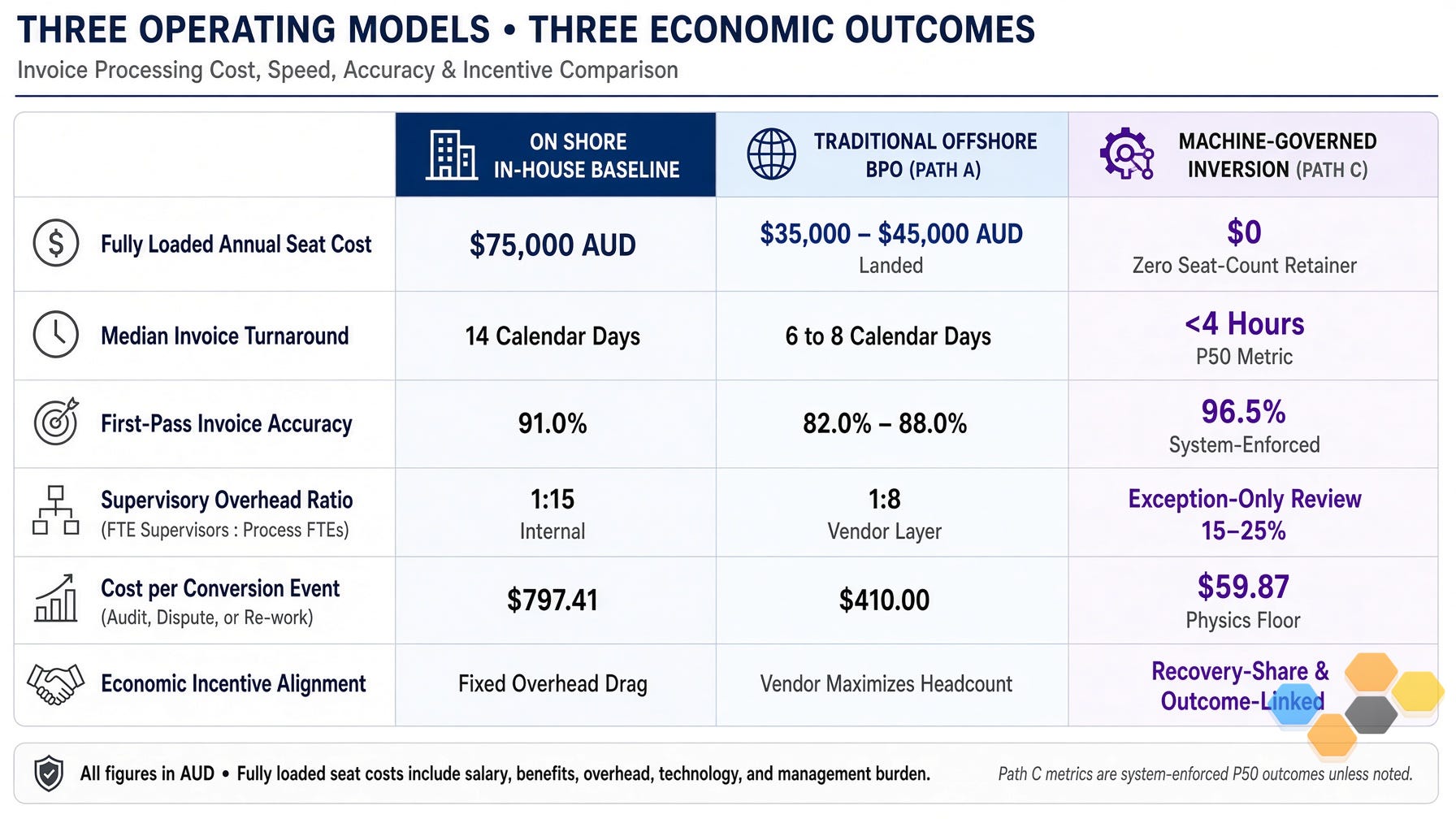
The table above demonstrates that while pure labor relocation reduces base wages, it preserves the manual handling chain. When errors occur on commercial accounts with custom Master Service Agreements (MSAs), the cost of client reconciliation outstrips the hourly wage delta. Realized economic defensibility requires altering the operational architecture rather than shifting seats across geographic borders.
The Jevons Elasticity Trap (E = 1.14): Why AI Copilot Wrappers Accelerate Operational Chaos
Deploying artificial intelligence copilots over unstandardized human workflows accelerates exception generation and overwhelms local operational management. Under Jevons Paradox, when the unit time required to process administrative tasks drops without machine-enforced governance, total consumption and transaction volume expand faster than the capacity to audit them.
Because the field service elasticity coefficient (E = 1.14) exceeds unity, every 10% reduction in invoice drafting time induces an 11.4% increase in unvetted ticket throughput. Without deterministic data boundaries, AI-assisted offshore coordinators generate high-velocity errors on complex job lines, commercial rate overrides, and inventory decrement logic.
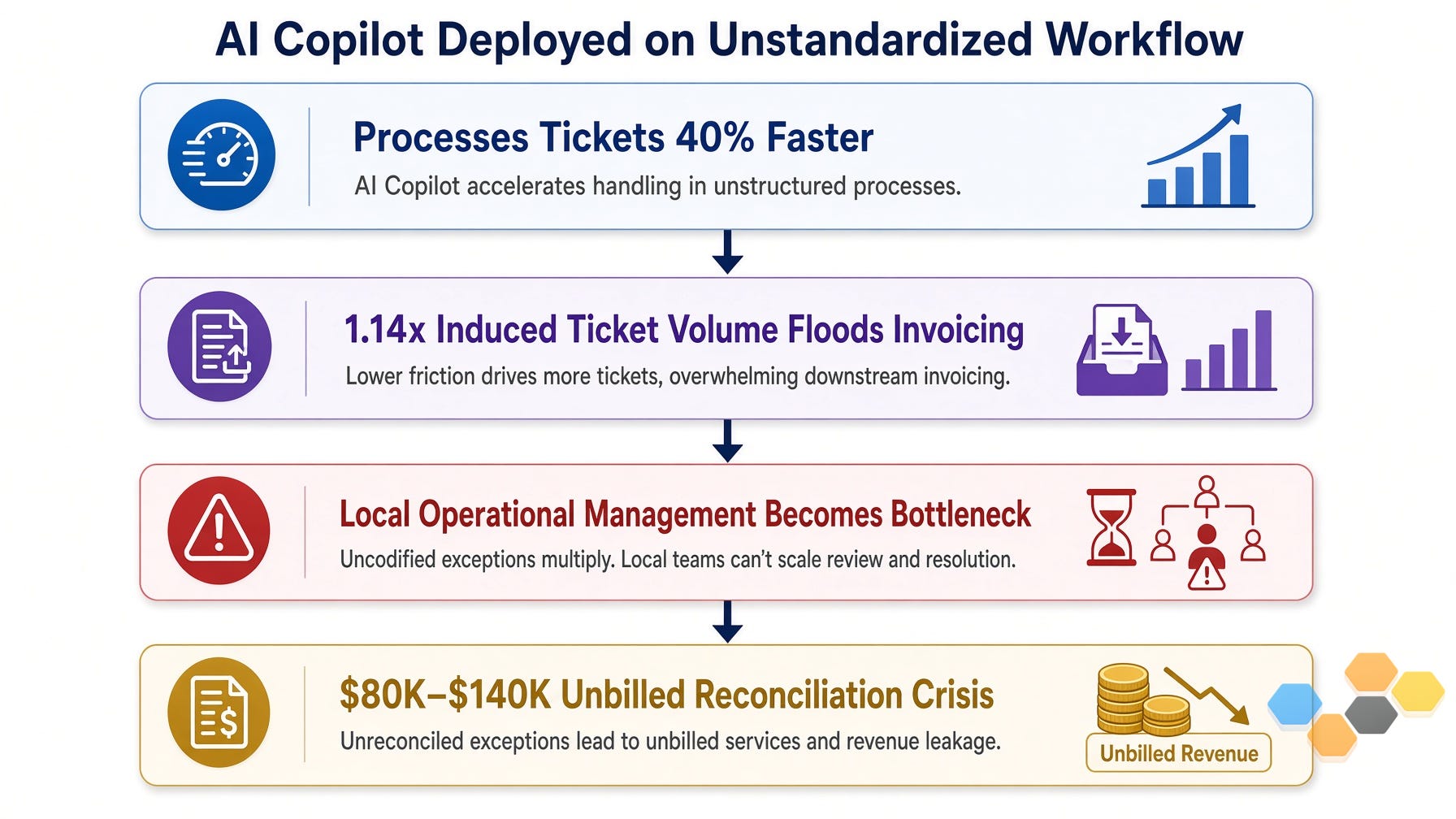
Mid-market service firms operating between $8M and $60M in annual revenue lack the middle-management bandwidth to audit generative AI outputs. When an offshore coordinator uses predictive assistance to invoice commercial accounts without strict data validation, small discrepancies trigger formal dispute holds. The operational bottleneck shifts from keyboard data entry to high-stakes executive dispute resolution.
The Induced Friction Rule: Introducing generative algorithmic assistance into an undocumented back-office workflow converts hidden latency into high-frequency customer-facing invoice disputes.
The resulting backlog locks up between $80,000 and $140,000 in unbilled job tickets per depot. Local service managers must then halt field dispatch to manually audit discrepancies across Field Service Management (FSM) platforms and accounting ledgers. The efficiency gains of copilot tools are entirely consumed by the managerial drag required to remediate downstream billing errors.
Premium Content
Is your organization prepared to move past traditional seat-count models and implement an outcome-aligned, machine-governed revenue engine?
Paid subscribers have access to special content below It consists of free access this research package inside my research hub — as well a link the interactive NotebookLM oracle. These research packages can be found at https://studio.jtbd.one/research for a one-time fee for select artifacts or an option fee for access to all of the sources — which includes RAG-like Notebook you can interrogate for answer to questions I may not have asked for you.
The 30-Hour Documentation Tax: Why Whiteboard Process Mapping Fails
Standard BPO implementations stall during onboarding because service firms are forced to commit between 30 and 40 executive hours per workflow to author standard operating procedures from scratch. Mid-market field service operations rely on tenured billing specialists who possess decades of tacit knowledge that cannot be effectively extracted through interviews or process-mapping workshops.
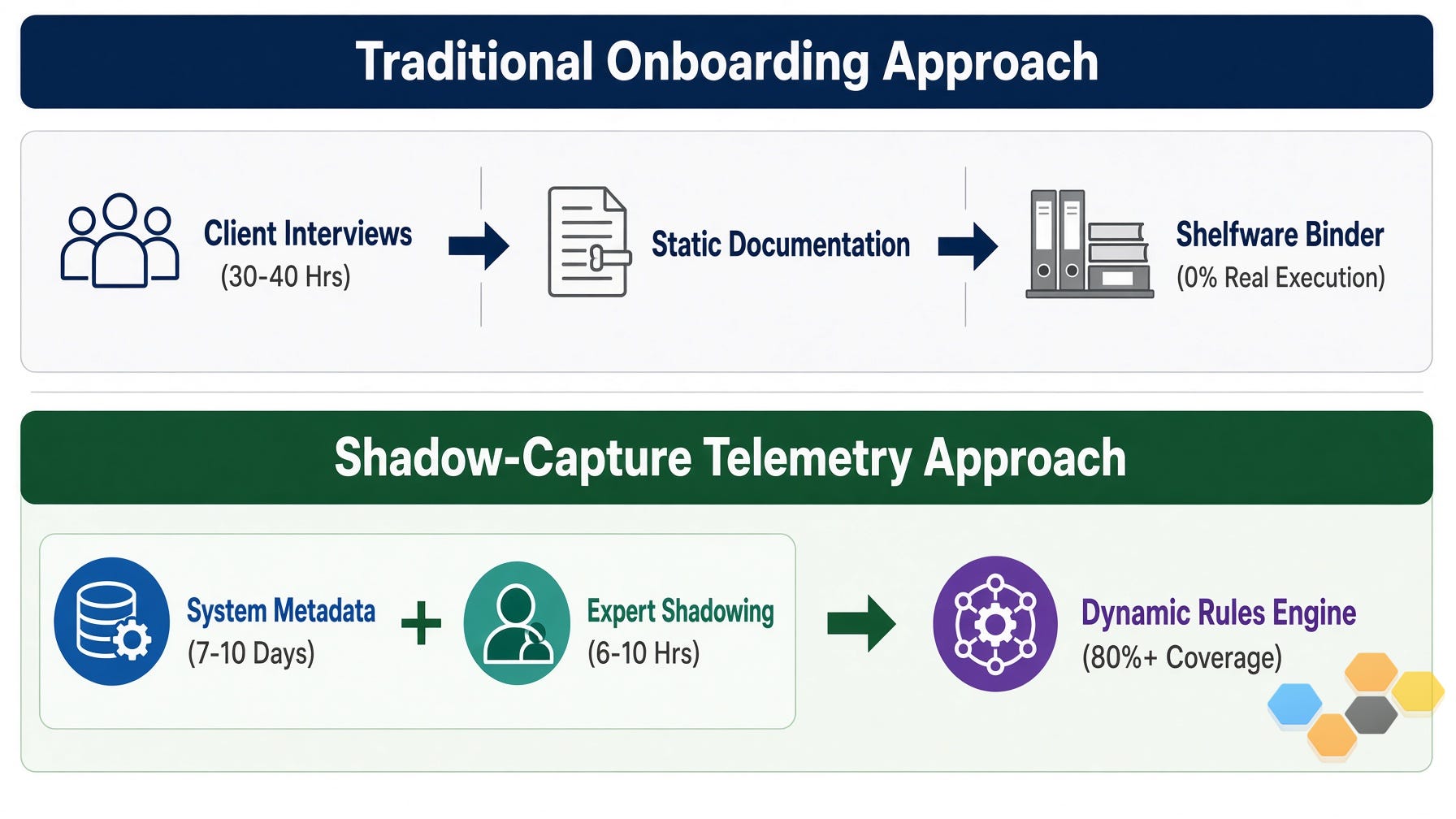
Manual documentation efforts produce outdated manuals that fail to account for daily operational edge cases. In commercial mechanical contracting, variations in refrigerant recovery compliance, customer warranty terms, and technician overtime markups change constantly. Traditional consultants charge between $18,000 and $35,000 to deliver process binders that are obsolete upon delivery.
The Tacit Knowledge Law: Operational expertise in specialty trades exists as muscle memory within transactional systems; interviewing tenured staff captures what they believe they do rather than how they resolve exceptions.
Shadow-Capture SOP extraction inverts this dynamic by deploying read-only telemetry listeners alongside 6 to 10 hours of paired-expert screen observation. Capturing actual keystrokes, Field Service Management status transitions, and accounting postings reduces the documentation burden by 70% to 80% while establishing an auditable baseline.
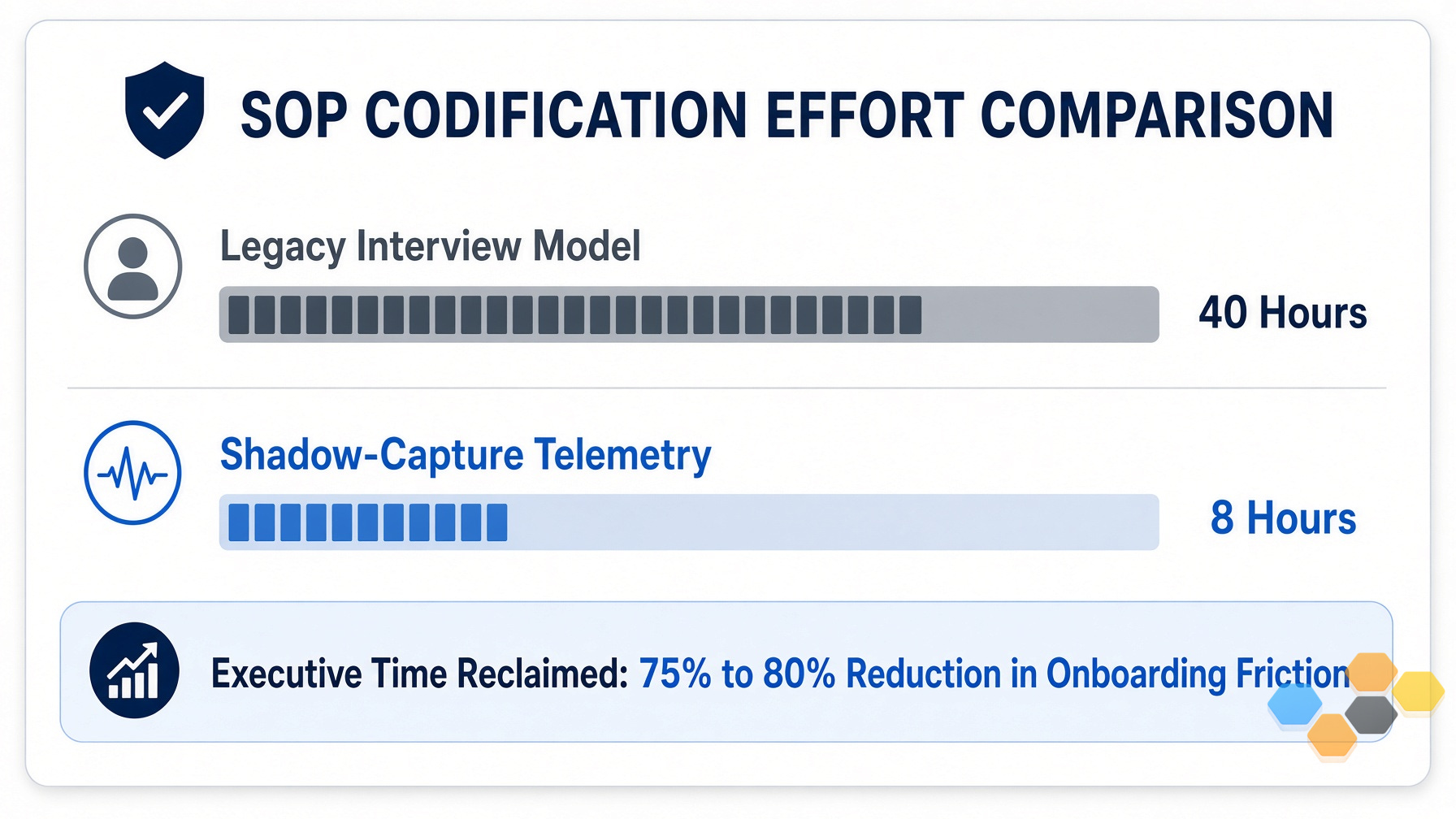
This observational methodology extracts ground-truth operational rules directly from the systems of record, identifying specific exception paths such as split-billing and missing purchase orders. The resulting procedural templates cover 80% of routine workflows within 45 days, creating the structural foundation required for reliable process delegation.
The Three-Layer Agentic Architecture: Transitioning from Headcount to Semantic Governance
Sustainable back-office transformation requires replacing the manual execution chain with a three-layer agentic architecture that embeds governance directly into software integrations. Rather than paying an external vendor for labor hours, the enterprise licenses an operational framework that validates field evidence and automates transactional flow.
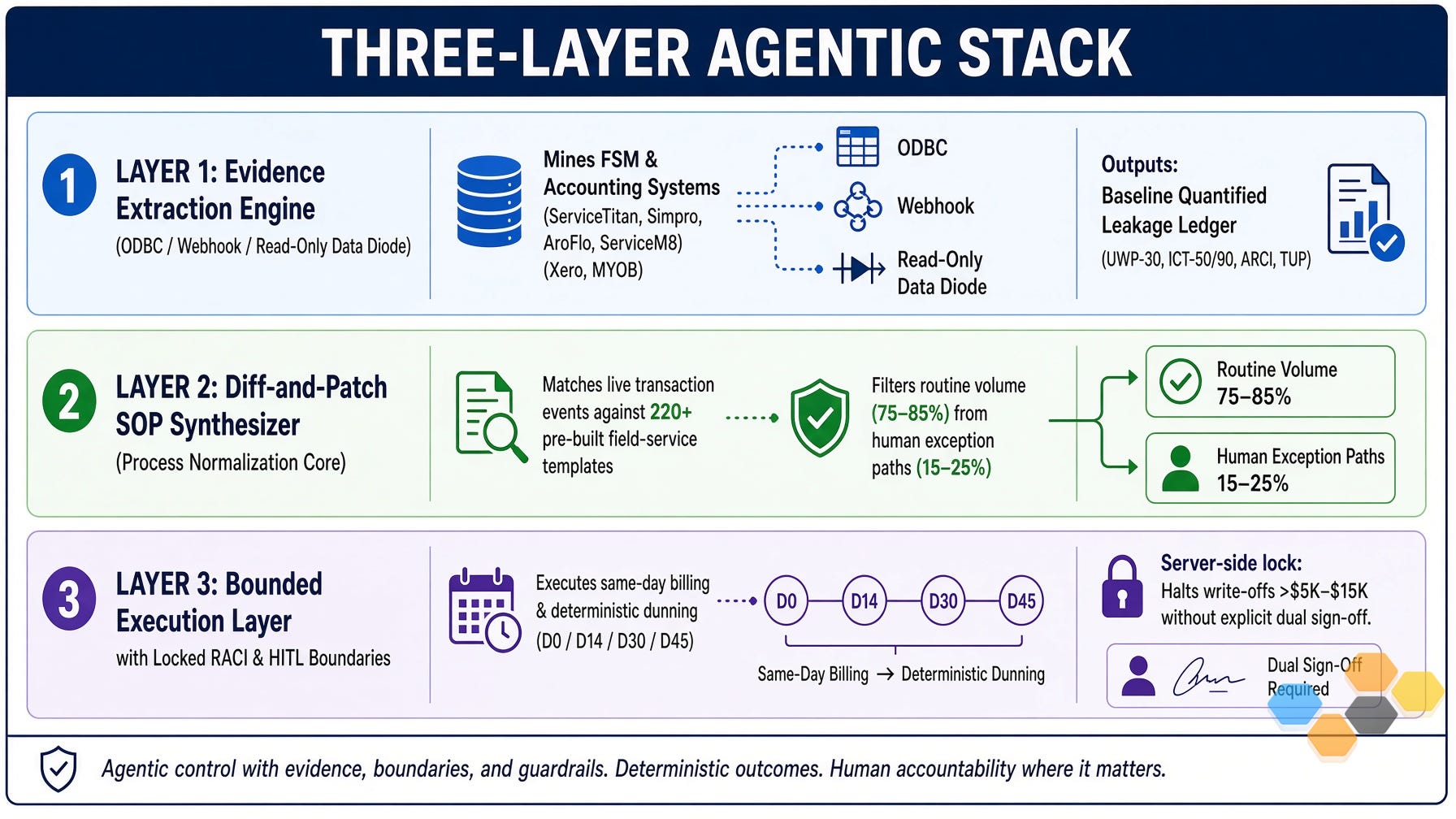
Layer 1 operates as an Evidence Extraction Engine using read-only database connections and webhook listeners. It reconciles job completion timestamps, mobile signatures, and inventory logs against accounting registers. This data diode models invoice cycle times and unbilled revenue without triggering internal IT change-advisory board reviews.
Layer 2 functions as a Diff-and-Patch SOP Synthesizer, comparing extracted system events against an indexed library of over 220 trade-specific workflows. It establishes automated execution rules for routine jobs while routing edge cases into a structured triage workbench.
Layer 3 provides Bounded Agentic Execution under strict Human-in-the-Loop (HITL) governance. It handles routine invoicing and tiered collections while enforcing hard operational stops:
Automated billing triggers execute within 4 hours for jobs with complete field evidence.
Invoices matching pre-approved purchase orders and signed customer work orders process unattended.
System routing isolates the 15% to 25% of jobs with pricing, warranty, or scope exceptions.
Write-offs exceeding $5,000 to $15,000 AUD require explicit cryptographic dual sign-off.
Customer payment terms cannot be modified without Service Operations Leader authorization.
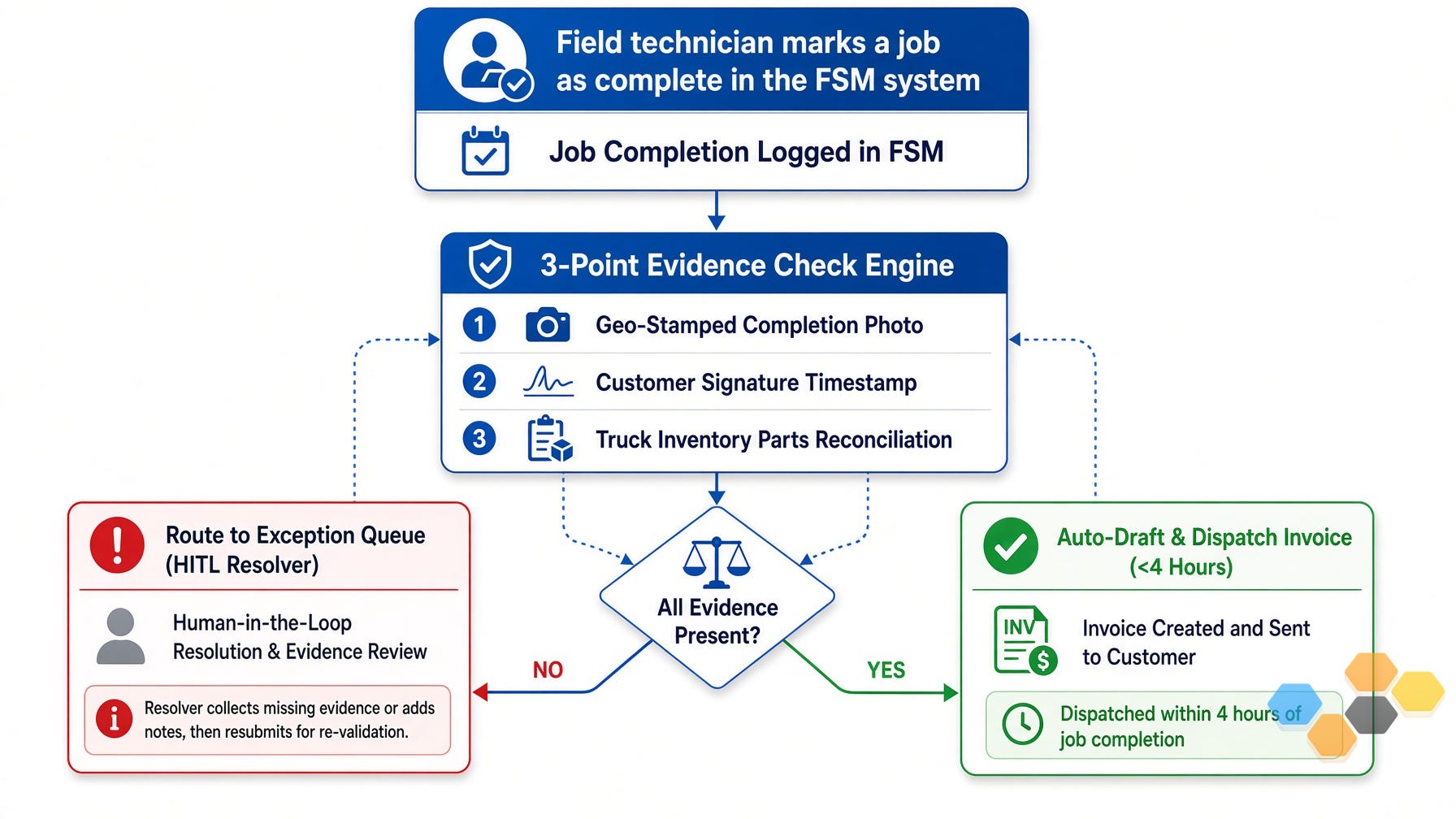
This structural division ensures automated systems execute high-volume data entry while experienced personnel focus exclusively on high-risk exceptions, eliminating operational leakage without surrendering fiscal control.
The Five Core Metrics of Field-to-Cash Telemetry: The Anti-Dashboard Scorecard
Operational control of field service revenue realization requires replacing vanity metrics with a falsifiable telemetry scorecard. Standard business intelligence dashboards aggregate activity metrics like closed tickets or outbound calls, which mask underlying working capital decay and invoice cycle drag.
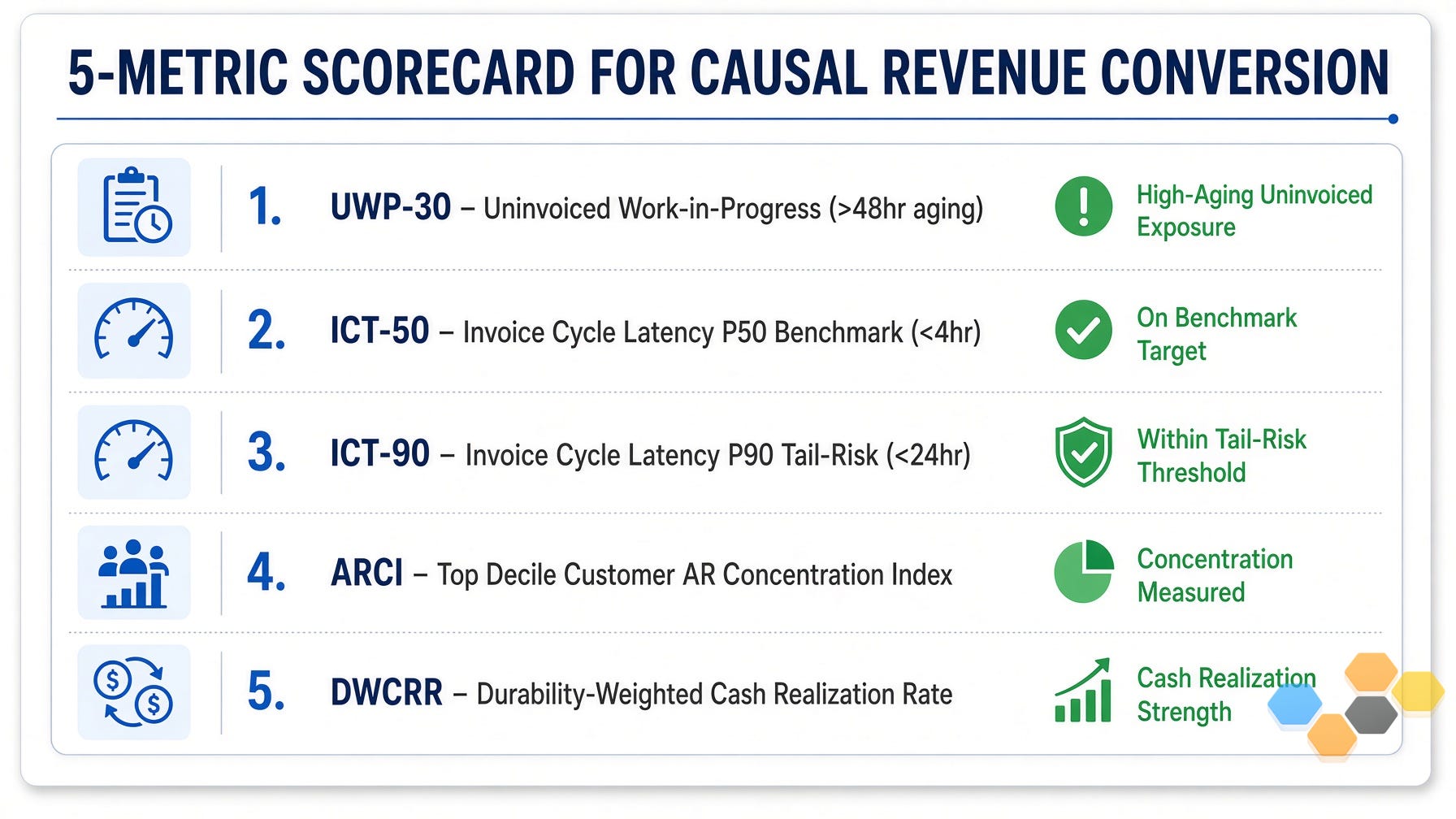
The primary diagnostic metric is Uninvoiced-Work-In-Progress Dollar Value (UWP-30), which measures the gross value of field-completed labor and materials that have failed to generate an invoice within 48 hours. When UWP-30 trends upward, it reveals operational friction between field technicians and billing dispatchers.
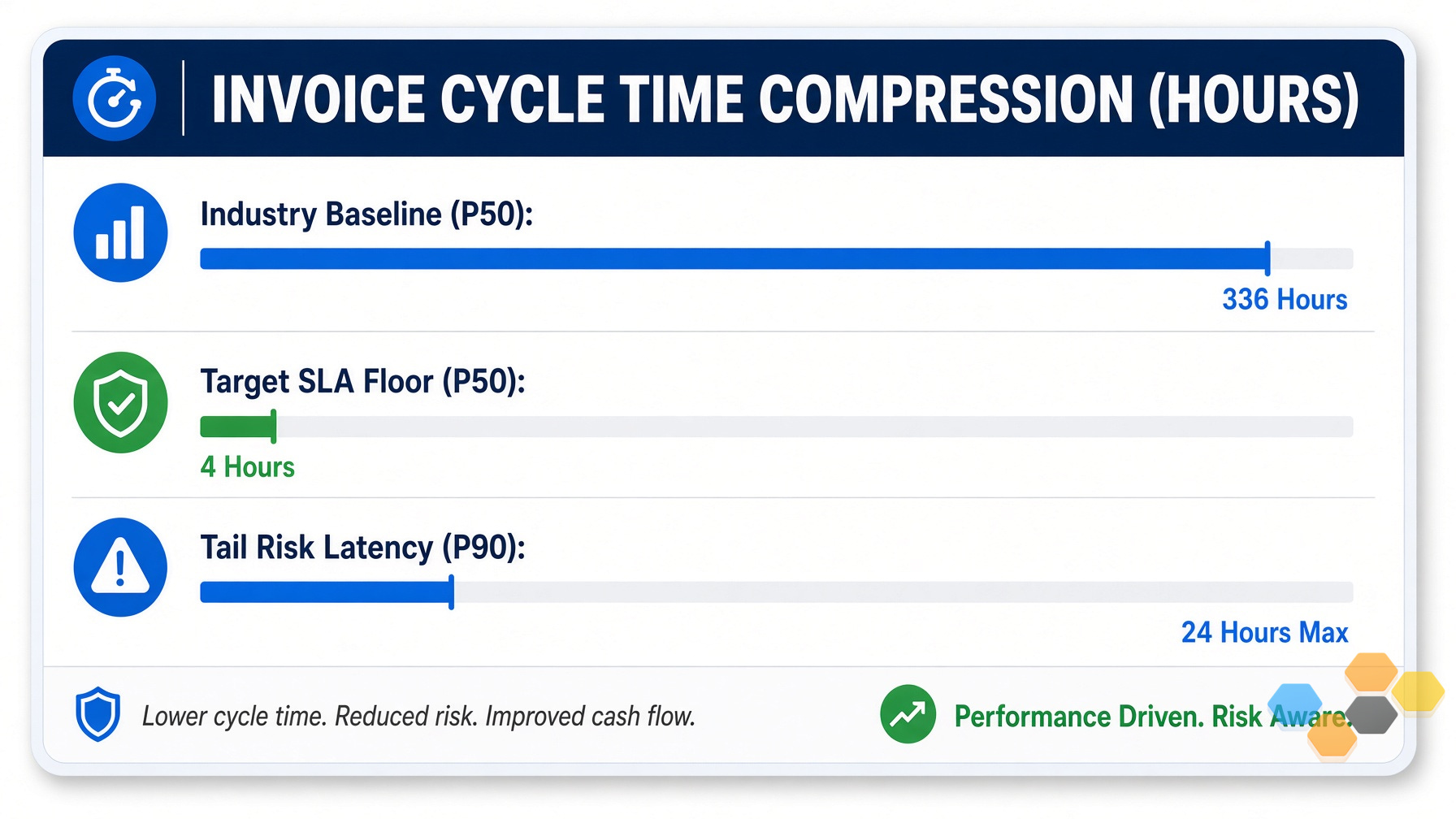
Invoice Cycle Time (ICT-50 and ICT-90) measures the median and 90th-percentile hours elapsed between physical job completion and invoice posting. The industry average hovers at 14 calendar days (336 hours), driven by missing parts data, delayed technician sign-offs, and batch billing practices. A machine-governed workflow targets a P50 latency under 4 hours and a P90 tail under 24 hours.
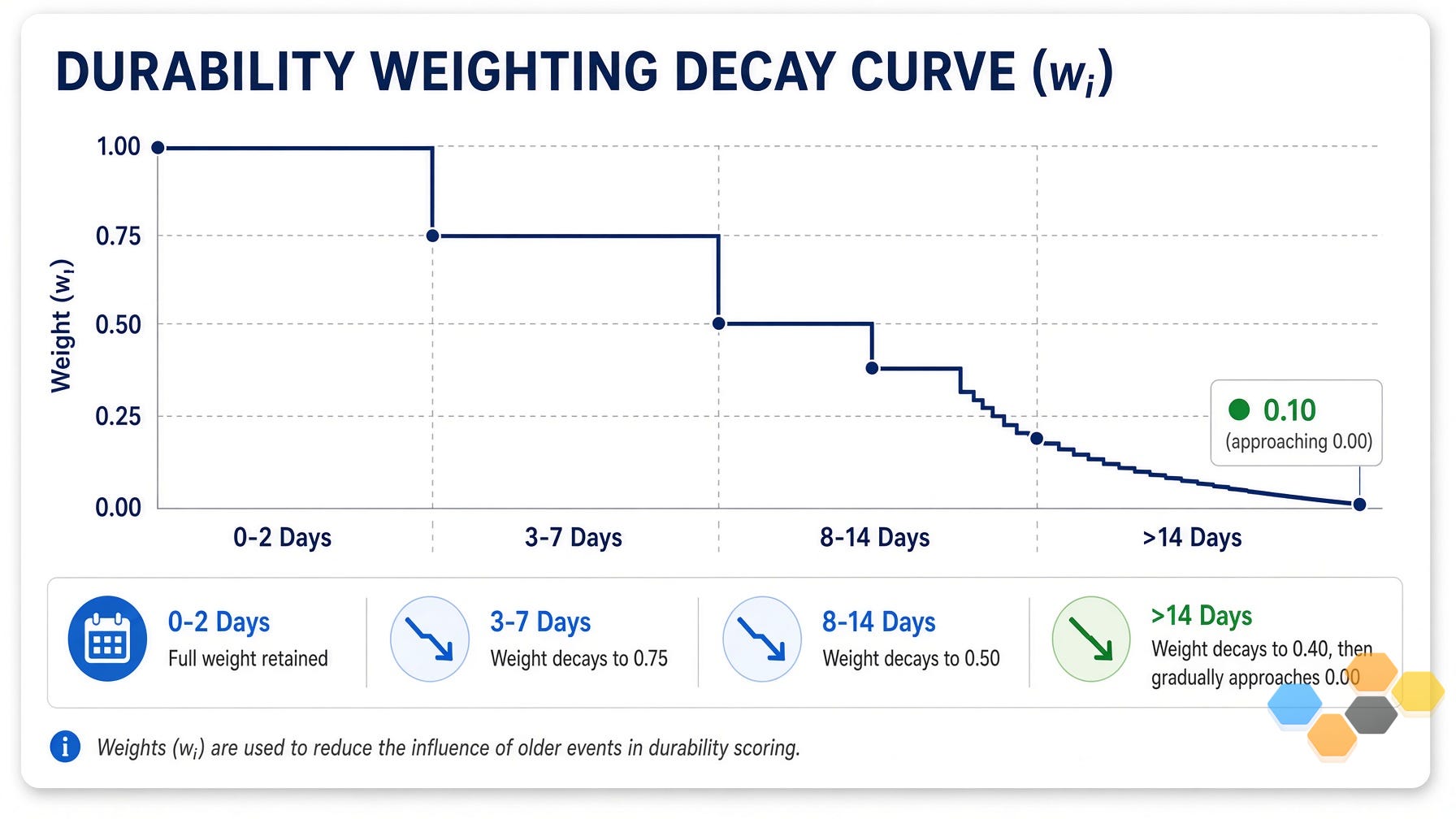
The Durability-Weighted Cash Realization Rate (DWCRR) scores the quality of working capital conversion by applying decay weights to receivables based on collection speed. Cash collected within terms is weighted at full value, while collections dragging past contracted dates are discounted to reflect working capital interest costs and bad-debt risk.
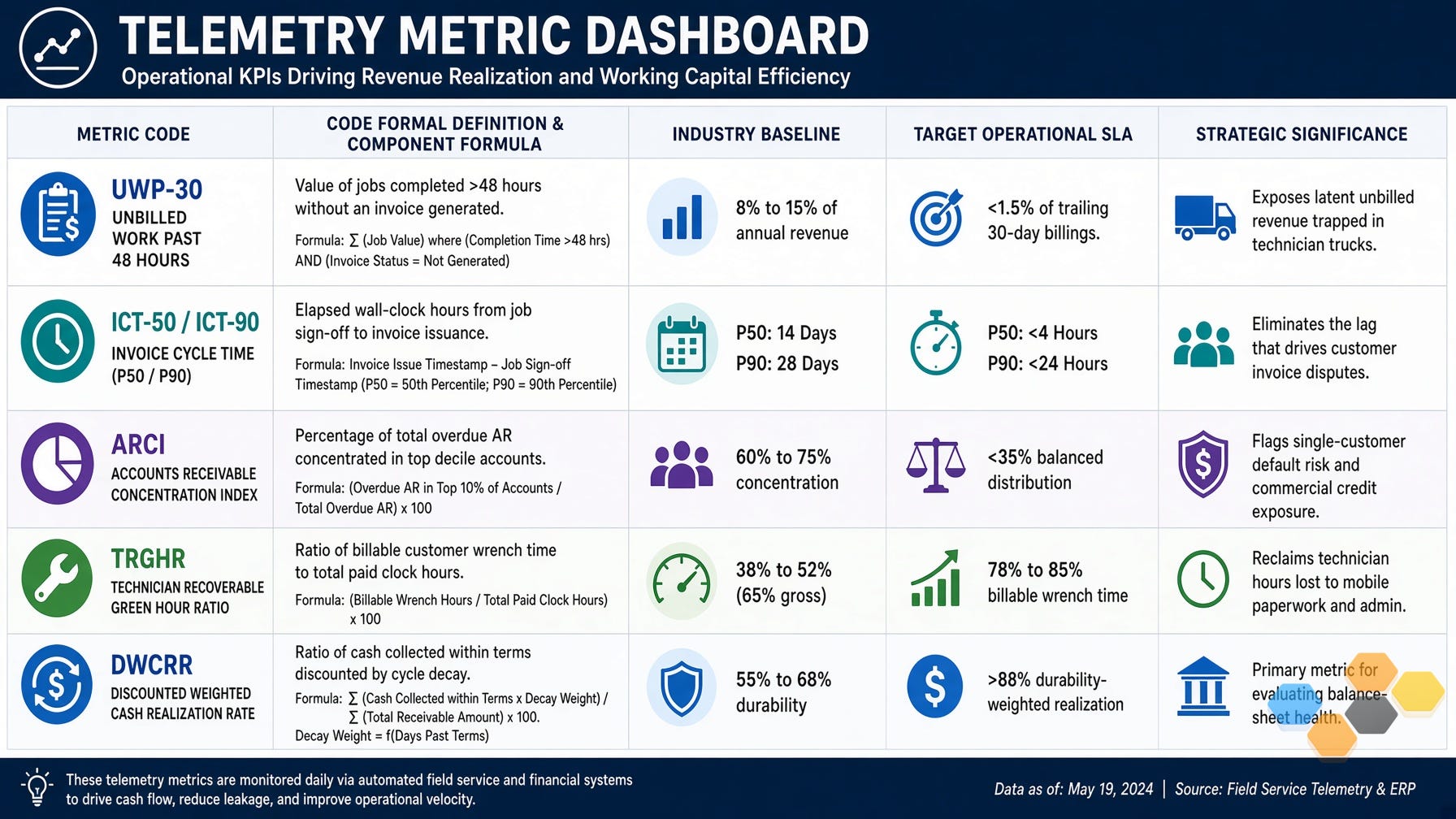
Tracking these metrics gives leadership a clear view of operational performance. Rather than monitoring activity volume, management can track working capital velocity directly from underlying system telemetry.
The Locked RACI Matrix: Enforcing System-Level Authority and Sabotage Detection
Delegated back-office architectures fail when operational boundaries are ambiguous, allowing unvetted adjustments to bypass managerial review. In an uncodified environment, administrative staff often make unauthorized assumptions regarding discounts, payment terms, or customer credit limits to clear backlogs quickly.
The Authority Preservation Rule: Software configurations must strictly limit write permissions on destructive financial actions, ensuring remote and automated agents operate solely within verified parameters.
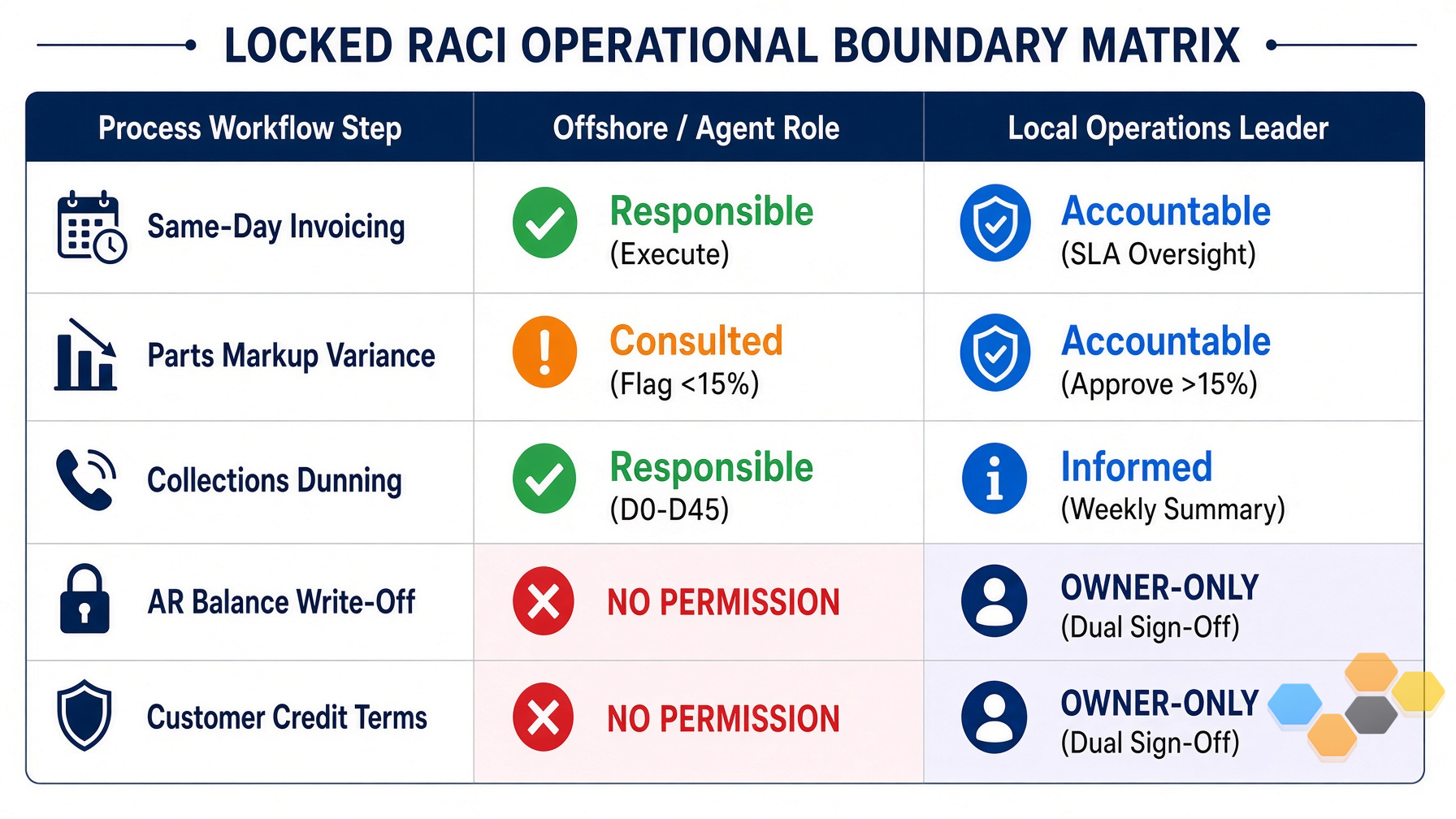
The Locked RACI Matrix embeds decision rights directly into system application programming interfaces (APIs). Routine tasks are delegated to automated or remote operators, while high-risk financial decisions remain locked behind dual-control authentication:
Routine Invoicing Execution: Offshore personnel process verified job packets within pre-set contract terms.
Parts Variance Verification: Any discrepancy exceeding 15% between truck inventory and quoted bills-of-materials routes to local management.
Credit Memo & Write-Off Control: The system blocks credit adjustments or payment extensions exceeding $5,000 AUD without cryptographic approval from the Service Operations Leader.
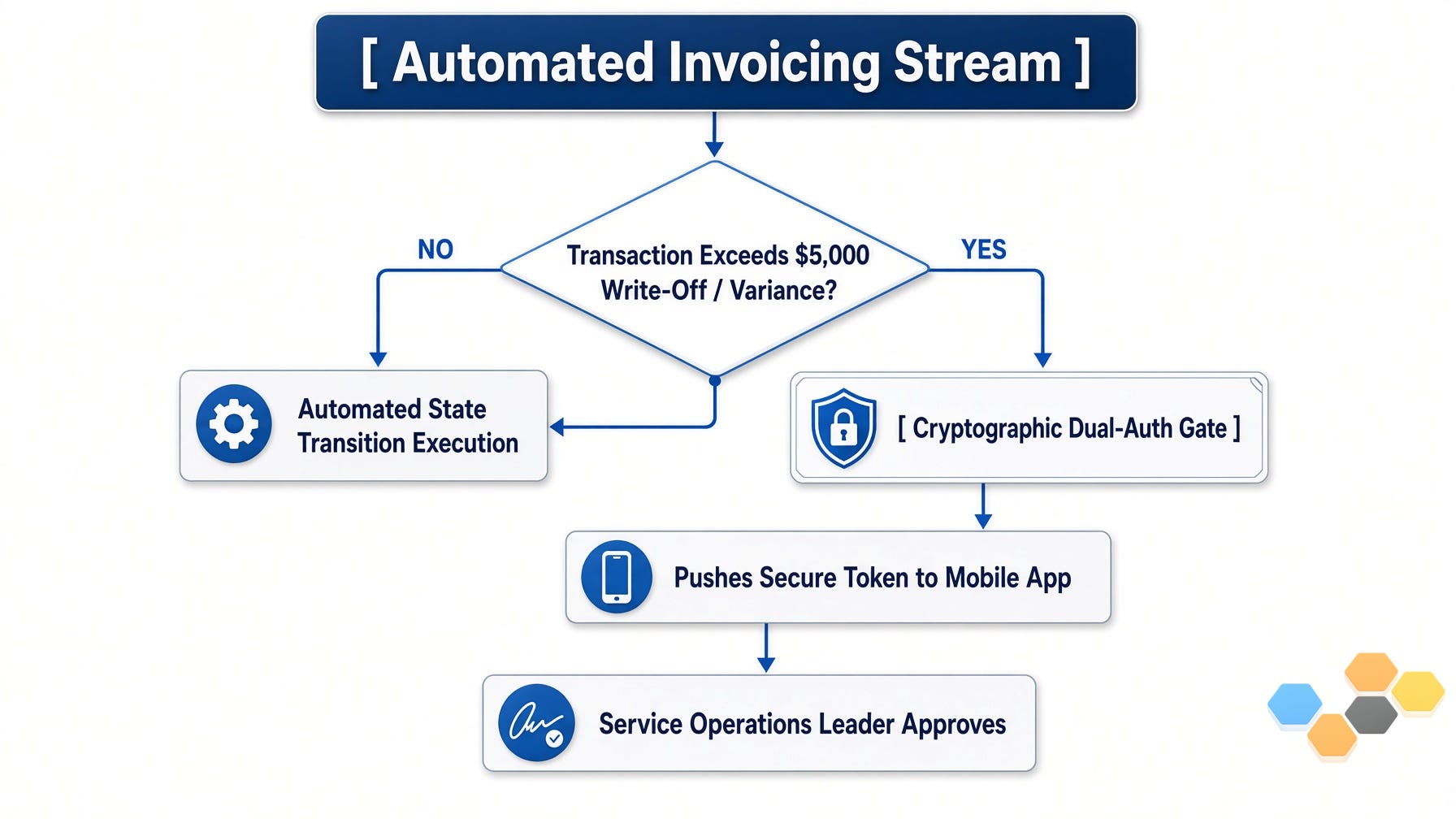
To counter internal process drift or intentional workflow circumvention, the architecture deploys passive anomaly detection using Median Absolute Deviation (MAD) statistics. The engine monitors operational event streams for deviations exceeding 3.5 robust standard deviations from historical personal baselines.
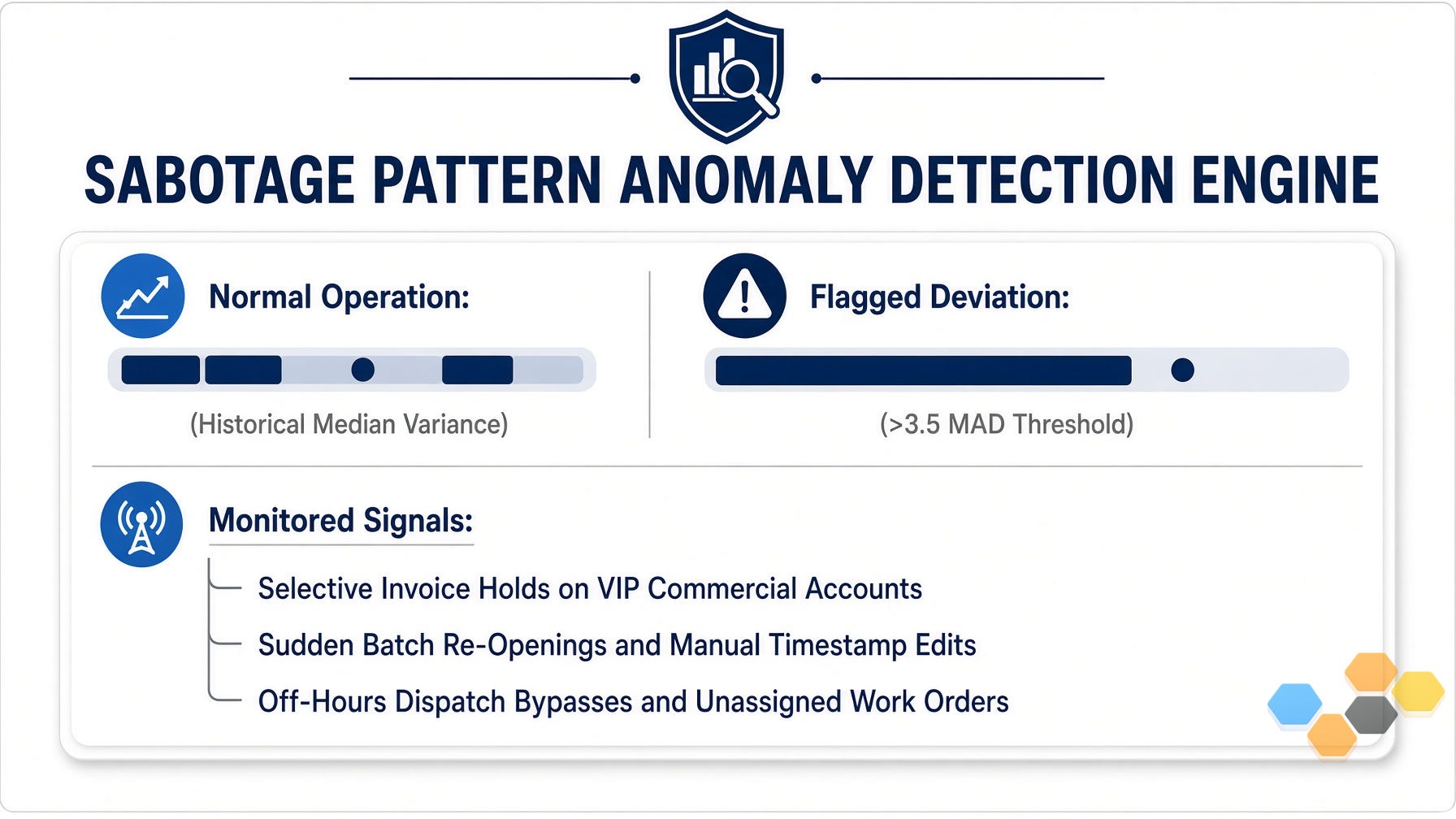
This passive monitoring flags specific behaviors—such as unassigned ticket backlogs or delayed customer billing—directly onto management scorecards. Pairing clear API boundaries with automated anomaly tracking prevents process breakdowns and maintains operational integrity across distributed teams.
The Five-Phase Trust-Ladder: From Concierge Pilot to Platform Defensibility
Transitioning to an automated, outcome-aligned revenue engine requires a phased operational roadmap that earns managerial trust through iterative proof points. Attempting a single-step migration to full automation introduces operational risk and triggers organizational resistance across technical and administrative teams.
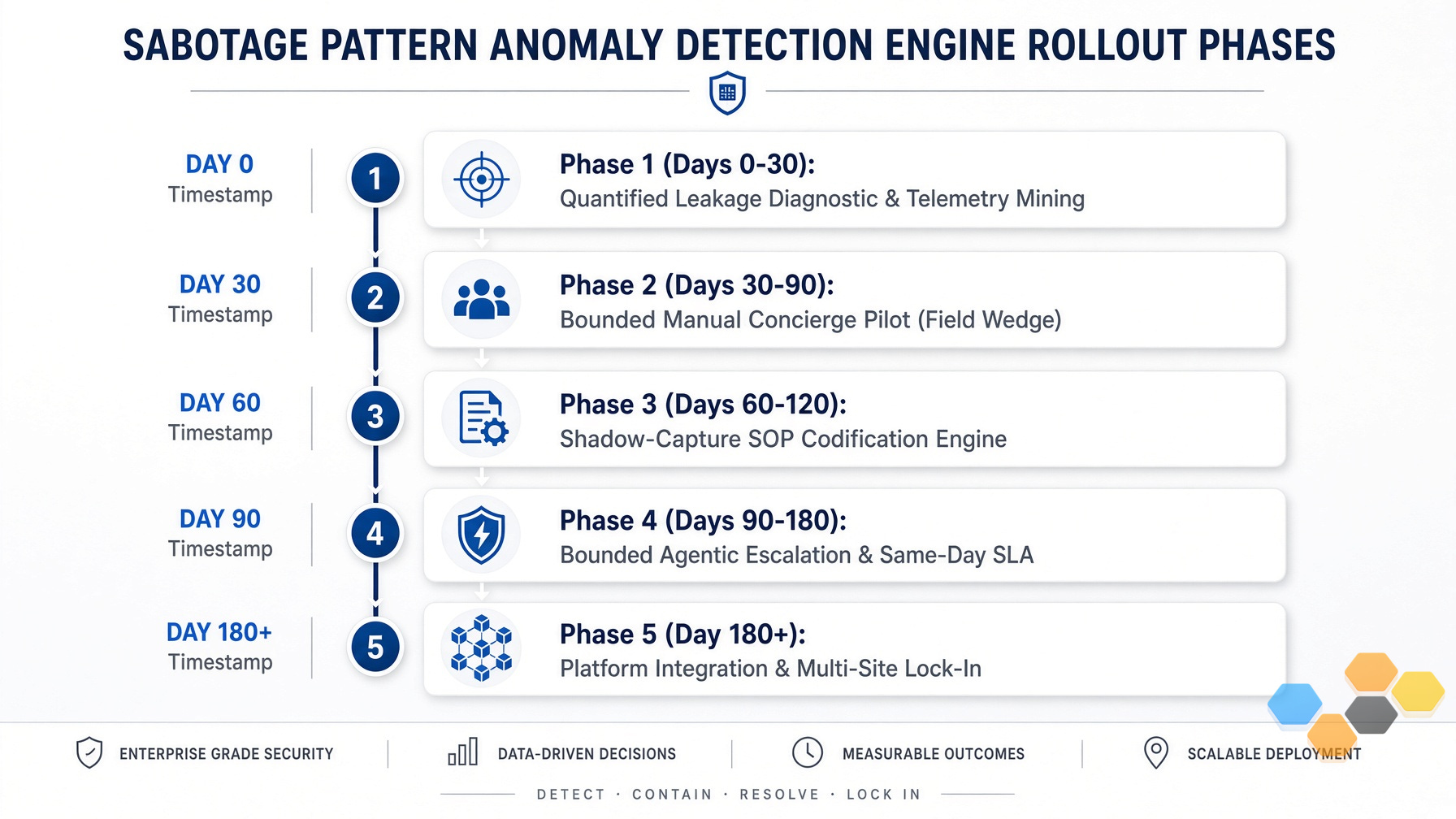
Phase 1 executes a 30-day Diagnostic on a limited budget ($0 to $5,000 AUD), ingesting historical FSM and accounting metadata to generate a signed baseline Leakage Ledger. This phase extracts historical cycle times, first-time fix rates, and unbilled work values without altering existing staff workflows or installing invasive system monitors.
Phase 2 launches a Bounded Manual Concierge Pilot over days 30 to 90, using a refundable deposit ($15,000 to $40,000 AUD) to manage a single service line. This stage isolates the field-completion-to-invoice handoff, establishing a baseline turnaround under 4 hours and demonstrating cash acceleration before expanding operational scope.
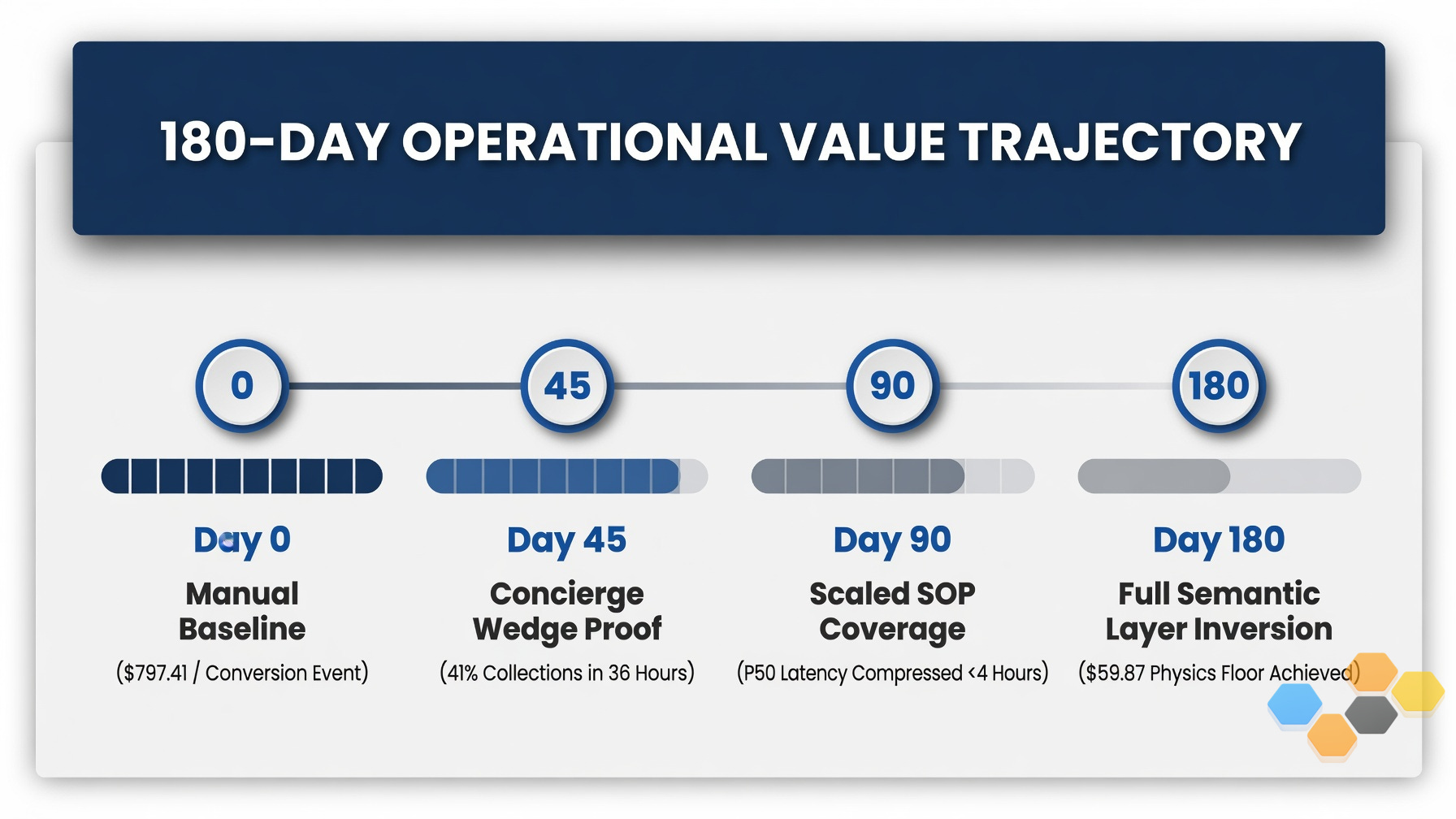
Phase 3 runs Shadow-Capture SOP Authoring in parallel across days 60 to 120, converting observed system interactions into structured rules. Phase 4 introduces automated execution across days 90 to 180, locking in deterministic collections ladders and same-day invoice dispatch. Phase 5 secures platform defensibility by embedding verified performance reporting into executive governance and banking covenant reviews.
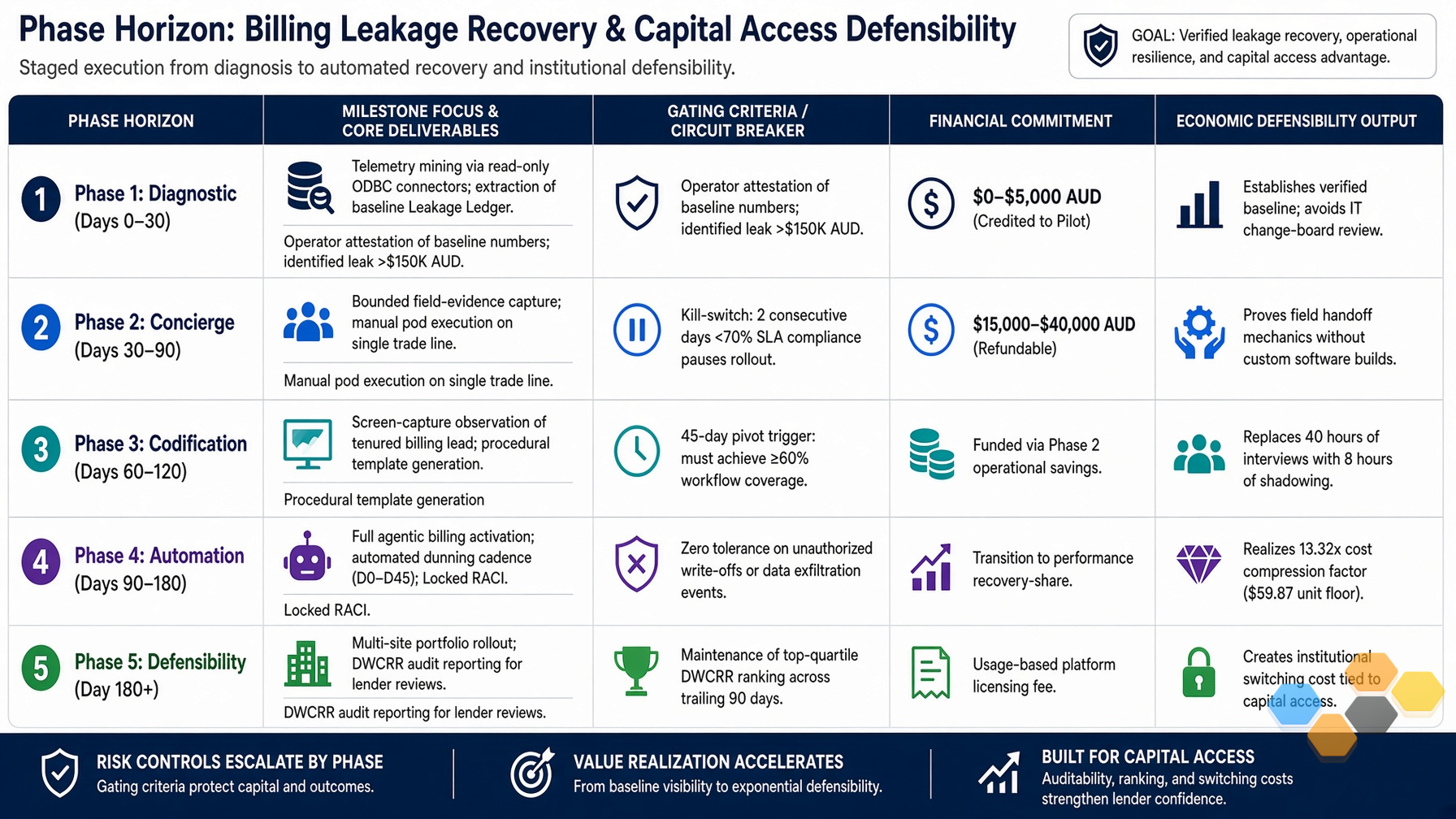
Staging the rollout along this sequence protects the enterprise from early operational failure. Each phase funds subsequent integration steps while systematically de-risking delegation across technical, legal, and personnel boundaries.
Outcome-Coupled Commercial Models: Inverting Cost-Plus Vendor Pricing
Traditional business process outsourcing contracts rely on a structural conflict: the provider bills fixed fees per human seat, meaning vendor revenue grows alongside operational inefficiency. To achieve durable margin expansion, the commercial structure must shift from input-based seat rentals to outcome-coupled recovery sharing.
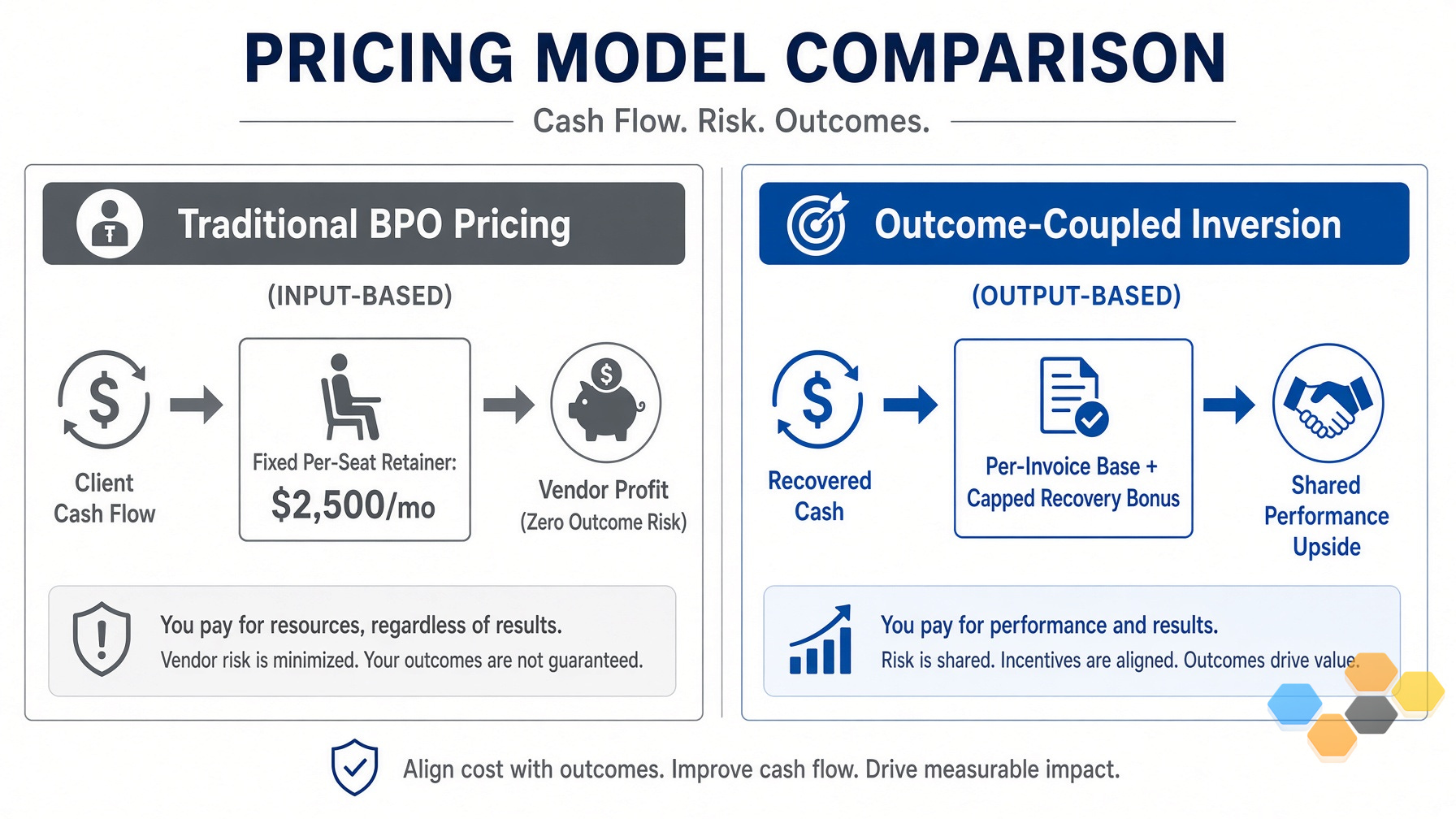
Under this outcome-aligned model, the service provider charges a base fee per processed invoice combined with a variable percentage of incremental cash collected above an attested pre-engagement baseline. If invoice turnaround times or cash realization rates fail to improve, variable fees drop to zero.
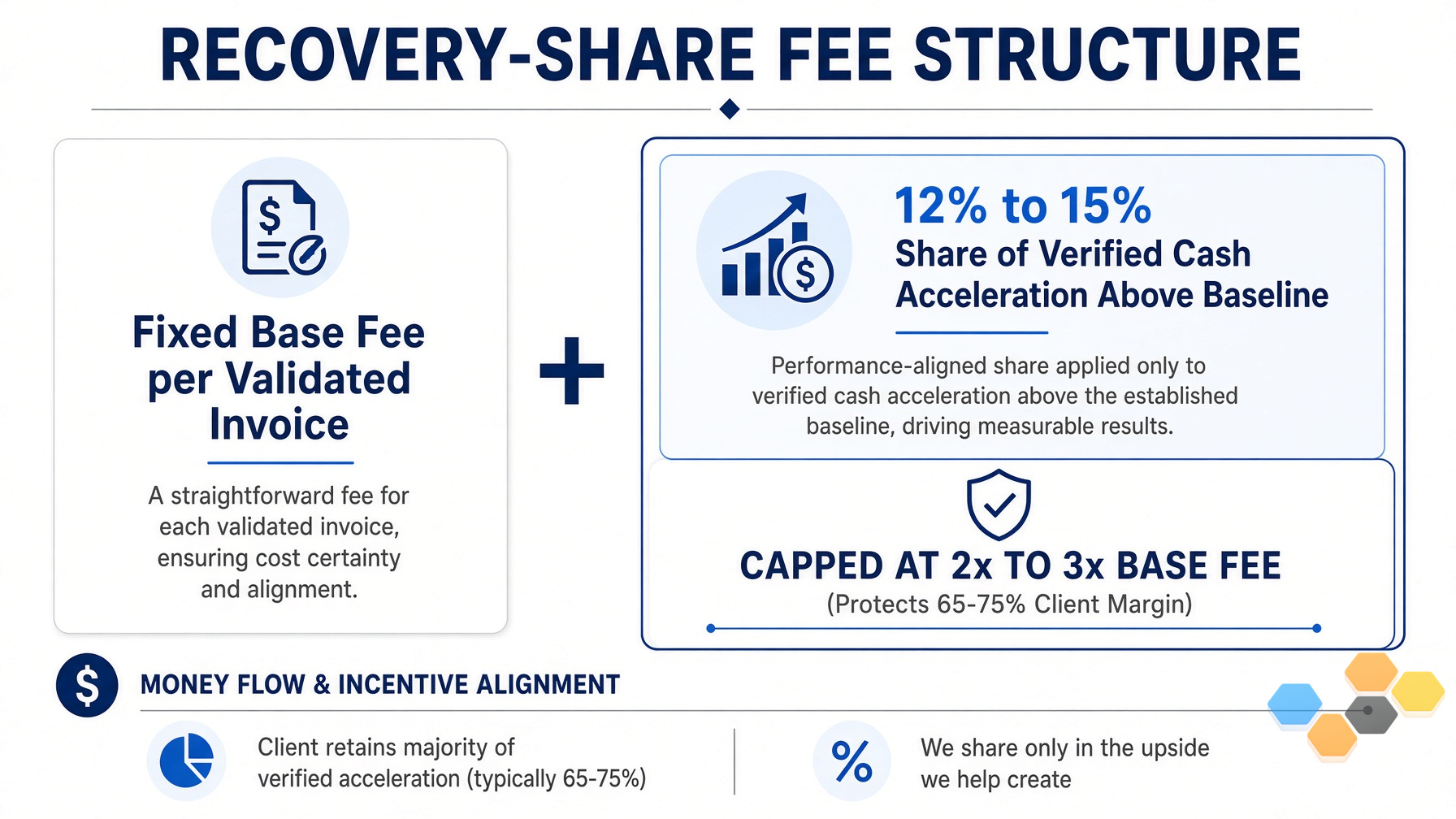
To maintain economic balance for both parties, the performance bonus incorporates a ceiling capped at two to three times the base invoice fee. This mechanism guarantees the client retains the vast majority of recovered working capital while protecting the provider’s gross delivery margin across diverse invoice cohorts:
Attested Baseline Lock: Historical collection speed, unbilled backlog, and invoice error rates are cryptographically locked before launch.
Per-Transaction Unit Pricing: Clients pay a predictable processing fee ($8 to $14 AUD) for invoices validated and dispatched within SLA targets.
Variable Recovery Sharing: The provider earns 12% to 15% of verified cash acceleration realized within contracted customer payment terms.
Automatic Circuit Breakers: Sustained SLA failures or unauthorized billing adjustments automatically suspend variable fee calculations.
This commercial architecture aligns the provider’s financial success with operational velocity. The vendor is economically motivated to eliminate process friction and automate repetitive handoffs, moving away from the head-count expansion models of traditional outsourcing.
Institutionalizing the Moat: Capital Separation, Verified Benchmarks, and PE Multiple Expansion
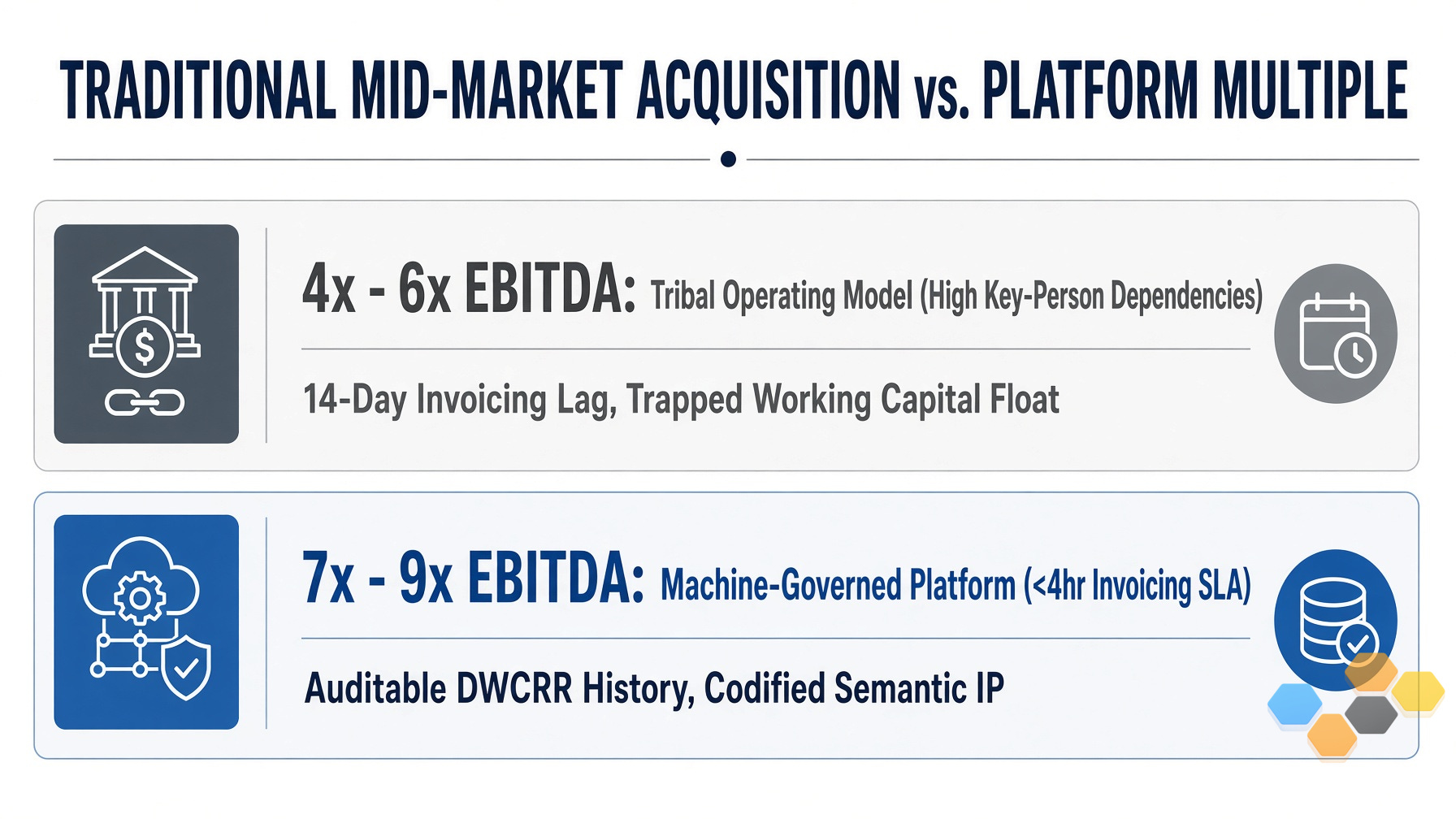
Enterprise valuation in field services depends heavily on the durability and independence of back-office operations. Independent operators burdened by manual administrative workflows typically trade at private equity acquisition multiples of 4x to 6x EBITDA, whereas platform-grade assets with codified operational infrastructure command valuations between 7x and 9x EBITDA.
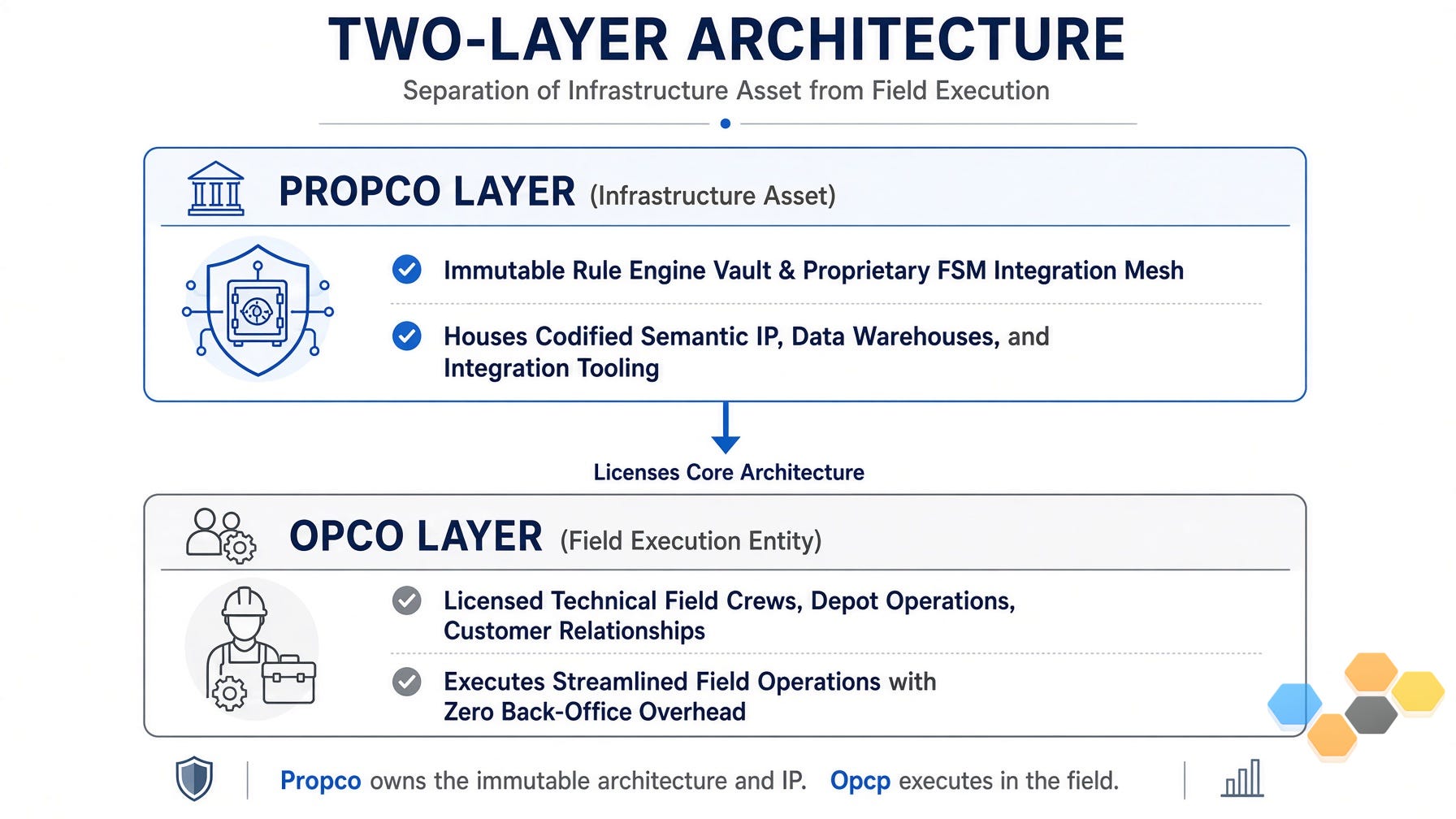
Separating operating infrastructure through an Operating Company / Property Company (OpCo/PropCo) structure allows contractors to isolate software assets from field labor liabilities. The PropCo entity owns the integration adapters, rule libraries, and data schemas, licensing them back to the operating business. Adding field personnel reduces per-unit technology amortization costs rather than expanding administrative bloat.
As the semantic engine processes daily transactions, it generates an auditable Durability-Weighted Cash Realization Rate (DWCRR) that provides third-party verification for lending syndicates and potential acquirers. Lenders and private equity buyers can underwrite asset quality directly from verified historical telemetry rather than relying on unstandardized internal reports.
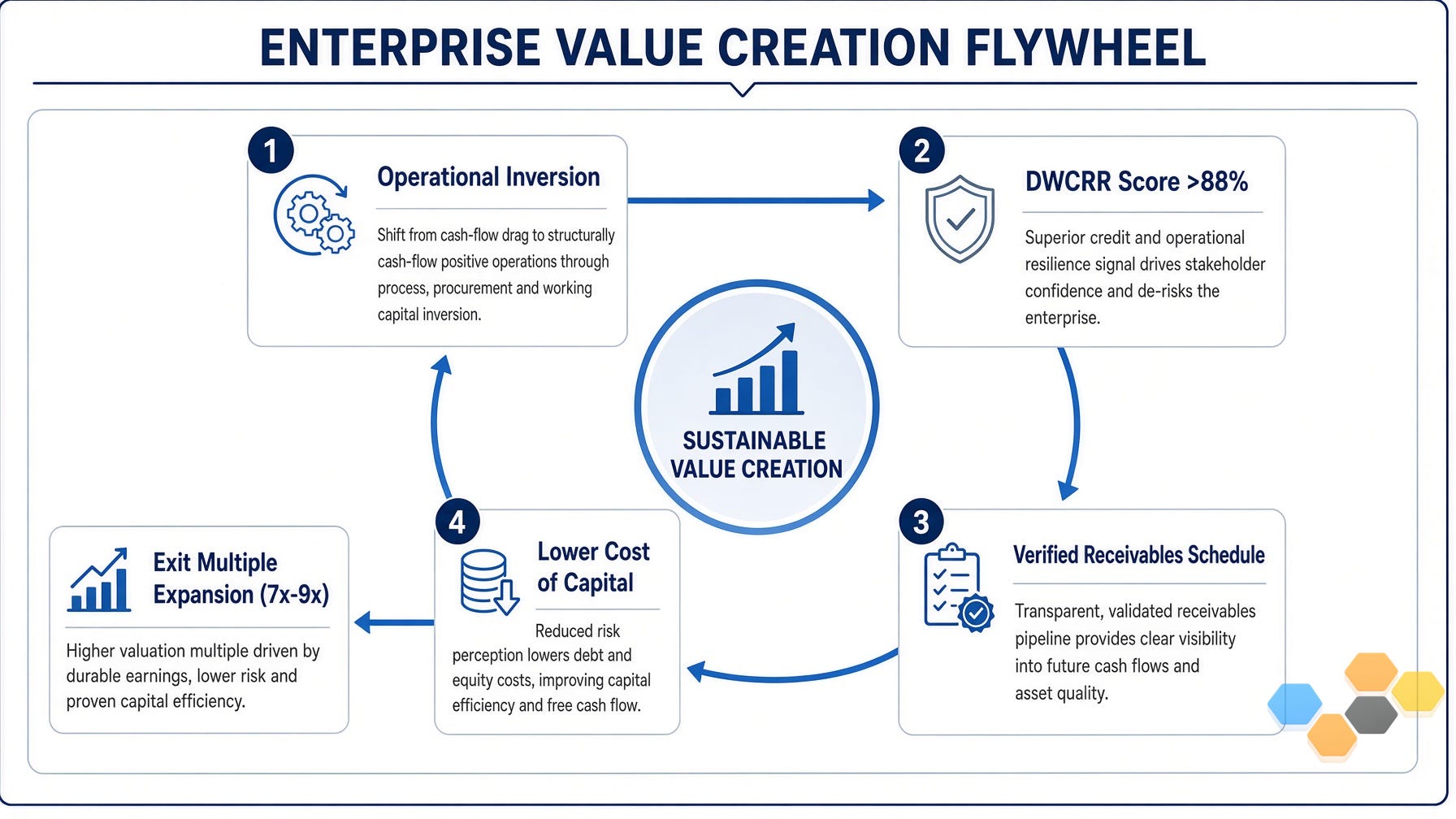
This verified operational history transforms the administrative back-office into a strategic asset. By removing key-person dependencies and accelerating working capital cycles, the enterprise establishes a defensible competitive posture that commands premium valuation multiples upon exit.
The Strategic Inversion: Moving from Manual Data Entry to Operational Governance
The fundamental decision facing field service leadership is not whether to hire offshore staffing or purchase artificial intelligence copilots. Both approaches represent sustaining modifications to a fragile operating model, and both accelerate transactional volume without resolving underlying process deficiencies.
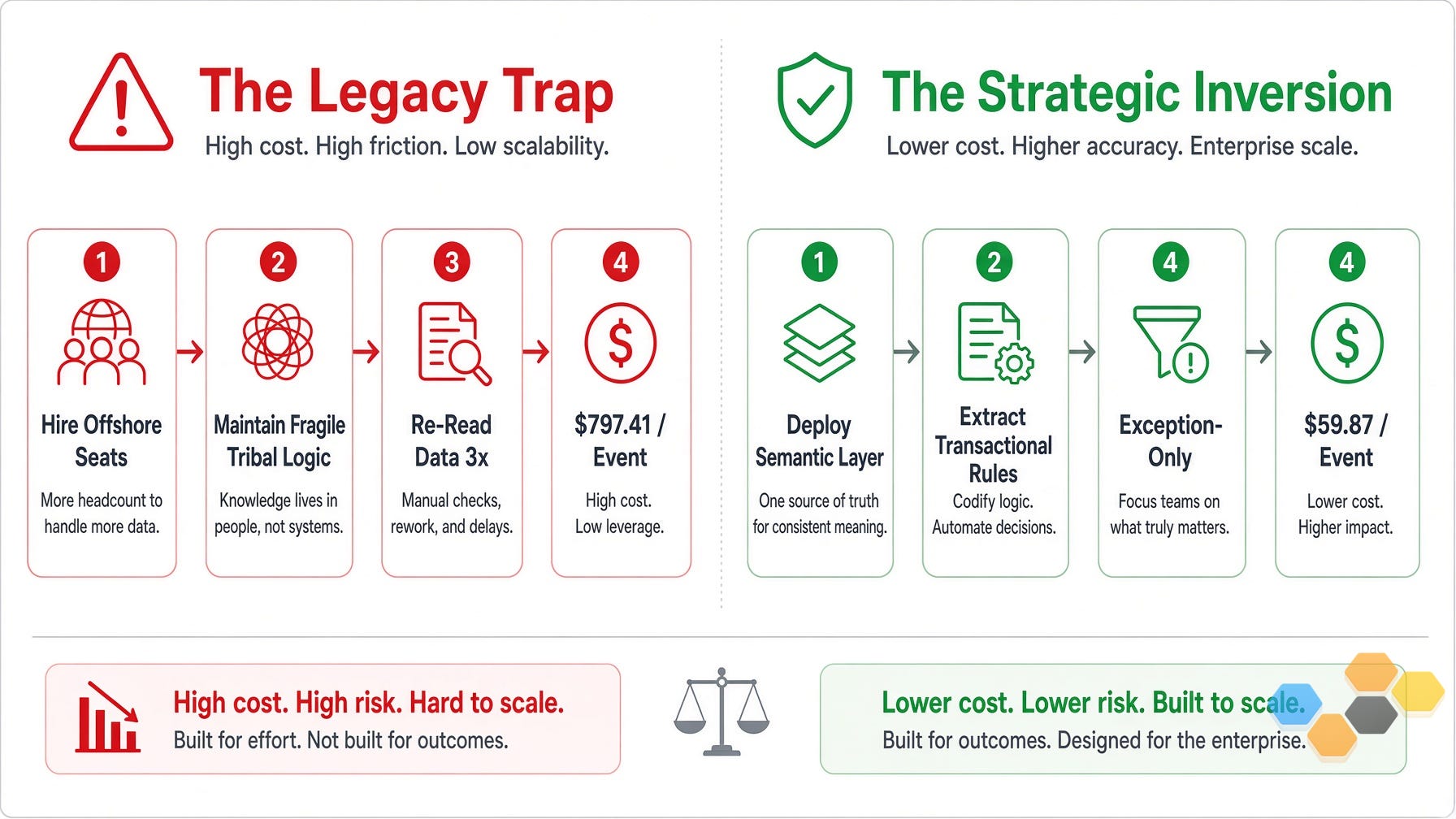
Real operational transformation requires stepping away from seat-count outsourcing and implementing an auditable, machine-governed semantic layer. Moving to an exception-based conversion model frees field technicians from routine paperwork, compresses working capital cycles, and establishes a transparent, scalable back-office.
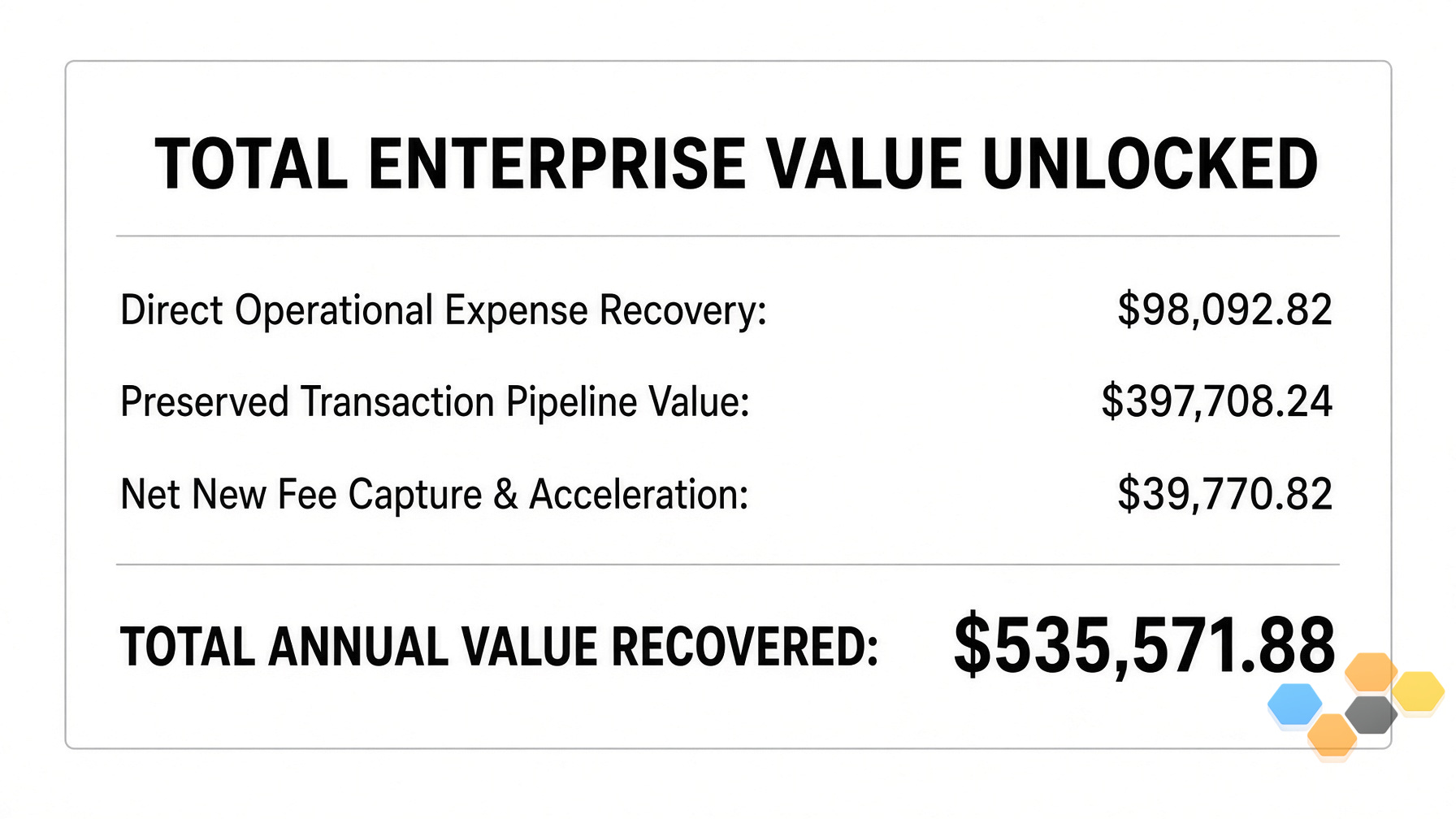
Operational leaders must evaluate their current back-office architecture: Will you continue subsidizing manual data entry at $797.41 per ticket, or will you establish the semantic infrastructure required to operate at the $59.87 physics floor?
If you thought this was a lot of information, you should see the research package! I welcome debate. If you bring non-analogical thinking to the critique, I’m happy to engage. It only makes my work get better.
Is your organization interested in differentiated innovation? The world is changing quickly. If you’re not adapting to those changes, you’re not innovating. Seeking reassurance from consultants fails, nearly always (sometimes they get lucky). I work with organizations who are serious about attacking problems using first principles. Many have been burned once, and they don’t want it to happen again. Is that you? (my availability is limited).
Book an appointment: Click here
Email me: mike@pjtbd.com
Call me: +1 678-824-2789
Join the community: Click here
Follow me on 𝕏: https://x.com/mikeboysen
Articles - jtbd.one - De-Risk Your Next Big Idea
Slaying the Sacred Cows of Innovation